
Last updated November 2, 2026
 Wrought iron
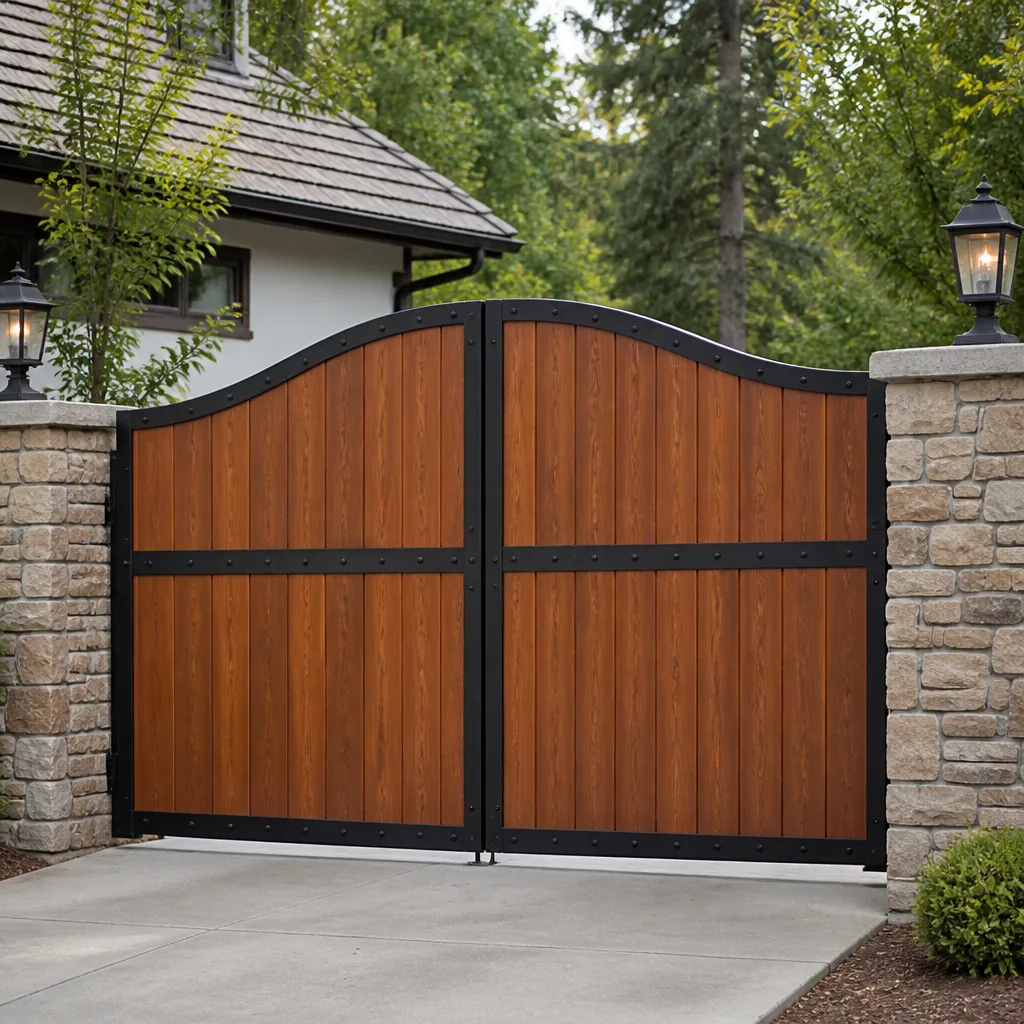 Wood & steel frame
 Farm & ranch
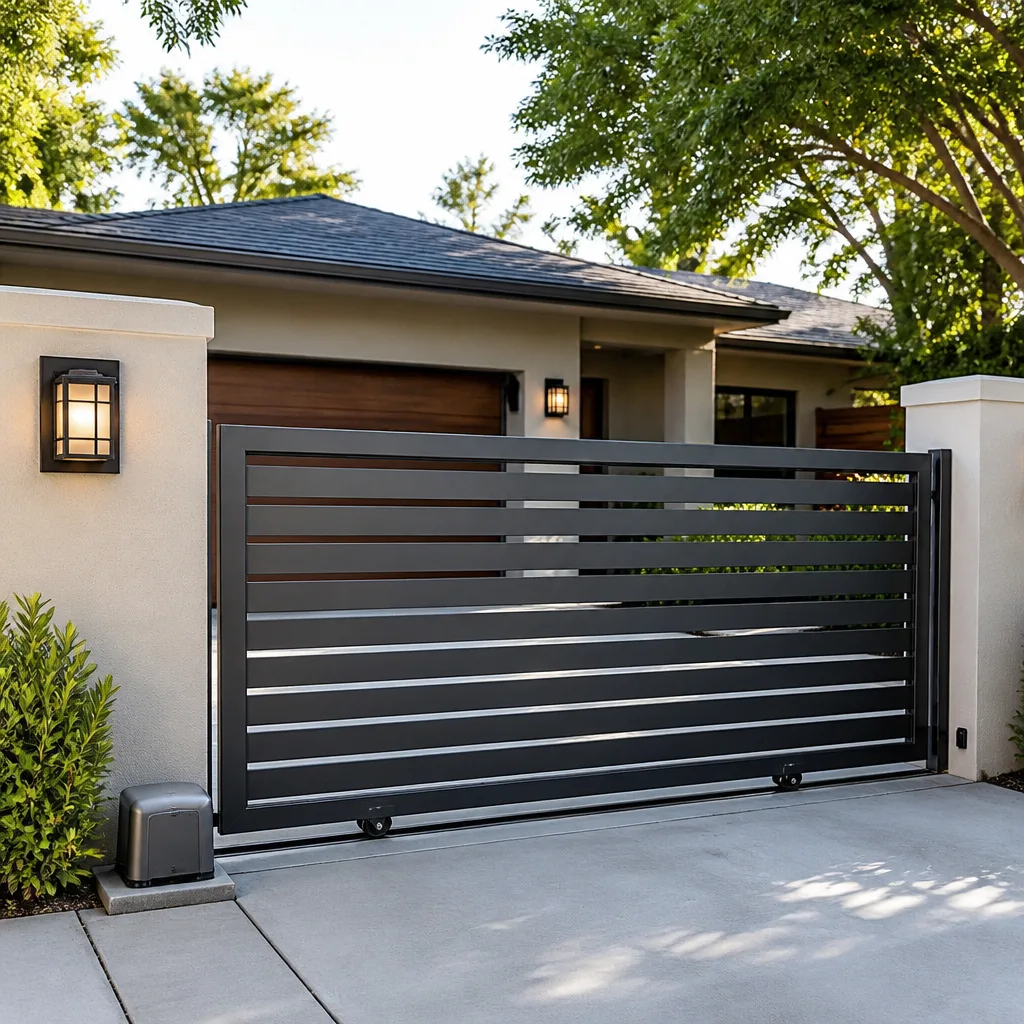 Sliding driveway gates
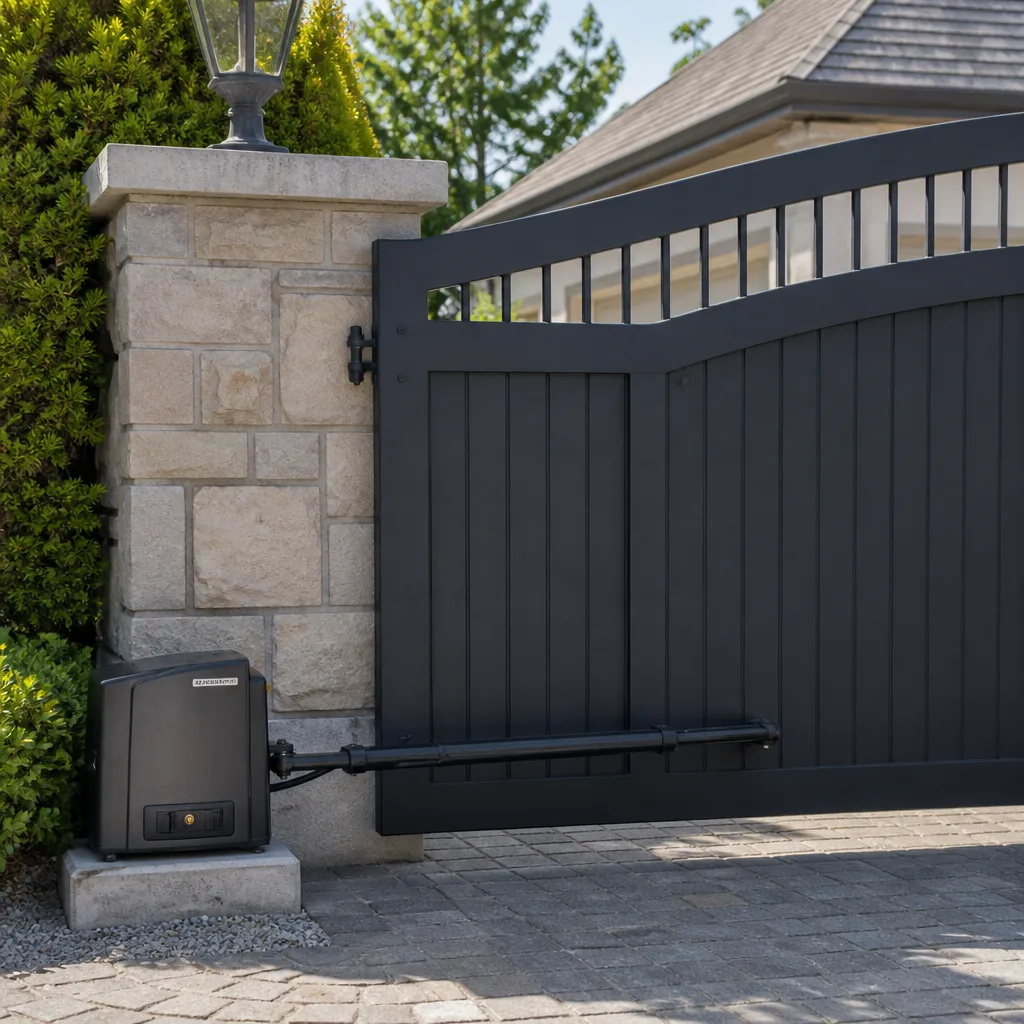 LiftMaster operators
Free on-site gate assessment - hinges, posts, and your LiftMaster or Nice gate operator checked before anything is quoted
The assessment is free and the quote is the invoice.
Get your free estimateSeasonal Gate Repair Care for Escondido: Year-Round Homeowner’s Guide
Escondido’s “mild” winters are deceptive for gate owners. The combination of infrequent rain, temperature drops into the low 40s, and high desert humidity swings causes more seal failures and corrosion in hinge hardware than anywhere on the coast, because systems here were never maintained for moisture they rarely see. A gate that works flawlessly through August can bind, screech, or refuse to open by January, and the failure is rarely the motor. It’s the accumulated effect of seasonal stress on components most homeowners never inspect. This guide breaks the year into four threat profiles, each with specific checks and interventions, so you can act before a minor issue becomes a Saturday morning lockout.
Quick Answer
Escondido gate owners need four seasonal maintenance passes per year: a summer thermal expansion and ventilation check, a fall bearing and lubricant service before temperatures drop, a post-rain winter corrosion and seal inspection, and a spring sensor and safety loop calibration. Skipping any single season stresses the operator, hinge hardware, and access control systems in ways that compound. The most expensive repairs we see in Escondido are almost always the result of two or three skipped seasonal checks stacked on top of each other.
Styles & brands we work with
- Wrought iron
- Wood & steel frame
- Farm & ranch
- Sliding driveway gates
- LiftMaster operators
Table of Contents
- Summer: Thermal Expansion and Solar Heat Protocol
- Fire Season: Ash, Debris, and Operator Ventilation
- Fall: The Bearing Lubrication Window
- Winter: Rain Response and Corrosion Control
- Spring: Sensor Calibration and Safety Loop Audits
- Year-Round Access Control Calendar
- Common Mistakes to Avoid
- When to Call a Professional
- Frequently Asked Questions
Summer: Thermal Expansion and Solar Heat Protocol
From June through September, Escondido regularly hits the high 90s, and steel slide gates absorb direct sun for six to eight hours a day. Steel expands when heated. A 20-foot slide gate can grow by roughly a quarter inch between dawn and mid-afternoon, and that expansion has to go somewhere. If the track was installed tight, or the gate was welded with a narrow clearance, the gate binds against the track or the catch post. The operator’s motor then draws more current to compensate, which trips the thermal overload or burns out the limit switch.
Limit switch failures in Escondido are most common during peak solar hours, between 1 p.m. and 4 p.m., when the gate is at maximum expansion. The switch is a small mechanical or magnetic sensor that tells the operator where the gate stops. When the gate’s physical end position moves with temperature, the switch setting from a cooler morning no longer matches. The gate overtravels, slams, or reverses.
Here’s the summer protocol we recommend for Escondido homeowners:
- Check the gate’s clearance at the hottest hour of the day. Run the gate manually (use the release handle) and feel for resistance as it approaches full open and full close positions. A gate that slides freely at 8 a.m. but drags at 3 p.m. confirms thermal binding.
- Inspect the operator housing ventilation. LiftMaster, FAAC, and Elite operators all have cooling vents or louvers. Dust, spider webs, and grass clippings block them. An operator that can’t shed heat runs hot, and hot circuit boards fail early. Clear the vents with compressed air, not water.
- Test the limit switch at two temperatures. Run the gate fully open and fully closed once in the morning and once in the afternoon. Listen for a hard stop, a bang, or a motor that keeps running after the gate has stopped. Any of those signals means the limit setting needs adjustment for the summer position.
- Look for track deformation. Concrete pads expand less than the steel track bolted to them. That differential stress can bow a track upward in the middle. Run a level across the track’s length. More than an eighth-inch deviation over six feet warrants a closer look.
If you’ve noticed your gate reversing for no reason, grinding at the end of its travel, or the operator beeping but not moving during the hottest part of the day, that’s thermal stress, and it’s the single most common summer service call we run in Escondido. A Gate Repair in Escondido technician can reset clearances and limit switches without replacing parts, but only if the issue is caught before the motor has overheated enough times to damage windings.
Fire Season: Ash, Debris, and Operator Ventilation
Escondido sits in a high fire severity zone. Even in years without a major blaze nearby, late summer and early fall bring weeks of dry Santa Ana conditions: airborne dust, leaf debris, and occasionally ash drift. That fine particulate gets into everything, and automatic gate operators are particularly vulnerable because their cooling fans actively pull outside air through the housing.
The problem sequence is predictable. Ash and dust coat the operator’s circuit board. The board’s components generate heat during operation. That heat bakes the fine particulate onto the board’s surface, forming a layer that acts like insulation. Temperatures inside the housing climb. Capacitors degrade. Sensors drift. Then the gate starts behaving erratically: it opens partway, reverses mid-travel, or ignores remotes intermittently. It’s not a programming problem. It’s a cooling problem caused by fire-season air quality.
The cleaning sequence matters, and doing it wrong can be worse than not cleaning at all. Compressed air is the only safe method. Never use water, and never use a wet wipe on a control board. FAAC and LiftMaster warranty terms specifically exclude damage caused by moisture intrusion or unapproved cleaning methods.
Fire season cleaning sequence for Escondido gate owners:
- Disconnect power to the operator at the breaker. Never open an operator housing with the system energized.
- Remove the housing cover. Most operators have four to six screws. Set the cover aside in a clean spot.
- Use compressed air at 20 to 30 PSI. Hold the nozzle six inches from the board. Blow from top to bottom, edge to edge. Get into the relay sockets and terminal blocks.
- Inspect the cooling fan. If the operator has one, it’s usually mounted at the back of the housing. Spin it by hand. Any resistance, wobble, or accumulated grime means it’s not moving air properly.
- Check the conduit entry points. Loop detector wires enter the housing through conduit or grommets. Ash gets in through gaps here. If the grommet is cracked or the conduit isn’t sealed, add a silicone bead around the entry point.
- Reassemble and test. Run the gate through three full open-close cycles and listen for unusual hum or clicking.
In our experience, gates in the hillside neighborhoods east of the I-15, including the areas around Dixon Lake and Jesmond Dene, collect fire-season debris faster than properties in the valley floor. The geography funnels wind, and the wind carries particulate. If you’re in a hillside lot, double the cleaning frequency during fire season. An Electric Gate Repair in Escondido service call that starts with a board cleaning is cheaper than the board replacement that follows if the cleaning never happens.
Fall: The Bearing Lubrication Window
Here’s the part competitors never discuss: standard gate lubricants have a viscosity threshold. Below a certain temperature, the lubricant thickens to the consistency of cold honey. A bearing that spins freely at 70 degrees starts dragging at 45 degrees, and the motor has to work harder through every cycle. That extra current draw shortens the operator’s life and trips thermal breakers on cold mornings.
Escondido night temperatures typically drop below 50 degrees by mid-November, and into the low 40s during December and January. The lubrication window runs from mid-October through mid-November. Get it done before the cold settles in.
What gets lubricated during a fall service:
- Slide gate rollers and track. Use a dry film lubricant or a light machine oil rated for outdoor use. Heavy grease traps grit and turns into a grinding paste. Wipe the track clean first.
- Swing gate hinge pins. Two or three hinges per leaf, depending on gate height. A few drops of penetrating oil per pin, then swing the gate by hand to work it in.
- Operator drive chain and sprocket. If your operator uses a chain drive, it needs a light coat of chain lubricant. Too much flings off onto the housing.
- Wheel bearings on cantilever gates. Cantilever slide gates roll on two sets of truck wheels inside a supporting frame. These are the most neglected bearings on any gate system, and they’re also the hardest to reach without removing the frame cover.
- Latch and lock mechanism. A few drops of graphite or dry lubricant prevents the cold-weather freeze-up where moisture condenses inside the lock cylinder.
Don’t use WD-40 as a permanent lubricant. It’s a water displacer and mild solvent. It cleans, but it doesn’t lubricate. A week after application, the bearing is dry and more vulnerable to corrosion than before. For Escondido’s climate, a lithium-based grease on hinges and a dry film lubricant on tracks are the right combination.
The fall pass is also when we test the operator’s capacitor. Capacitors lose efficiency in cold weather as their electrolyte thickens. A capacitor that’s weak but functional in September may fail to hold enough charge to start the motor on a 42-degree December morning. It’s a $40 part, but the failure always happens at the worst time: a cold morning, a car in the driveway, a schedule to keep.
Winter: Rain Response and Corrosion Control
Escondido’s first significant rain usually arrives in late November or December. If your gate hasn’t been serviced in over a year, the 24 hours after that first rain are the highest-risk period of the entire season. Here’s why: the rain reveals every seal failure, every crack in the housing, every corroded wire connection that has been quietly deteriorating all year. Moisture that sat harmlessly as dust now conducts electricity. Ground faults appear. Safety sensors start false-triggering.
What to do in the 24 hours after Escondido’s first significant rain if your gate hasn’t been serviced recently:
- Run the gate through three full cycles. Watch and listen. A gate that stutters, reverses, or stops mid-travel after rain has moisture in the system somewhere.
- Check the safety sensors. Photo eyes on a slide gate are usually mounted low, near the ground. Splashback coats the lenses with mud. Wipe them with a dry cloth. If the gate refuses to close after cleaning, the sensors have moisture inside the housing.
- Open the operator housing and look for condensation. Run your finger along the inside of the cover. Any moisture means the seal is failing and needs replacement. Ignoring condensation inside the housing leads to board corrosion within one season.
- Inspect the conduit and junction boxes. Look for water sitting inside low-mounted junction boxes. Drain them. If the wires inside show green corrosion on the copper, the connections need to be cut back and re-terminated.
- Test the keypad. Moisture inside a keypad causes ghost entries: the gate opens on its own, or the keypad beeps without input. This usually means the keypad’s internal seal has failed.
Hinge hardware on Escondido gates takes a compounding hit from the winter pattern. The humidity swings between dry Santa Ana conditions and moist marine layer are wide. Metal expands and contracts. Hairline cracks form in powder coating. Water gets in, rust starts, and the hinge pin seizes. A gate that swings freely in October can be completely frozen by February, and no operator motor in the world will open it.
For swing gates, inspect the hinge area at least once during winter. Look for rust staining running down from the hinge knuckle. Feel for a gate that moves stiffly when the opener is released. Both are early indicators of hinge degradation. A specialist can extract and replace hinge pins before the entire hinge has to be cut off and re-welded, which is the repair that follows a badly seized gate. If you’re seeing rust, or if the gate is binding, a Gate Repair in Escondido visit now costs less than the structural repair that comes later.
Spring: Sensor Calibration and Safety Loop Audits
Spring in Escondido is a deceptive season. Temperatures are pleasant, the gate works, and nothing seems urgent. That’s exactly why it’s the right time to do the precision work: calibrating safety systems and auditing the components that keep people and vehicles from getting hurt.
Automatic gates are regulated safety devices. The safety loop is a wire buried in the driveway that detects a vehicle’s metal mass. The photo eye is an infrared beam that detects an obstruction. Both systems exist to prevent the gate from closing on a car or a person. Both systems drift. Loop sensitivity changes as soil moisture levels shift with the seasons. Photo eyes drift out of alignment as mounting posts settle and brackets flex in heat.
Spring calibration checklist:
- Test the safety loop with a metal object. Place a large steel tool or a metal trash can lid on the driveway directly over the loop’s known location, then try to close the gate. The gate should refuse to close. If it closes anyway, the loop is either misadjusted or broken.
- Check photo eye alignment. Both eyes have small indicator LEDs. When aligned, the receiving eye shows a steady light. When misaligned, it blinks. Adjust the mounting brackets until the light goes steady.
- Clean the photo eye lenses. Dust from spring winds coats the lenses and reduces infrared transmission. A dry microfiber cloth is all that’s needed.
- Test the reversing edge or pressure sensor. Close the gate and place a roll of paper towels or a cardboard box in the path. The gate should reverse on contact. A gate that doesn’t reverse is a serious safety hazard.
- Audit the keypad code list. Spring is when we recommend deleting codes for anyone who no longer needs access: a former tenant, a contractor who finished a job weeks ago, a previous employee. The fewer codes in the system, the fewer paths in.
Mighty Mule and Ghost Controls systems sold for the DIY market are often installed with safety loops omitted entirely. Those systems rely on obstruction sensors in the operator, which are less reliable than a properly installed loop. If you have a Mighty Mule operator on an Escondido driveway gate and you’re not sure whether a safety loop was ever installed, this is the season to find out. A gap in the safety system is a liability that doesn’t fix itself.
Year-Round Access Control Calendar
Access control is the layer most Escondido homeowners think about least until it fails. The keypad, the remote controls, the intercom, the battery backup: all of these are electrical components subject to the same seasonal stresses as the gate itself. But unlike the gate, which gets used every day and shows its problems, access control devices can fail silently and reveal themselves at the worst moment.
Here’s the seasonal access control calendar we recommend for Escondido’s climate:
Summer (June through August): Test the battery backup system. Peak summer demand on the grid brings voltage sags and brief brownouts, especially during heat waves. A battery backup that’s been cycling for three years may no longer hold charge. Unplug the operator from AC power and run the gate on battery. If the gate moves slowly or not at all, the batteries need replacement. This is also when solar-powered operators in Escondido’s hill country need their panel output checked against the manufacturer’s spec.
Fall (September through November): Audit entry codes and remote allocations. Delete codes for anyone who no longer needs access. Test every remote in the household. Replace remote batteries as a set, not one at a time, so they don’t die in staggered succession through the winter. This is also the window to update the operator’s control board firmware if the manufacturer has released a new version.
Winter (December through February): Test the emergency release. On most operators, the release is a keyed handle or a pull cord that disconnects the motor so the gate can be moved by hand. If you’ve never tested it, practice once during a dry winter day. You don’t want the first time to be during a power outage in the rain. Confirm the release works smoothly and the gate swings or slides freely by hand.
Spring (March through May): Recharge or replace UPS systems. Uninterruptible power supplies for gate operators and access control panels degrade with age, and their batteries should be replaced every three to five years. Spring is the right time because the mild weather makes the work straightforward. Test by cutting power and running the system on the UPS for at least ten minutes.
The unifying theme: every access control failure is cheaper to prevent than to repair, and every prevention step takes less than an hour. The homeowners who call us for an Electric Gate Repair in Escondido visit during a rainstorm or a heat wave are almost always the ones who skipped one of these seasonal checks. The ones who keep the calendar don’t call us in emergencies. They call us for routine maintenance, and they stay on schedule.
Common Mistakes to Avoid
- Lubricating without cleaning first. Adding fresh lubricant to a dirty track or hinge traps grit against the bearing surface and accelerates wear. Always wipe the surface clean before applying anything. This is the single most common mistake we see on Escondido gates.
- Using WD-40 as a permanent lubricant. It displaces water, which is useful, but it evaporates and leaves the metal dry. Within a week, the bearing is less protected than before. Use a proper lithium grease or dry film lubricant.
- Ignoring a gate that runs fine all spring. Spring is the season when deferred winter damage hides. Corroded connections from December rain can sit dormant for months before they fail during the first heat wave. Calibrate in spring, not just when something breaks.
- Adjusting limit switches without understanding thermal expansion. A homeowner sets the limits on a cool evening, then finds the gate slamming when the afternoon sun hits it. Limit adjustments should account for the gate’s hottest-hour position, not the position when you happen to have time to work on it.
- Cleaning an operator board with water or a wet cloth. Moisture on a control board causes immediate shorts and voids manufacturer warranties. Compressed air only, at low pressure, with the power disconnected.
- Testing the emergency release for the first time during an actual emergency. During a power outage, in the rain, at 6 a.m., is not the time to figure out how the release works. Practice once a year on a dry day.
- Skipping the safety loop audit because “the gate has always worked.” Safety loops are the component most likely to be missing entirely on DIY-installed systems, and the cost of a failure is measured in vehicle damage or worse. Audit the protection system, not just the gate’s movement.
When to Call a Professional
Some seasonal maintenance is within reach of a handy homeowner: cleaning photo eye lenses, testing remotes, wiping down tracks. Other situations genuinely require a trained technician. If your gate’s operator draws high current and trips its breaker repeatedly, there’s an electrical fault that needs diagnosis, not adjustment. If the gate moves stiffly by hand after the opener is released, the problem is mechanical and may require hinge work or track realignment. If you see visible corrosion on wiring inside the operator housing, cutting back and re-terminating connections is the right fix, and doing it wrong creates a fire hazard. If the safety loop isn’t detecting a vehicle, or if you’re unsure whether one is even installed, the only way to know for sure is with a loop tester and a trained hand. Gate Repair Escondido offers free estimates in Escondido. Call (833) 630-4122 and we’ll tell you exactly what’s wrong before any work begins.
Frequently Asked Questions
Four times per year, aligned with the seasons as described in this guide: a summer thermal check, a fall lubrication pass, a post-rain winter inspection, and a spring safety calibration. Most Escondido gates we service follow this schedule and avoid major failures entirely. We work on the gate you have, whether it’s a LiftMaster operator or a FAAC system, and the seasonal pass is the same regardless of brand.
Thermal expansion causes steel slide gates to bind against the track or the catch post during the hottest hours of the day, and the operator’s motor strains against that resistance. The grinding you hear is metal-on-metal contact. Adjusting the clearance and confirming the limit switch settings at peak afternoon temperature usually resolves it. Call us at (833) 630-4122 if the noise persists, because continued operation while binding will damage the motor.
Run the gate through three full cycles and watch for stuttering, reversing, or stopping mid-travel. Wipe down the photo eye lenses. Open the operator housing and check for condensation. Any moisture inside means a failed seal, and the fix is a $20 part now versus a control board replacement later.
Basic tasks are fine: cleaning, visual inspection, testing the remotes. But safety loop installation, control board diagnosis, and limit switch adjustment are tasks where a mistake creates a safety hazard. These are the systems we see most often installed without proper safety equipment, so a professional audit once a year makes sense even for DIY-brand operators.
A full pass includes cleaning and inspecting the operator, testing limit switches and safety sensors, lubricating all bearing surfaces, checking the battery backup, and adjusting the system for the coming season’s temperature profile. If you need a new gate or a replacement operator, a Gate Installation in Escondido consultation covers the full scope from measurement to installation.
With consistent seasonal maintenance, a quality operator like a LiftMaster or Elite typically lasts 12 to 15 years. Without maintenance, the average drops to 7 to 9 years because heat, moisture, and debris shorten the life of the control board and motor. The difference is the four seasonal passes described in this guide, every year, without exception.
The Bottom Line
Escondido’s climate is harder on gates than it looks. The heat expands steel, the fire season chokes operator housings with ash, the winter rain attacks seals and hinges, and the spring wind buries sensors in dust. Each season has a specific failure mode, and each failure mode has a prevention step that takes less than an hour. The homeowners who follow the four-season calendar keep their gates running for a decade or more on the original operator. The ones who wait for a symptom get the repair bill instead. If you’d rather have a professional handle the seasonal passes for you, call (833) 630-4122 for a free estimate in Escondido. We’re a dedicated gate specialist, we work on the system you own, and we’d rather keep it running than replace it.
Written by the team at Gate Repair Escondido, serving Escondido since 2018.
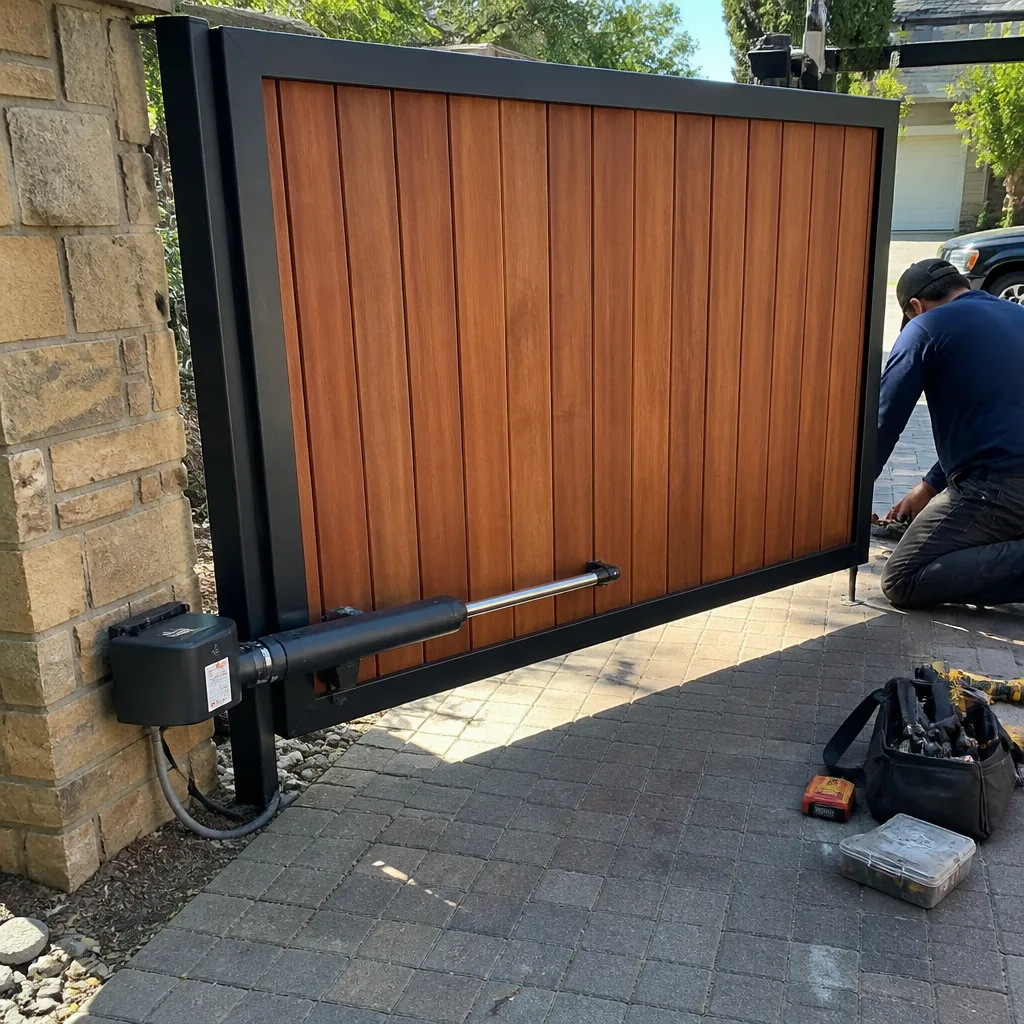
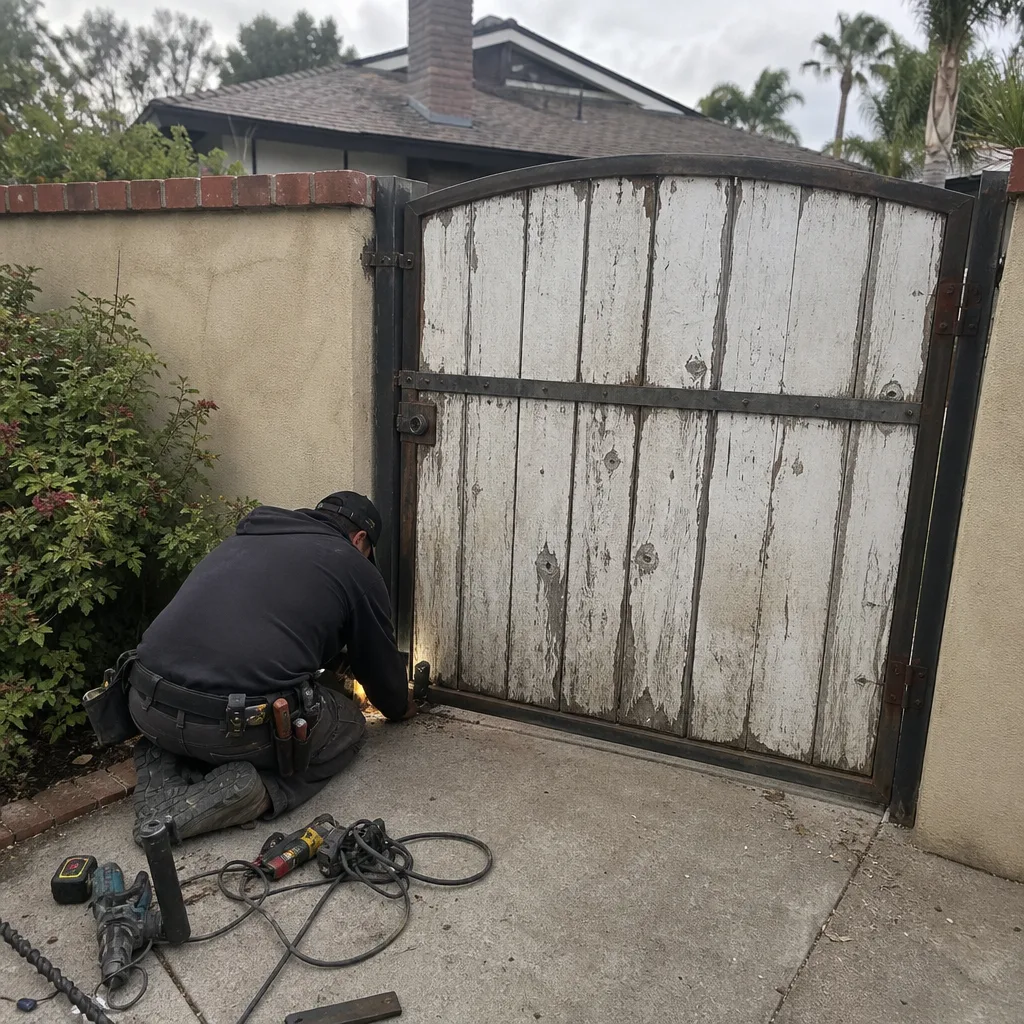
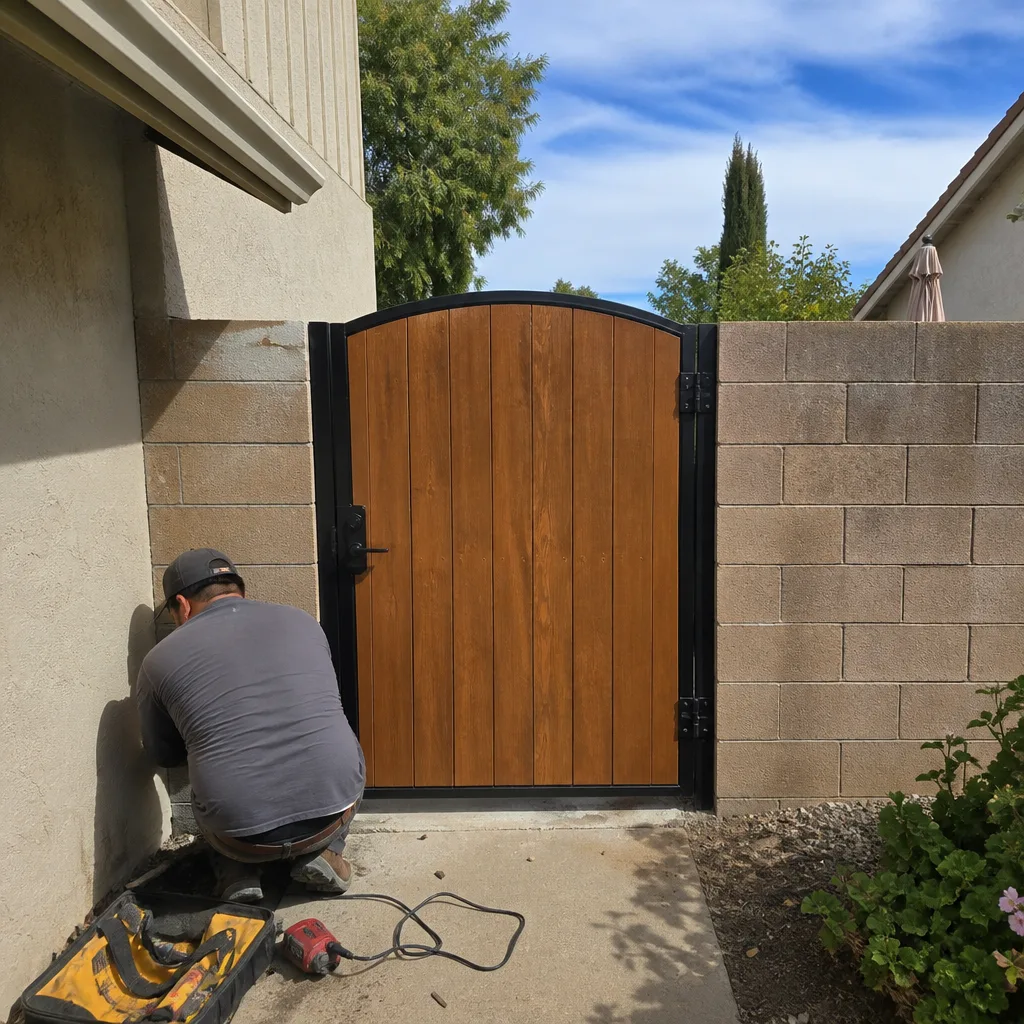
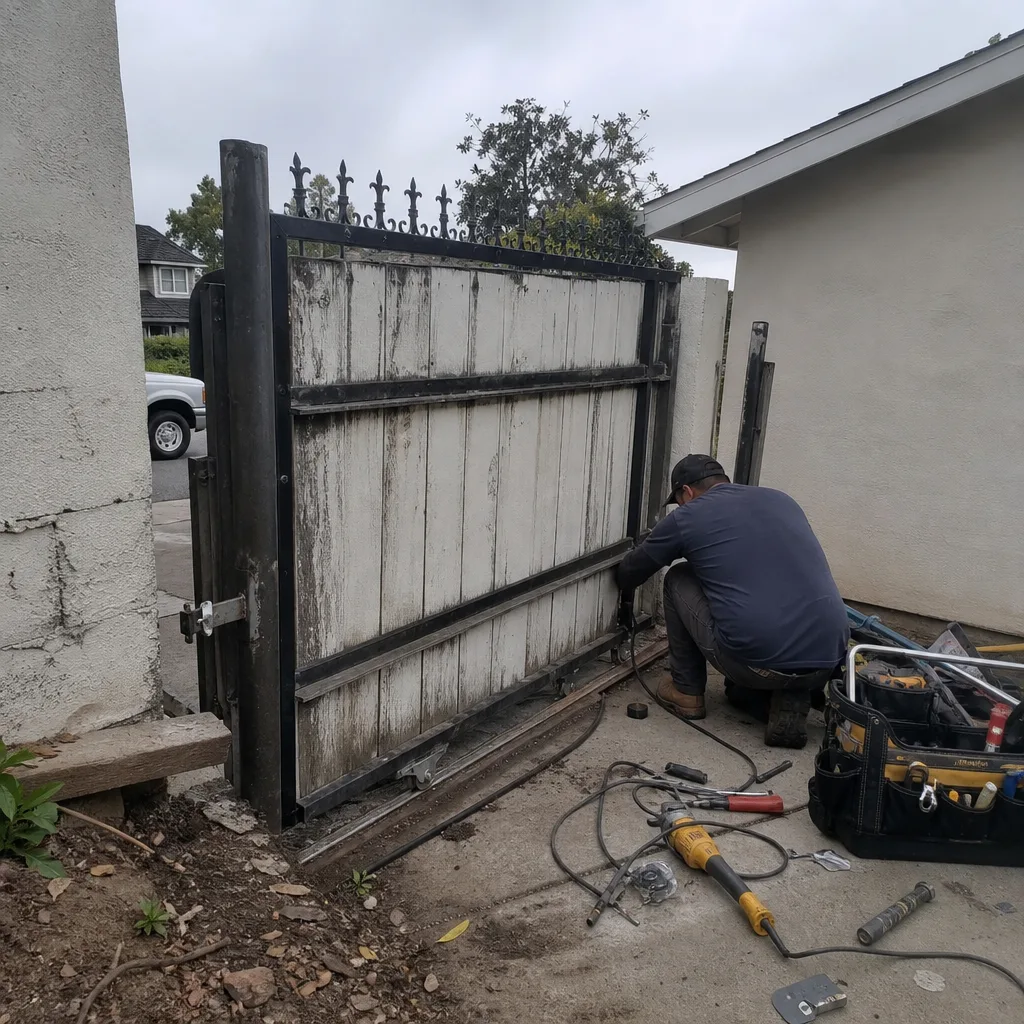
See the difference
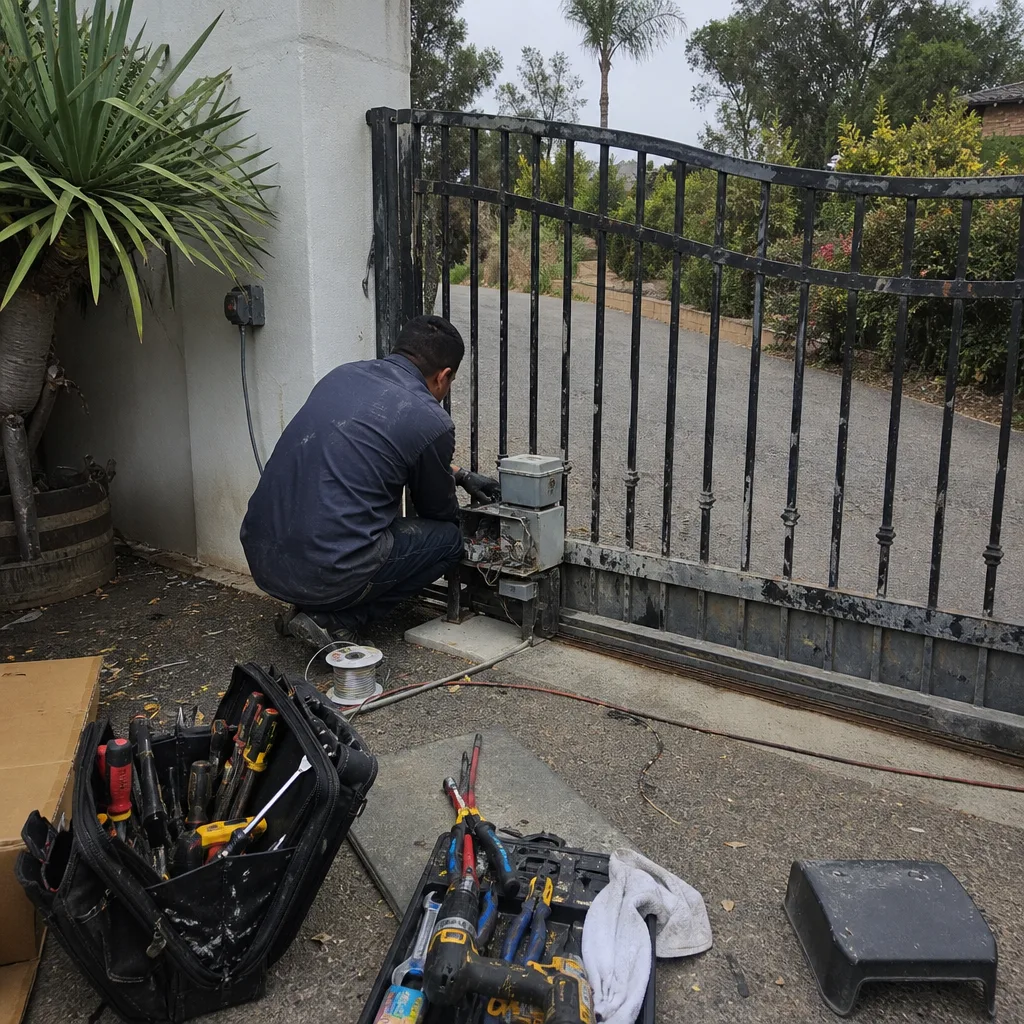 Before
 After
 Before
 After
 Before
 After