
Last updated November 2, 2026
 Wrought iron
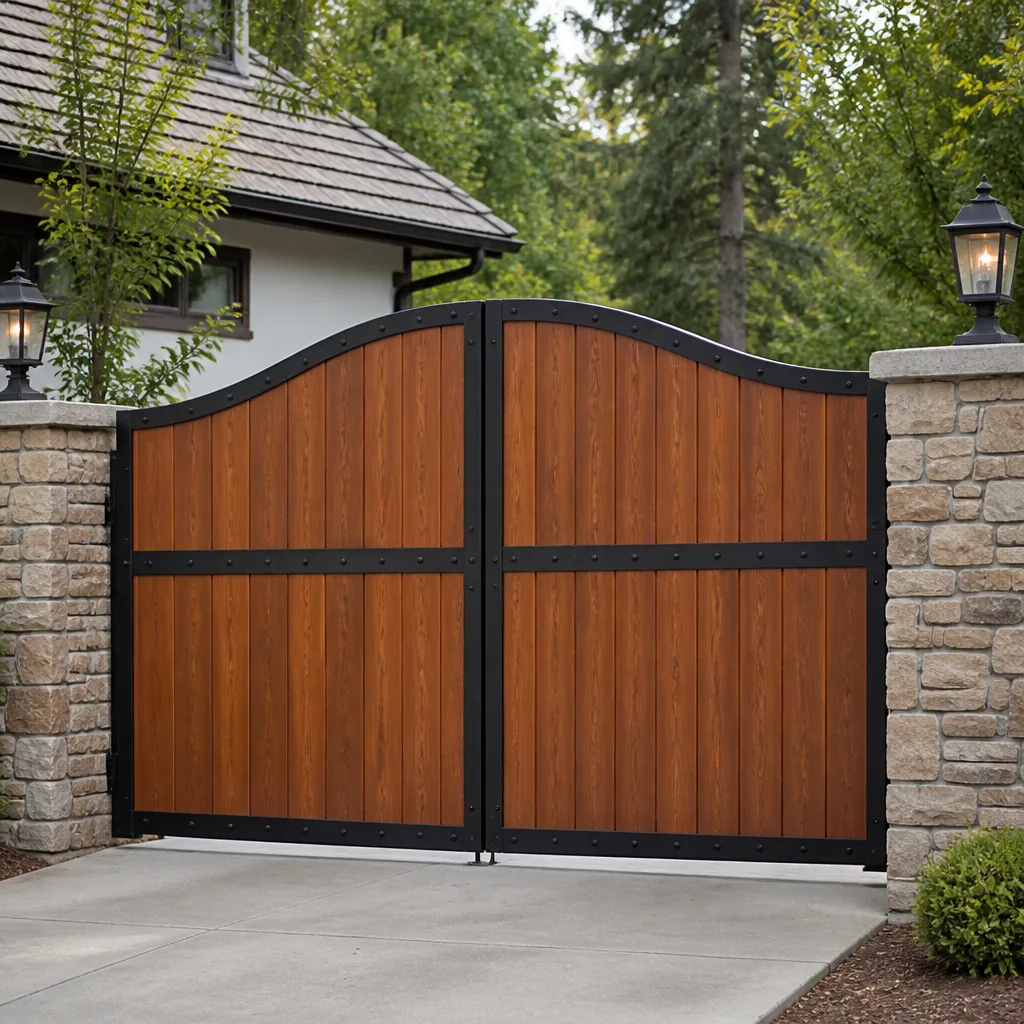 Wood & steel frame
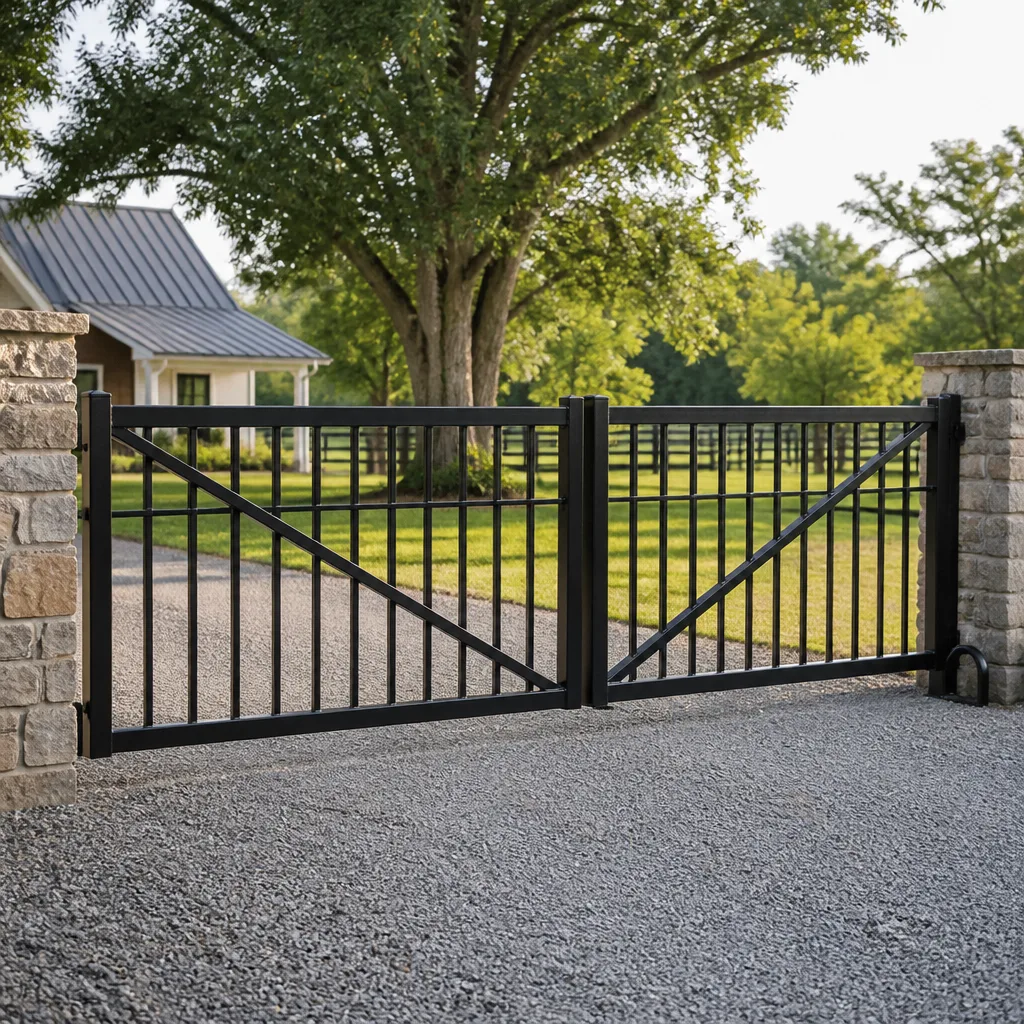 Farm & ranch
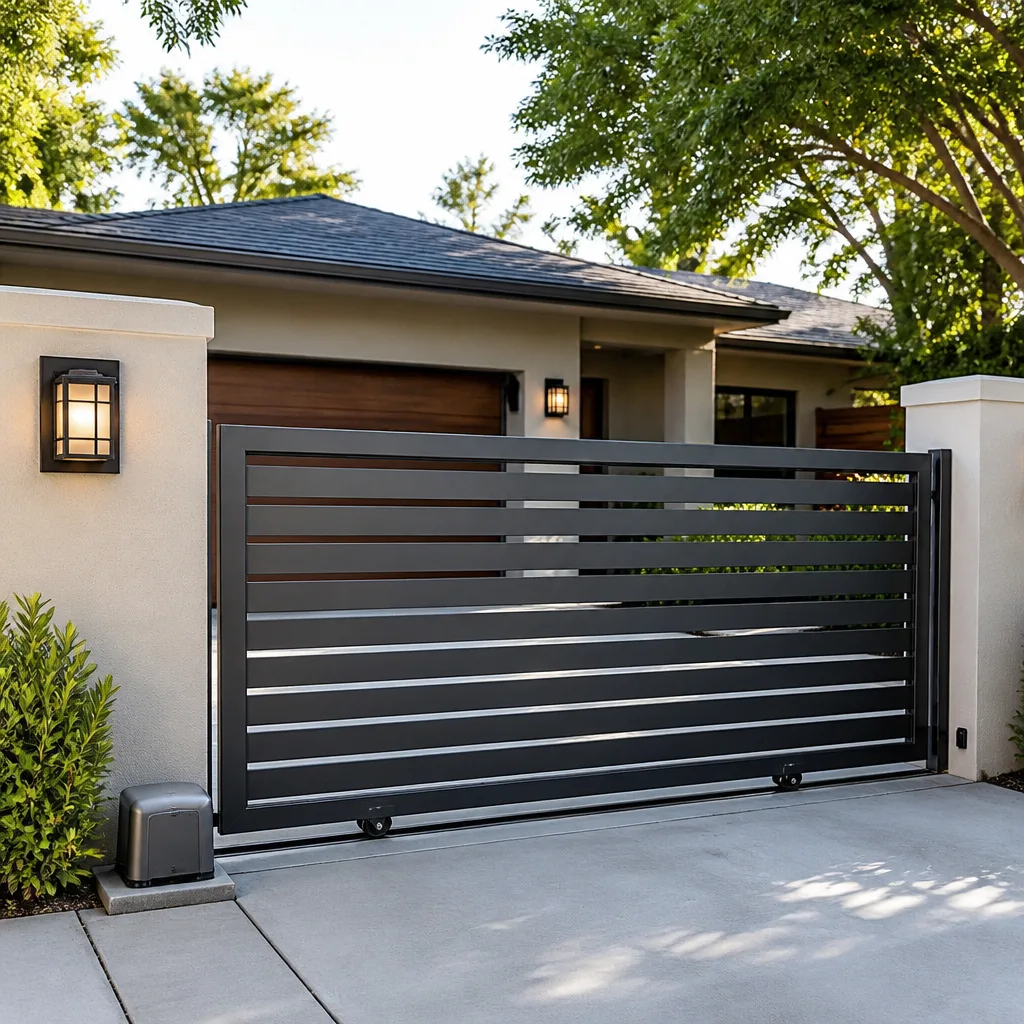 Sliding driveway gates
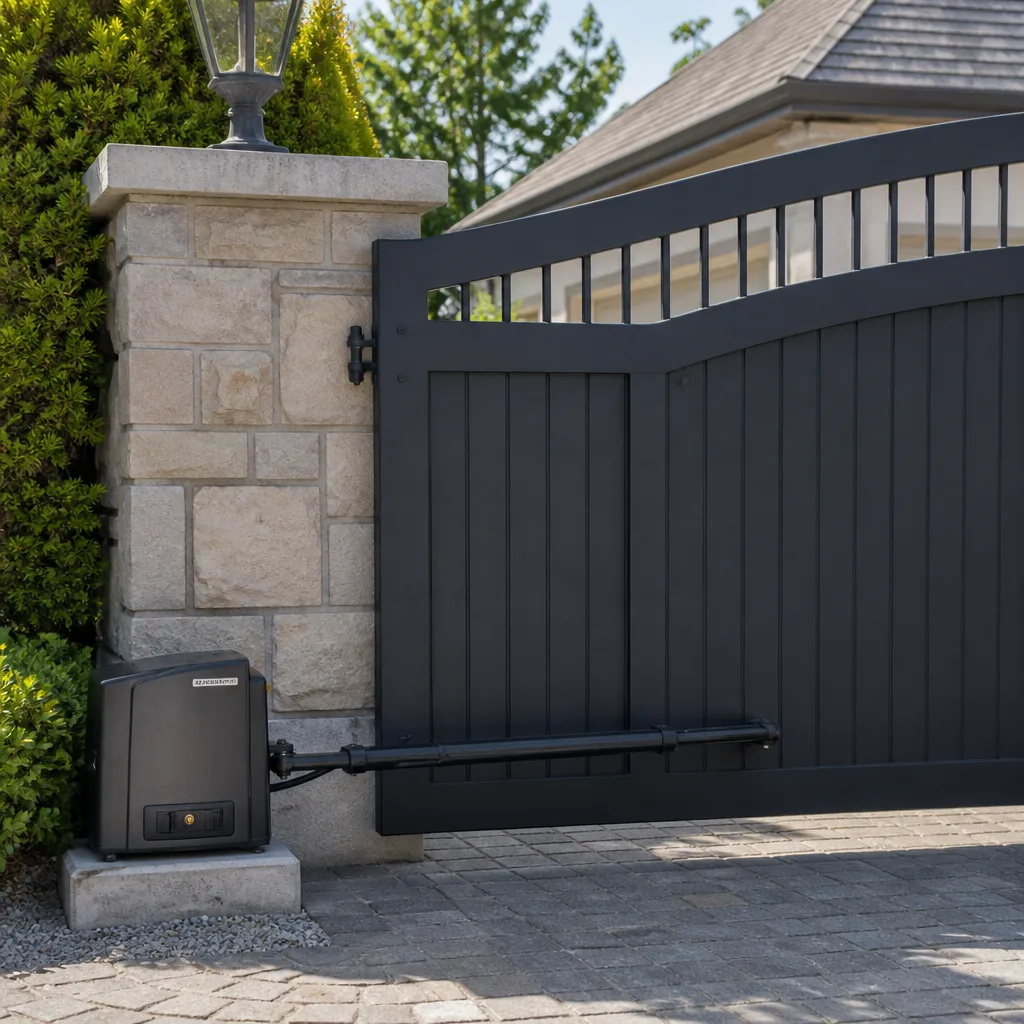 LiftMaster operators
Free on-site gate assessment - hinges, posts, and your LiftMaster or Nice gate operator checked before anything is quoted
The assessment is free and the quote is the invoice.
Get your free estimateGate Repair Warning Signs: An Escondido Homeowner’s Reference Guide
A gate that reverses mid-cycle isn’t malfunctioning. It’s doing exactly what its safety system was designed to do when it senses resistance. The actual malfunction is whatever created that resistance in the first place, and telling the difference between a stretched chain and a failing control board is the whole ballgame. In Escondido, where summer heat bakes gate components and winter rains introduce moisture into control boxes, these warnings show up more often than homeowners expect. This guide decodes the specific sounds, movements, and behaviors that precede gate failure, so you know whether you’re looking at a quick adjustment or a full operator replacement before the gate strands you outside your own driveway. We’ll walk through each symptom, what it means mechanically, and how to tell the urgent from the merely annoying.
Styles & brands we work with
- Wrought iron
- Wood & steel frame
- Farm & ranch
- Sliding driveway gates
- LiftMaster operators
Quick Answer
A gate showing any of these five behaviors needs attention within days, not weeks: it reverses before fully opening or closing, it moves noticeably slower than it did six months ago, it makes grinding or screeching sounds during travel, it fails to respond to remotes or keypads intermittently, or it sags visibly at the hinge side. In Escondido, our Gate Repair services most often trace back to one of three root causes: worn hinge bearings on swing gates, failing capacitors in operators, or ground faults in the safety loop wiring. Each of these produces a distinct warning pattern, and identifying which one you’re hearing is the difference between a service call under $200 and a full system replacement.
Table of Contents
- The Symptom-to-Cause Matrix: What Each Behavior Actually Means
- Battery Backup vs. Control Board: Decoding Intermittent Operation
- The Swing Gate Hinge Inspection Sequence
- Access Control Red Flags: Keypads, Intercoms, and Loop Detectors
- Three Noises That Demand Immediate Shutdown vs. Three That Can Wait
- What Escondido’s Climate and Terrain Do to Gate Systems
- Common Mistakes to Avoid
- When to Call a Professional
- Frequently Asked Questions
- The Bottom Line
The Symptom-to-Cause Matrix: What Each Behavior Actually Means
A gate doesn’t break all at once. It telegraphs its failure through specific, repeatable behaviors. Here’s the part most guides skip: each observable symptom maps to a short list of likely mechanical causes, and the order of likelihood is predictable. In our experience working on gates throughout Escondido, from the hillside properties near Daley Ranch to the gated communities off El Norte Parkway, the same patterns show up again and again. Here’s the breakdown.
Symptom: Gate reverses before reaching the closed position
Most likely cause: Safety loop obstruction detection or excess mechanical resistance. When a gate’s operator senses force beyond its calibrated threshold, it interprets that force as an obstruction and reverses direction. That’s the safety system working correctly. The problem is upstream.
What to check first: Look at the gate track or hinge path. In Escondido, decomposed granite from xeriscaped yards and gravel driveways accumulates in slide gate tracks faster than most homeowners expect. A half-inch of gravel in a track creates enough resistance to trigger reversal on every cycle. Clean the track first. If the gate still reverses, check the safety loop: a loop detector that reads false positives will send a phantom obstruction signal. Loop failures often present as intermittent reversal that comes and goes with temperature changes.
Less common but serious: A failing capacitor in the operator motor reduces starting torque. The gate starts, strains, and reverses because the motor literally cannot push through the initial resistance. This is more common on LiftMaster and FAAC operators that are five or more years old and have been through several Escondido summers.
Symptom: Gate opens slowly, even on a cool morning
Most likely cause: Capacitor degradation. The start capacitor provides the burst of energy that gets the operator motor turning. When it weakens, the gate moves, but slowly. You’ll notice it most on the first cycle of the morning or after the gate has been sitting for several hours.
Second candidate: Worn hinge bearings on swing gates or dry rollers on slide gates. Metal-on-metal friction increases the load the operator must overcome. You’ll typically hear this before you see it: a slow gate with accompanying grinding or squealing points to mechanical friction, while a slow gate that’s quiet points to an electrical cause.
Escondido note: The temperature swings between Escondido’s inland valley and the coastal influence from the west can cause metal components to expand and contract in ways that accelerate wear on bearing surfaces. A gate that’s fine in July may bind in December.
Symptom: Gate doesn’t respond to remote or keypad at all
Most likely cause: If the gate is completely unresponsive, check power before anything else. A tripped GFCI breaker, a disconnected battery backup, or a failed transformer in the operator housing will present exactly like a dead control board. The transformer is the cheapest component in the system and the one most often misdiagnosed by non-specialists.
Second candidate: A failed control board. This is expensive, typically starting around $400 for the board itself on most BFT and Linear models before labor. You don’t want to authorize this repair until every other possibility has been eliminated.
Third candidate: A receiver failure in the operator or a dead remote battery. The remote battery is a 30-second fix, but it’s remarkable how often this gets missed. If the keypad works but the remote doesn’t, suspect the remote or the operator’s receiver module. If both fail, suspect the board or power supply.
Symptom: Gate jerks or shudders during travel
Most likely cause: Physical obstruction or track damage. A bent slide gate track, a wheel that’s lost its bearing, or a hinge that’s begun to seize will cause the operator to surge and stall repeatedly as it fights the obstruction.
Second candidate: A failing gearbox inside the operator. When the nylon gears inside starter models begin to wear, they slip. The gate moves, stops, moves again. This is a terminal condition for the operator: once gearbox damage is confirmed, replacement is usually more cost-effective than rebuilding.
What we see in Escondido: The hilly terrain in neighborhoods like Hidden Meadows and the slopes around Lake Hodges means many Escondido driveways are graded. Gates installed on a slope fight gravity on every cycle. This accelerates gearbox wear and makes symptom detection even more important, because a jerking gate on a slope is closer to catastrophic failure than the same symptom on a flat lot.
If you’re seeing any of these behaviors on a regular basis, our Gate Repair in Escondido page covers the diagnostic and repair process in detail.
Battery Backup vs. Control Board: Decoding Intermittent Operation
This is the single most expensive misdiagnosis in gate repair, and it happens constantly. A gate that works sometimes and fails other times can be traced to either a dying battery backup or a failing control board. Both present as intermittent operation. Both get worse in cold weather. But the repair costs are wildly different: a replacement battery might run $80 to $150, while a new control board on a LiftMaster or FAAC operator runs $400 to $900 before labor. Knowing the difference before you authorize work is the difference between a routine repair and a painful invoice. For How to Hire a Gate Repair Contractor in Escondido: A Step-by-Step Guide, see our detailed walkthrough.
Here’s how to separate the two:
- Test the gate on wall power if possible. Most automatic gate operators have a manual bypass that runs the gate directly off AC power, circumventing the battery circuit. If the gate operates normally on direct power, the battery is the problem. If it still glitches, the board is suspect.
- Watch for pattern intermittent operation. A dying battery typically fails more often at night, in cold weather, or after the gate has been idle for extended periods. A failing control board tends to produce random failures that don’t correlate with temperature or time of day.
- Listen for relay clicks. When a control board is starting to fail, you’ll often hear rapid clicking from the board itself when a command is sent but the gate doesn’t move. That’s the relay attempting to engage and failing. A dead battery produces no click at all.
- Check the battery’s physical condition. Most battery backup units in the Escondido market are sealed lead-acid batteries that swell, leak, or show corrosion at the terminals when they’re near end of life. Visible swelling is diagnostic.
- Look at the operator’s error codes if equipped. Most modern LiftMaster, FAAC, and BFT operators have onboard diagnostic LEDs or digital readouts. Battery issues typically trigger low-voltage codes, while board failures generate communication or logic errors.
One Escondido-specific factor: the summer heat here accelerates battery degradation. A backup battery that would last four years in a coastal climate often lasts two to three in Escondido’s inland valleys. If your battery is older than three years and you’re seeing intermittent operation, the battery is the likely culprit, and it’s a cheap fix relative to the alternative.
When intermittent operation persists after battery replacement, we call in an Electric Gate Repair in Escondido diagnostic that traces the signal path from keypad to board to motor. That’s not a guess-and-check exercise, it’s a systematic process.
The Swing Gate Hinge Inspection Sequence
Swing gates fail most often at the hinge. Every other component, the operator, the board, the sensors, depends on a gate leaf that swings true. When hinges wear, the gate sags. When the gate sags, the operator fights gravity and friction. When the operator fights, it burns through capacitors and gearboxes. Hinge failure is the root cause behind a surprising percentage of operator replacements that could have been avoided with a visual inspection months earlier.
Here’s the inspection sequence we walk through on service calls across Escondido:
- Close the gate fully and look at the gap between the two gate leaves. On a healthy gate, the gap is consistent top to bottom, typically a half-inch to three-quarters of an inch. If the gap narrows at the top, the gate is sagging. If it narrows at the bottom, the hinge posts are shifting.
- Sight down the top rail of the gate from the hinge side to the latch side. Any visible bow or droop means the load has moved off the hinge bearings and onto the gate frame itself. That’s stress the frame wasn’t designed to carry.
- Look at each hinge weld or bolt connection from a foot away. You’re looking for hairline cracks in welds, rust staining that indicates water intrusion into the weld, or bolts that show visible displacement. In Escondido’s rain season, water gets into micro-cracks in welds, and the expansion and contraction from temperature swings widens those cracks into real structural failures.
- Grab the gate near the latch and try to lift it. You shouldn’t be able to move it more than a quarter-inch vertically. Any more than that means the hinge bearings are worn and the full weight of the gate is riding on the operator arm instead of the hinges.
- Open the gate halfway and watch the hinge pin as it rotates. A healthy hinge pin rotates smoothly. A failing one wobbles visibly or produces metal shavings that collect at the base of the hinge.
If you catch hinge wear early, the repair is typically bearing replacement and re-seating, a few hundred dollars on most residential gates. If you miss it, the hinge can fail catastrophically, and a falling gate leaf is a genuine safety hazard, easily weighing 300 pounds or more. That’s not a risk worth taking. A sagging gate that drops off its hinges can injure a person or crush a vehicle. If you see a crack, a wobble, or more than a quarter-inch of vertical play, stop using the gate and call a dedicated gate technician.
Access Control Red Flags: Keypads, Intercoms, and Loop Detectors
Access control failures confuse people because the symptoms seem disconnected from the gate mechanism itself. The gate opens fine when you use the manual button on the operator, but the keypad is slow. Or the intercom buzzes. Or the gate opens on its own for no reason. Each of these points to a different layer of the system, and understanding which layer is failing saves hours of fruitless troubleshooting.
Keypad lag: You press a code and the gate takes two or three seconds to respond. If the gate responds instantly to the manual button but lags on the keypad, the problem is not the operator. It’s the keypad itself, the wiring between the keypad and the control board, or a failing keypad relay. In Escondido, we see keypad failures most often on units exposed to direct afternoon sun on west-facing gates. The UV exposure degrades the keypad membrane and the internal contacts.
Intercom static or dropped calls: If your gate intercom produces static, cuts out mid-conversation, or drops calls when the gate operates, suspect a ground fault in the intercom wiring or a failing power supply to the intercom station. Intercom and gate operator wiring often share a conduit, and a nick in the insulation from a previous repair or a rodent (common in the rural parts of Escondido, including the areas around San Pasqual Valley) creates cross-talk that degrades the audio signal.
Loop detector false reads: If the gate opens when no vehicle is present, or fails to open when you pull up, the loop detector is misreading. The loop itself is a buried wire coil, usually saw-cut into the driveway surface. Over time, asphalt expansion, concrete settling, or landscaping work can sever or partially short the loop. A partial short produces unpredictable behavior: the gate opens randomly, or only opens when the car is in a specific position. This is almost always a loop or loop-detector problem, not a control board problem.
The wiring distinction: Here’s the key insight. When access control devices misbehave but the gate itself works fine on manual operation, the issue is in the signal layer, not the mechanical layer. Replacing the operator won’t fix a bad loop. Replacing the keypad will. A dedicated gate diagnostic separates these layers and tests each one in sequence before recommending any parts.
If your access control is giving you unreliable behavior and you’re ready to talk through it, our Gate Repair Escondido home page is the starting point. We work on the equipment you already have, whether that’s a DoorKing telephone entry system paired with a LiftMaster operator or a Viking intercom mounted on a BFT-powered gate.
Three Noises That Demand Immediate Shutdown vs. Three That Can Wait
Sound is the most underused diagnostic tool in gate maintenance. A trained ear can identify a failing component from across the yard, and the difference between an urgent noise and a scheduled-service noise is often a matter of days versus months. Here’s the breakdown.
Shut down immediately:
- A shrieking metal-on-metal screech during movement. This is bearing failure. The bearing surface has worn through and you’re hearing raw steel grinding on steel. Continued operation compounds the damage, eventually scoring the hinge pin or the shaft so badly that the entire hinge assembly must be replaced.
- A repeated thumping or banging that matches the gate’s travel rhythm. This is the operator or the gate hitting a mechanical stop, a bent track, or an internal gearbox component that’s broken free and is being struck by moving parts on every cycle. Each impact advances the damage.
- An electrical buzzing or crackling from the operator housing. This is arcing. A compromised relay, a failing capacitor that’s starting to vent, or a wire that’s frayed and shorting. Arcing is a fire risk. Kill power to the operator at the breaker and leave it off until a technician arrives.
Can wait for a scheduled appointment:
- A low grinding sound that’s consistent with gate movement. This usually means the chain or belt needs tensioning, or the rollers on a slide gate are dry and need lubrication. It’s a wear indicator, not an emergency, but it shouldn’t be ignored for more than a few weeks. Untensioned chains stretch further, and the repair gets more involved.
- An intermittent squeak that only appears at a specific point in the travel. This is typically a hinge or wheel with a flat spot or a dry spot that only contacts at one position. It’s a lubrication or minor alignment issue, not a structural failure. Schedule it, but don’t panic.
- A click when the operator engages, then silence. In a gate that’s still functioning normally, this is often the relay engaging normally. If the gate opens and closes reliably with this click, it’s not a warning sign at all. It becomes a warning when the click happens and the gate doesn’t move. That’s the relay firing but the motor not responding, and that’s a control board or motor issue worth looking at.
The difference between these two lists matters. A shrieking gate that runs for another month may destroy its own hinges. A squeaking gate that sits for two weeks before service is fine. If you’re not sure which category your noise falls into, err on the side of shutting it down. The cost of a wrong guess is measured in hundreds of dollars saved or thousands lost.
What Escondido’s Climate and Terrain Do to Gate Systems
Escondido sits in a sweet spot for gate wear. We’re far enough inland to get real summer heat, close enough to the coast to get moisture cycles, and hilly enough that many properties require gates on graded driveways. Here’s what that means for the specific failure patterns we see.
Summer heat and capacitor life: Capacitors are heat-sensitive components. The interior of an operator housing can reach 140 degrees or more on an Escondido August afternoon. Every summer cycle degrades the capacitor’s electrolyte, and the degradation accelerates as the capacitor ages. This is why gate operators in Escondido often fail in fall, after a summer of thermal stress has finished off a marginal capacitor.
Rain season and control board corrosion: Escondido’s winter rain introduces moisture into environments that have been dry for eight months. Control boards corrode at the solder joints when humidity and condensation are present. If your gate starts glitching in January after working fine in October, suspect moisture intrusion into the operator housing. Sealing the housing and replacing corroded connectors is a routine fix, but it’s one that non-specialists often miss.
Sloped driveways and gearbox strain: Properties in the hills around Escondido, from the neighborhoods west of Broadway to the developments off Valley Center Road, often have driveways that climb toward the house. A gate operator on a sloped driveway works against gravity on every open cycle. This constant load shortens gearbox life and makes hinge alignment even more critical. A slightly sagging gate on a flat lot might run for another year. The same sag on a slope can kill the operator in a month.
Dust and track contamination: The decomposed granite common in Escondido landscaping is fine, abrasive, and gets everywhere. Slide gate tracks accumulate this material constantly. A track that hasn’t been cleaned in six months is the single most common cause of slide gate reversal we encounter.
These conditions are not unique to Escondido, but their combination here is specific. A gate system that’s maintained for the climate and terrain here will outlast one that’s ignored. The same principle applies to gate installation in Escondido: the right equipment choices, operators rated for the load and the slope, hinge assemblies sized for the gate weight, enclosure sealing for the moisture cycle, matter more than brand preference.
Common Mistakes to Avoid
- Lubricating without diagnosing first. Adding grease to a failing bearing quiets the noise temporarily but doesn’t address the wear. The bearing keeps degrading, now lubricated, until it fails more thoroughly. Diagnose the cause of the noise, then lubricate only if appropriate. A dedicated gate technician always diagnoses before applying any remedy.
- Replacing the operator before checking the gate itself. If the gate sags or the track is bent, a new operator just burns out faster than the old one. The mechanical condition of the gate drives the electrical load. Always inspect the gate, hinges, track, and rollers before touching the operator.
- Ignoring intermittent problems until they become permanent. An intermittent gate is a gate that’s trying to tell you something. Wait until it fails completely, and you’ll pay more for a repair that would have been routine. Every intermittent behavior maps to a specific cause, and most causes are cheaper to fix early.
- Assuming the control board is the problem when anything electrical fails. Control boards get blamed for dead transformers, dead remote batteries, tripped breakers, and failed capacitors. None of these require a board replacement. A proper diagnostic tests the signal path and power supply before condemning the board.
- Using a general handyman for gate repair. Gate systems combine structural welding, electrical wiring, and programmable logic. A handyman who’s comfortable with fences may not know how to test a safety loop or diagnose a ground fault. The brand-specific quirks of LiftMaster, FAAC, BFT, and Linear operators require exposure to those brands. A Gate Repair Escondido technician works on these systems daily.
- Deferring hinge inspection until the gate visibly sags. By the time you can see the sag, the hinge bearings are already gone and the frame has been stressed. Visual inspection takes two minutes and catches the problem before it migrates to the operator and the gate frame.
- Replacing a gate that could be repaired. A sagging frame, a failed weld, or a worn hinge doesn’t necessarily mean the gate is done. We regularly repair gates that homeowners assumed needed full replacement. If you’re unsure, get a service call before a replacement quote. The difference in cost is significant.
When to Call a Professional
Some gate issues are straightforward enough to identify on your own, which is what this guide is for. The repair itself is usually not a DIY project. High-tension springs on some counterweight systems, electrical components inside the operator, and heavy gate leaves all pose real hazards if handled incorrectly. A falling gate or an arc from a compromised board can hurt someone. If you’ve identified any of the urgent symptoms in this guide, any of the three immediate shutdown noises, a sagging gate, or an intermittent electrical problem you can’t localize, call a professional. If you’re not comfortable testing electrical components or you’ve already burned through your patience with guess-and-check, that’s the other clear signal. Gate Repair Escondido offers free estimates in Escondido. Call (833) 630-4122 and we’ll take it from there.
Frequently Asked Questions
Gate repair pricing in Escondido varies with the specific diagnosis, but to set expectations: travel and diagnostic charges typically run $75 to $150, simple mechanical adjustments like chain tensioning or hinge lubrication run $100 to $250, and component replacements like capacitors, batteries, or safety sensors typically run $150 to $400. Operator replacement, when required, runs $800 to $1,500 depending on the model and brand. Full control board replacement starts around $400 and climbs from there. Every repair at Gate Repair Escondido is quoted and agreed before any work starts, so you’ll know the exact cost before a wrench turns. Call (833) 630-4122 for an exact quote. Estimates are free.
The earliest signs of a failing gate motor are slower-than-normal travel, a pause before the gate starts moving after you hear the relay click, and gradually increasing noise during operation. These indicate the motor is losing torque or the capacitor that starts it is weakening. You’ll notice the gate takes slightly longer to open than it used to, or it hesitates for a second after you press the remote. Catch these signs early and a capacitor replacement may be the fix. Ignore them and the motor may overheat and fail.
For urgent repairs like a gate that won’t close, a gate stuck open, or a safety system malfunction, Gate Repair Escondido prioritizes same-day service for Escondido calls whenever capacity allows. For non-urgent repairs, we typically schedule within a few days. Call (833) 630-4122 and we’ll be straightforward about timing.
A gate that opens by itself typically has a false signal from either a loop detector that’s picking up a phantom vehicle, a keypad with a stuck button, or a nearby radio transmitter interfering with the gate’s receiver. In Escondido, we’ve also seen security gates open themselves due to ground faults in the loop wiring caused by recent digging or erosion. The fix starts with a diagnostic that isolates which signal source is triggering the gate. It’s rarely the control board, despite how often that gets blamed.
Swing gates load their weight onto hinges and hinge posts, so the primary maintenance is hinge bearing inspection and alignment. Slide gates ride on wheels along a track, so the primary maintenance is track cleaning and roller lubrication. Swing gates sag when hinges fail; slide gates bind when tracks get debris in them. Both types need operator maintenance, but the mechanical failure modes are distinct. Which type you have determines what you should watch for, and Escondido’s gravel driveways make track contamination a bigger issue for slide gates.
A well-maintained residential gate operator in Escondido typically lasts 7 to 12 years, with commercial operators often running longer due to heavier-duty construction. Escondido’s summer heat shortens capacitor life, so operators here tend to need capacitor replacement every 3 to 5 years, which is a mid-life service item rather than a terminal failure. A gate operator that’s been properly maintained with good hinge alignment, clean tracks, and sealed enclosures can outlast its published service life. One that’s ignored may need operator replacement within 5 years of installation.
The Bottom Line
Gate systems fail the same way every time: slow first, then noisy, then dead. The window between the first symptom and total failure is usually measured in weeks or months, and every stage of that decline is observable if you know what to look for. Slow travel points to capacitors. Reversal points to resistance or loop issues. Intermittent operation points to batteries or boards. Sagging points to hinges. Noise points to whatever surfaces are contacting under load. Learn to read the warnings, act while repairs are still cheap, and call a gate specialist when the symptom is beyond what you can confidently diagnose. For more guides & resources, explore our blog. In Escondido, the cost of attention is always lower than the cost of replacement.
Written by the team at Gate Repair Escondido, serving Escondido since 2018.
See the difference
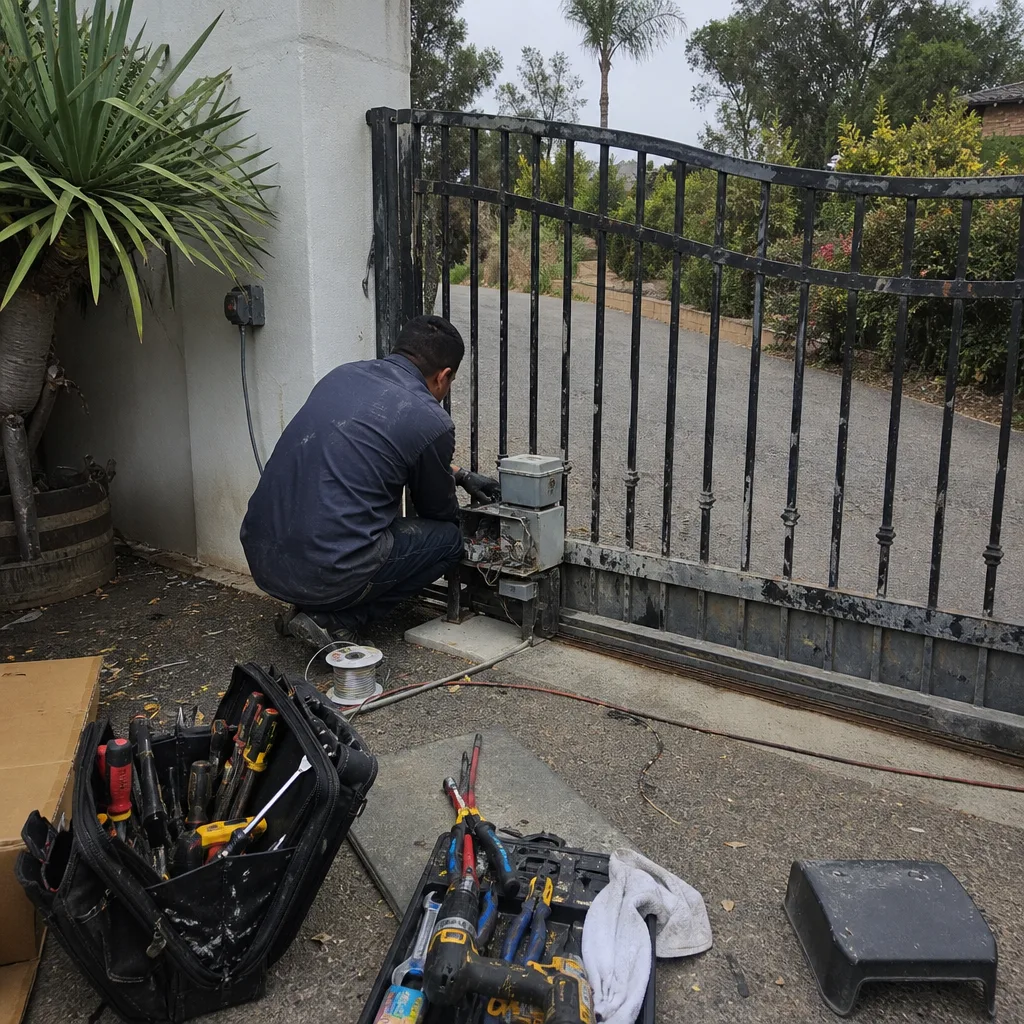 Before
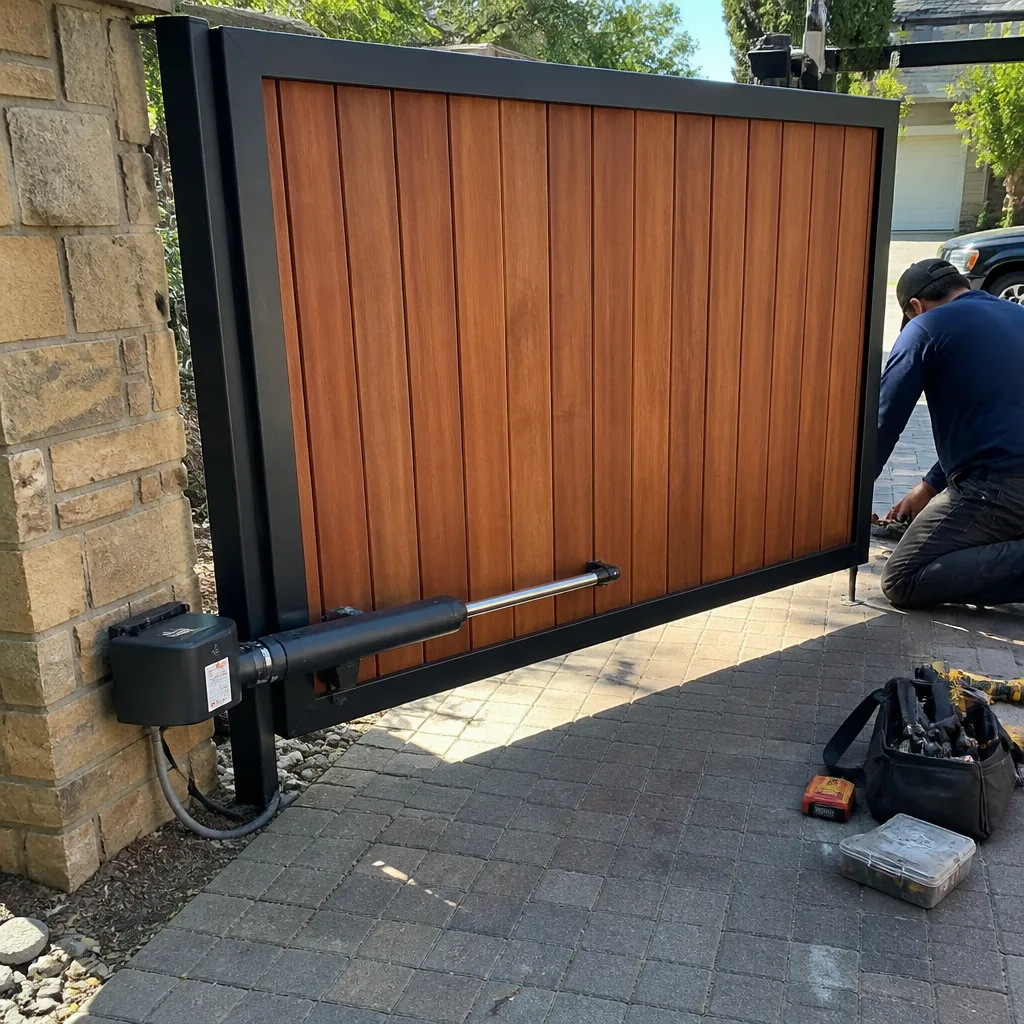 After
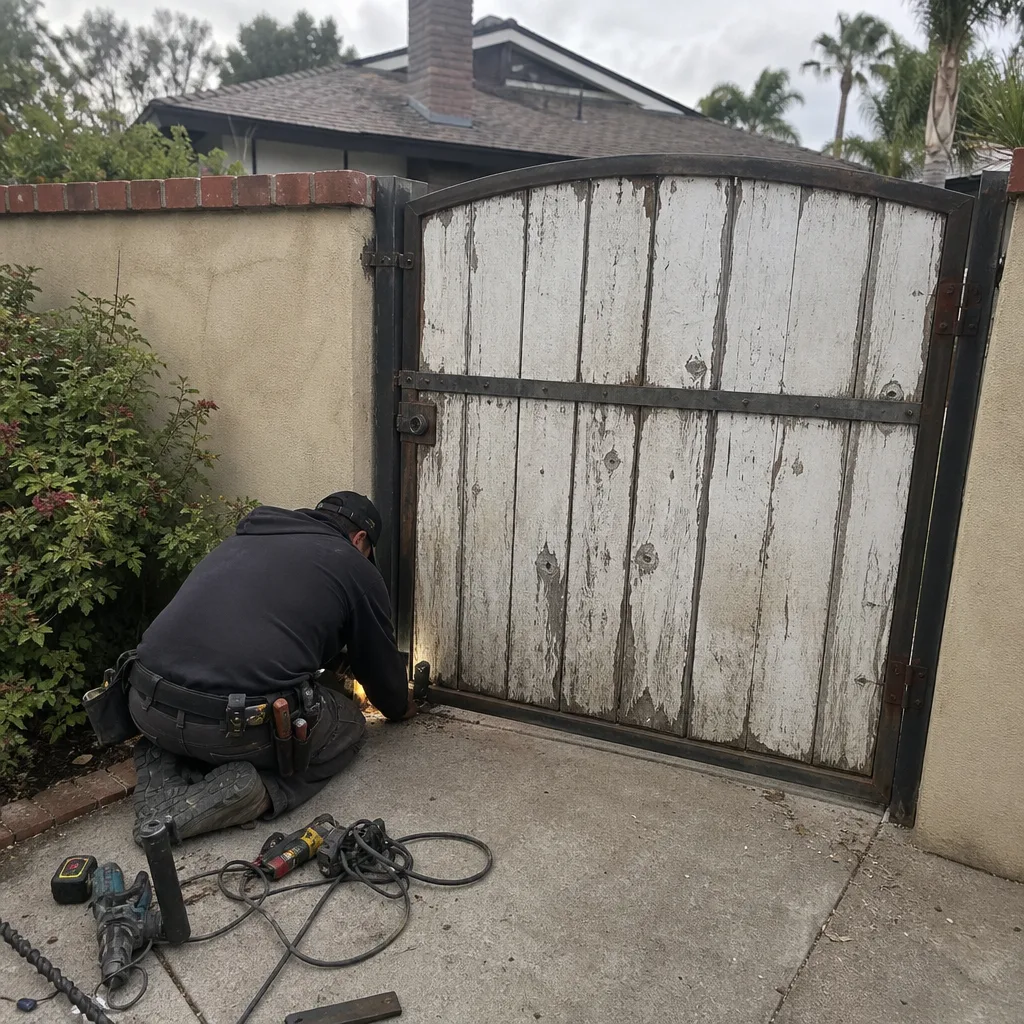 Before
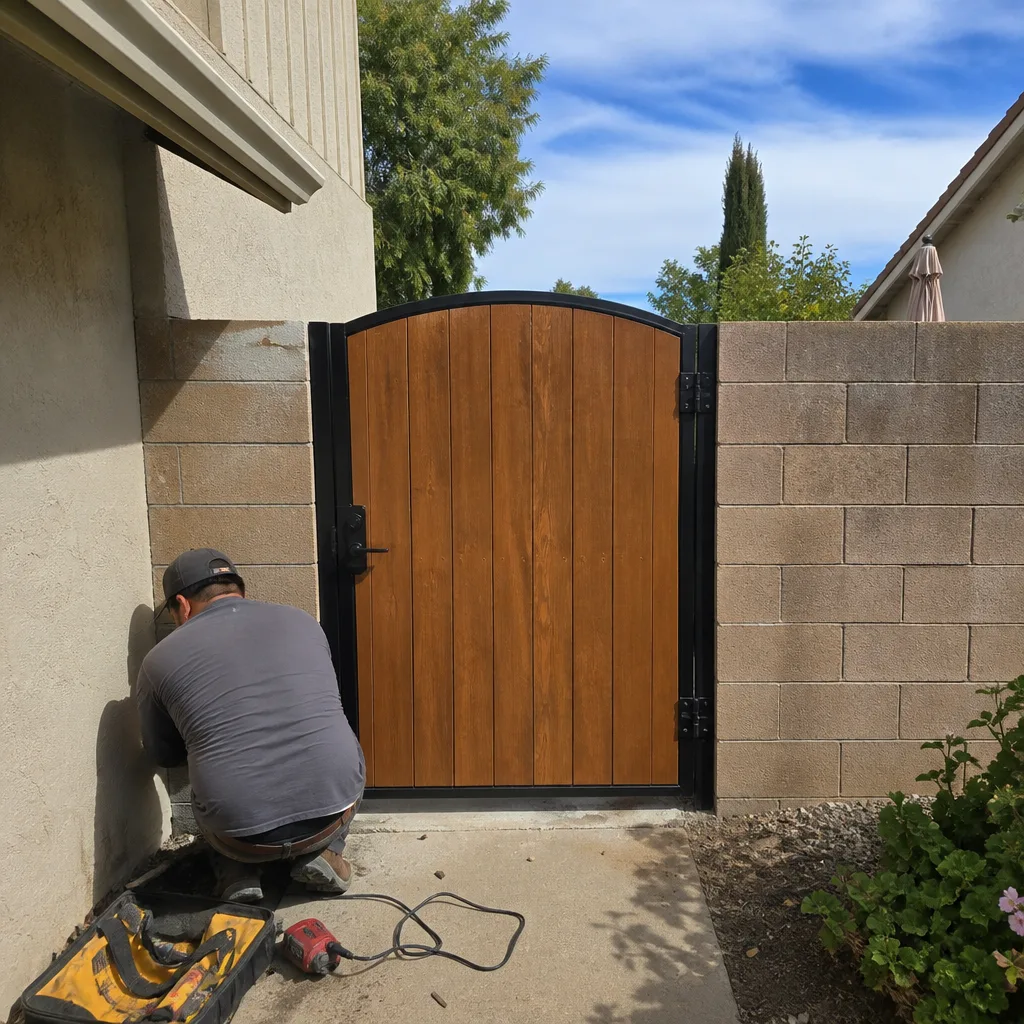 After
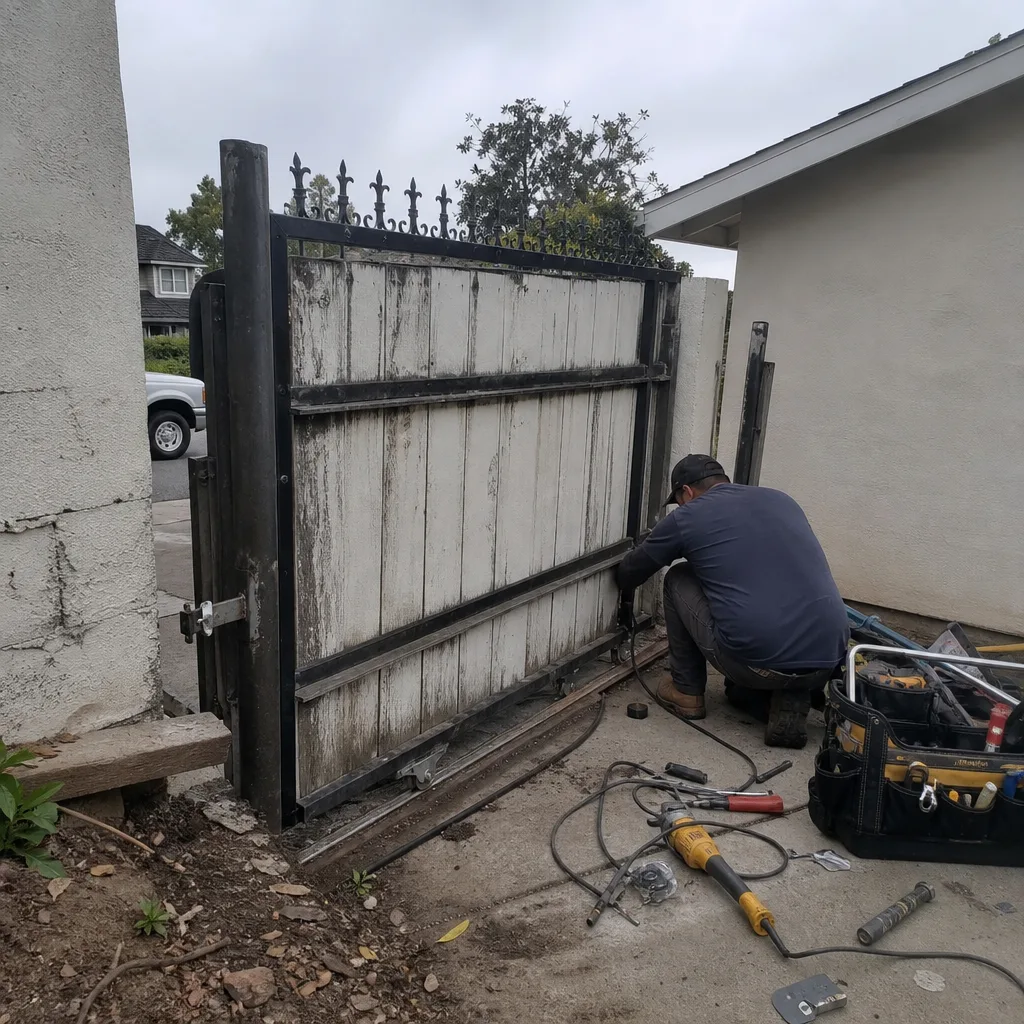 Before
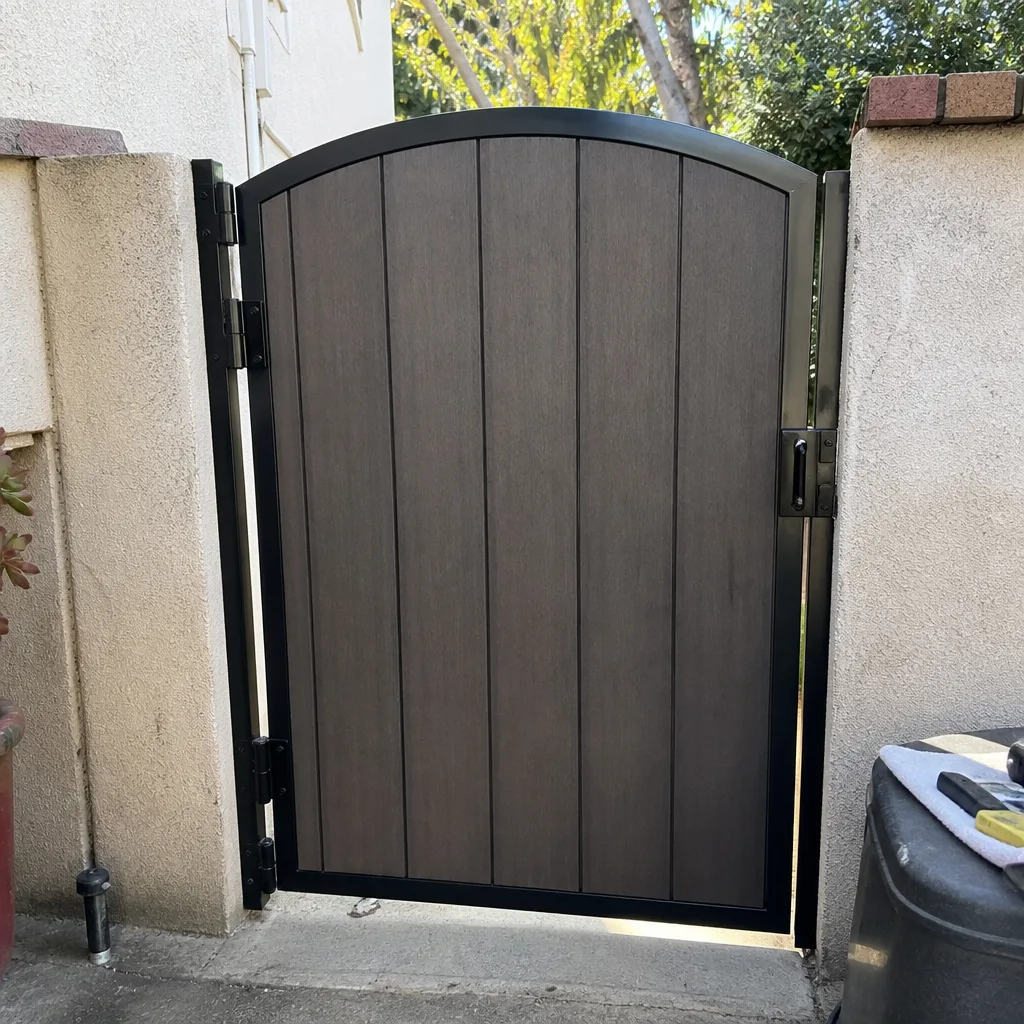 After