
Last updated November 2, 2026
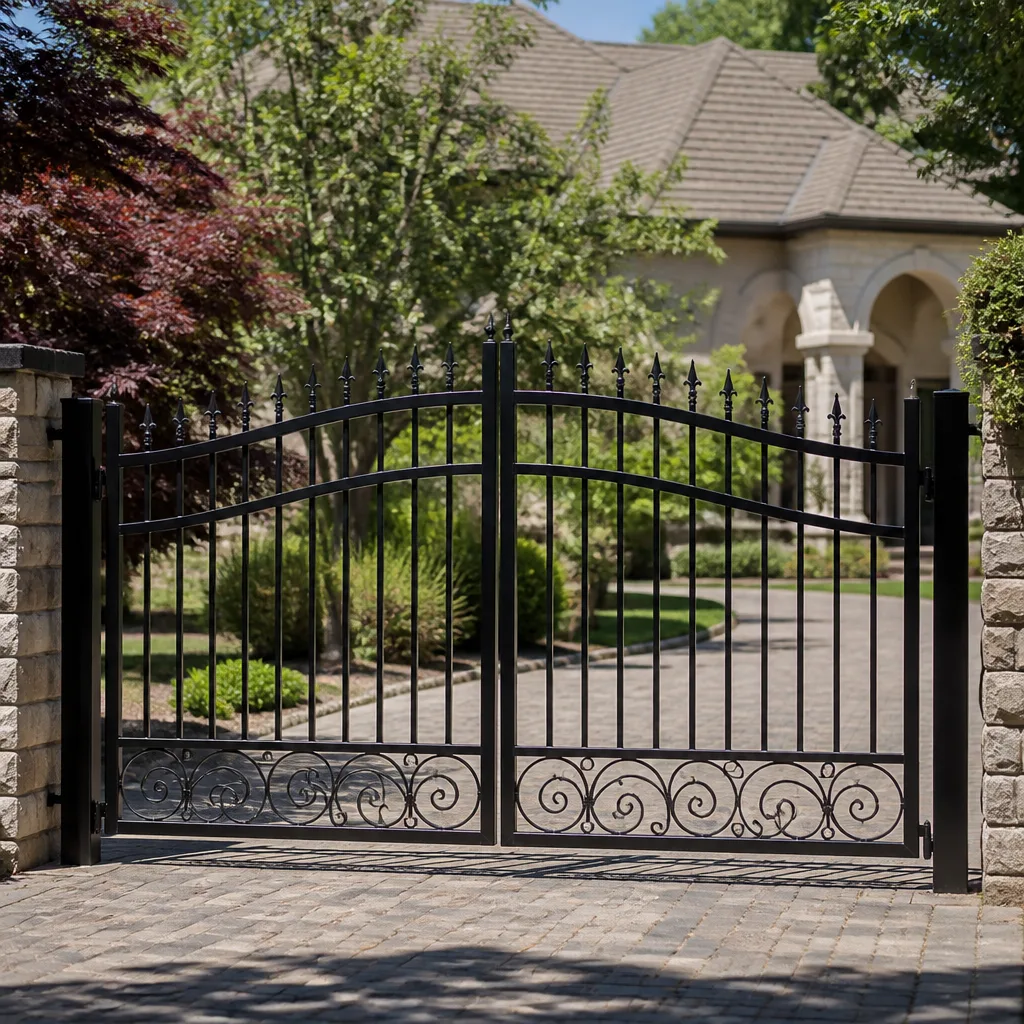 Wrought iron
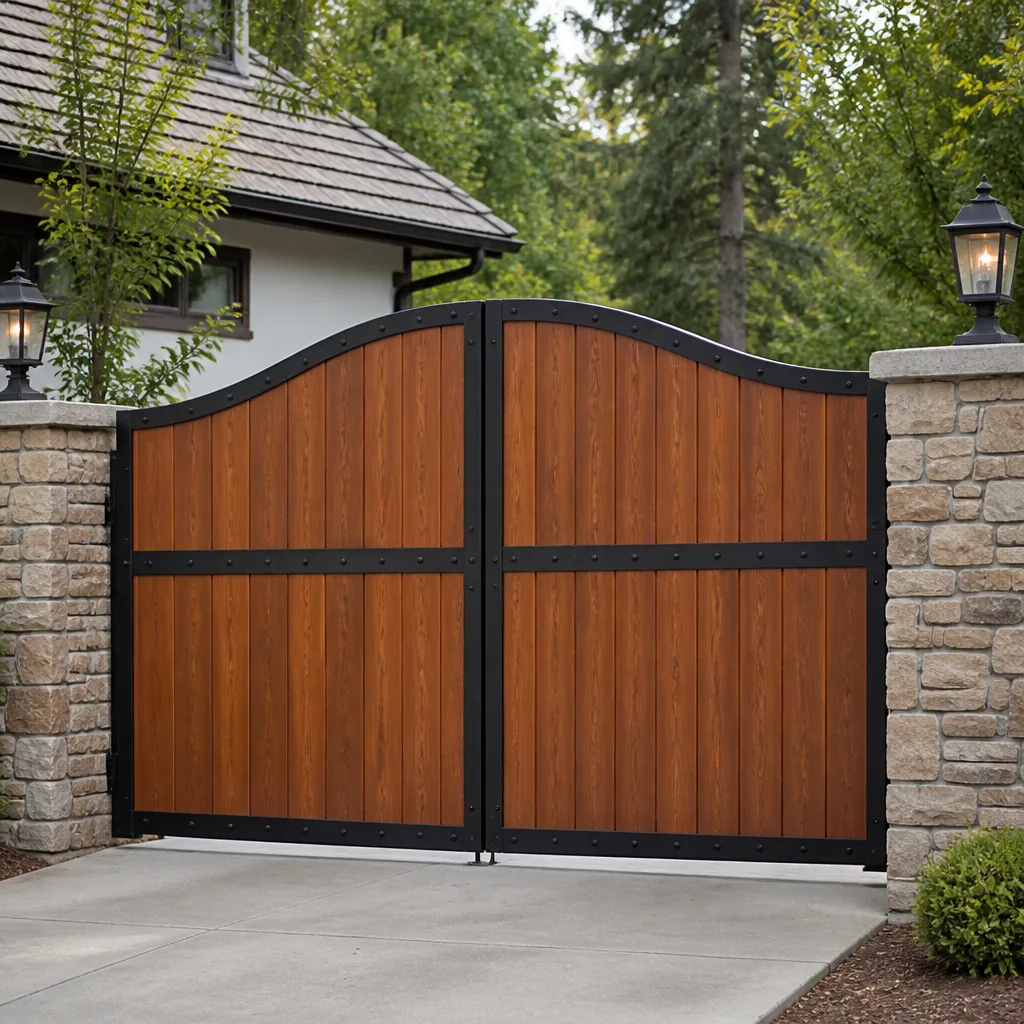 Wood & steel frame
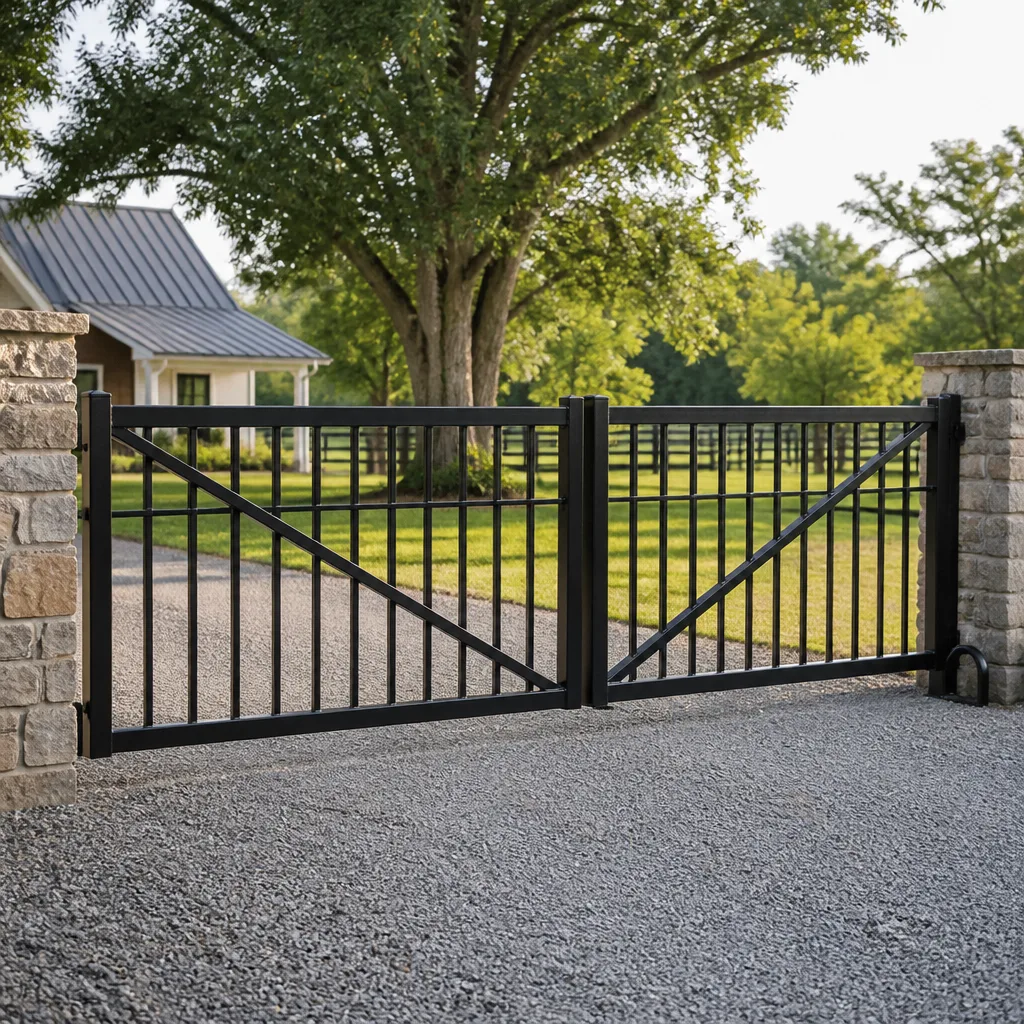 Farm & ranch
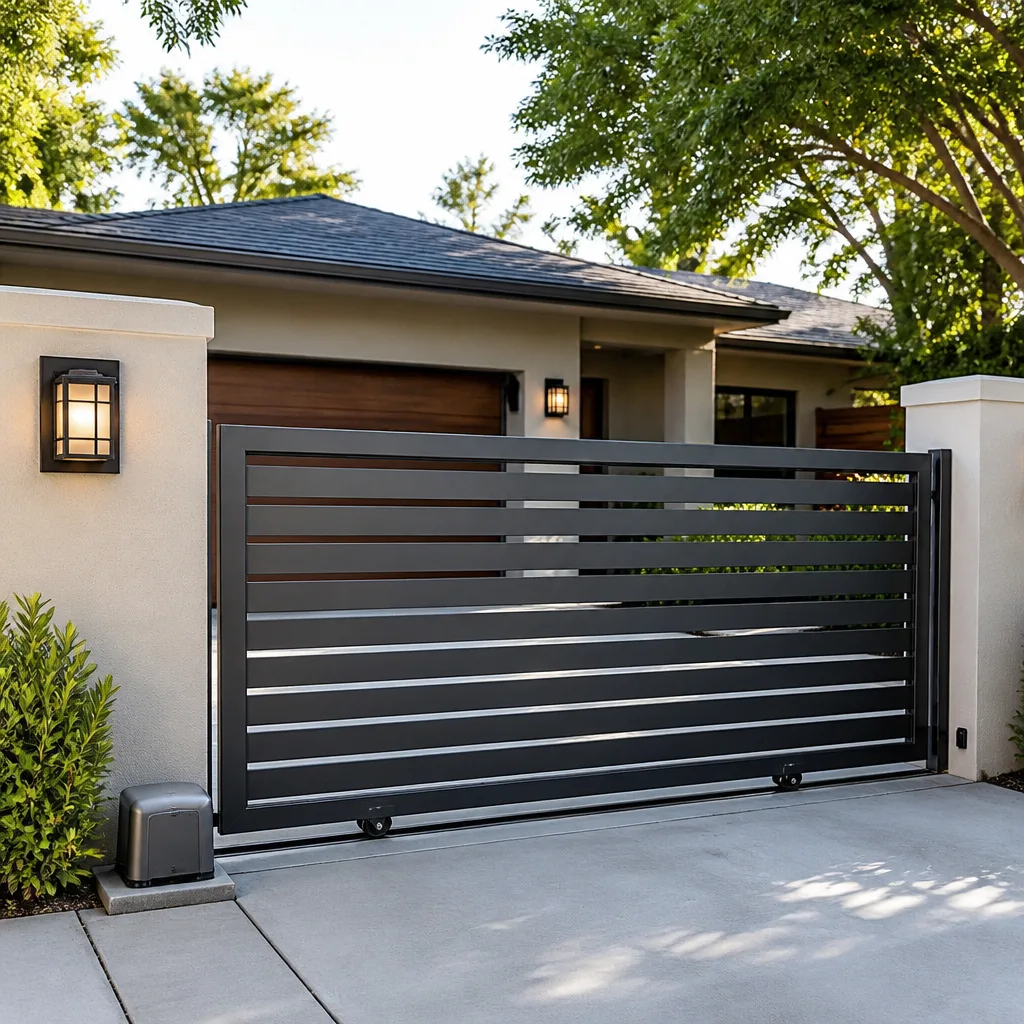 Sliding driveway gates
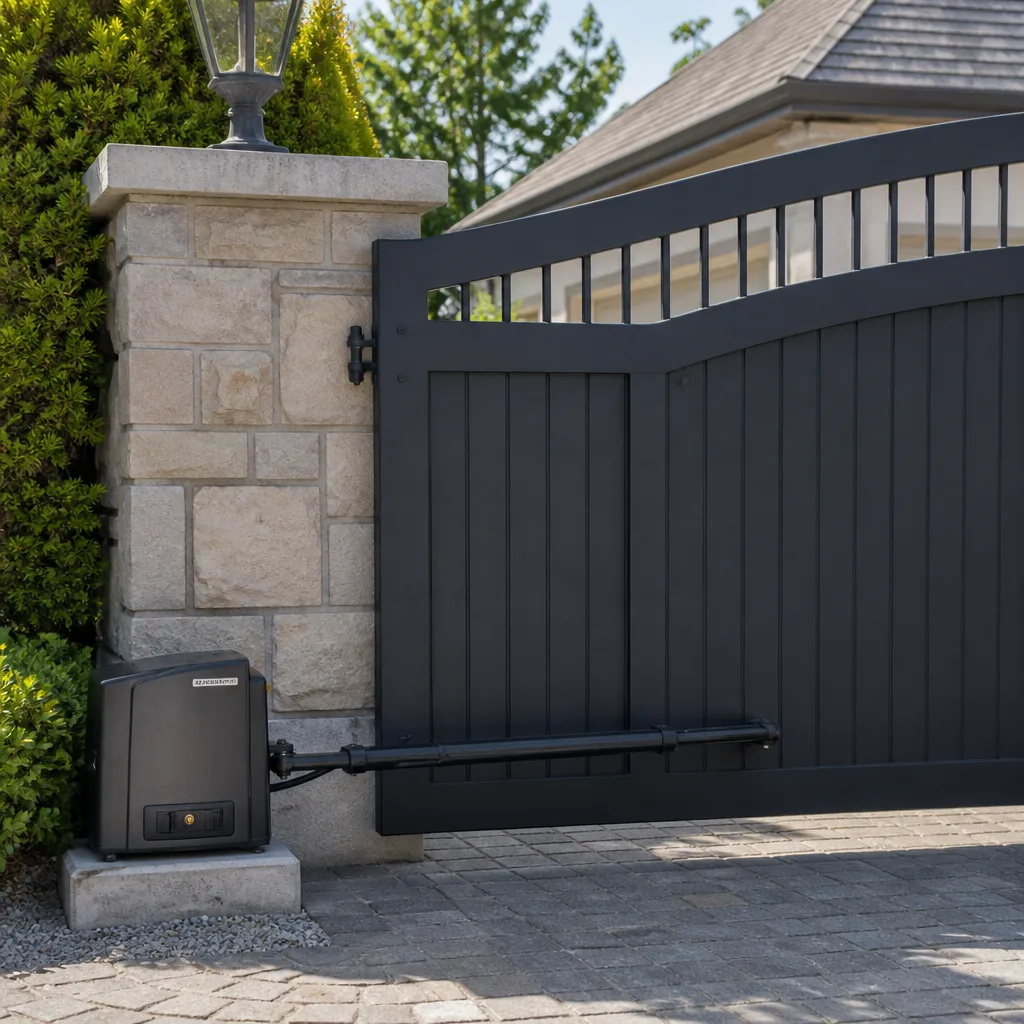 LiftMaster operators
Free on-site gate assessment - hinges, posts, and your LiftMaster or Nice gate operator checked before anything is quoted
The assessment is free and the quote is the invoice.
Get your free estimateDIY vs Professional Gate Repair: The Escondido Homeowner’s Decision Guide
Lubricating your gate’s hinge pins is a legitimate DIY task. Adjusting the open-limit switch on a LiftMaster CSW200 is also manageable with the manual in hand. But touching the entrapment safety edge wiring without understanding UL 325 compliance turns you into the liable party if that gate ever injures someone, regardless of how careful you were. Escondido homeowners face this exact decision every week: which gate problems are genuinely fixable on a Saturday afternoon, and which ones quietly carry legal, safety, and warranty consequences that make the “savings” disappear. This guide maps that line task by task, so you know precisely where DIY is smart and where it’s a liability.
Quick Answer
DIY gate repair in Escondido is safe and sensible for lubrication, battery replacement, keypad code resets, and visual hardware inspections. Professional Gate Repair services are legally and practically necessary for anything involving operator wiring, safety device calibration, or structural welding, where California contractor licensing laws and UL 325 liability standards apply.
Styles & brands we work with
- Wrought iron
- Wood & steel frame
- Farm & ranch
- Sliding driveway gates
- LiftMaster operators
Table of Contents
- Task Classification: The DIY-Safe Zone vs. The Professional-Only Zone
- California Contractor Licensing: What the Law Actually Says
- The Warranty Voidance Map: What LiftMaster, FAAC, and Viking Won’t Cover
- The Real Cost Comparison: Parts vs. Labor vs. Failed DIY
- The Diagnostic Exception: Why Smart Escondido Homeowners Use a Hybrid Approach
- Escondido-Specific Factors: Climate, Terrain, and Code
- Common Mistakes to Avoid
- When to Call a Professional
Task Classification: The DIY-Safe Zone vs. The Professional-Only Zone
The DIY-vs-professional question is not a single decision. It’s a series of decisions based on which specific task you’re facing. We’ve seen Escondido homeowners waste money hiring technicians for five-minute battery swaps, and we’ve also seen them spend three weekends and several hundred dollars trying to fix a control board issue that a trained gate specialist diagnosed in twenty minutes. The difference is knowing which zone you’re in.
DIY-Safe Tasks (Low Risk, Low Complexity)
- Hinge and track lubrication: Using a silicone-based or lithium grease on hinge pins, roller tracks, and chain drives. This is routine maintenance every six months, especially in Escondido’s dry, dusty climate where metal-on-metal wear accelerates without lubrication.
- Remote control battery replacement: Most gate remotes use standard coin cells or 9V batteries. Opening the case and swapping the battery doesn’t void any manufacturer warranty we’re aware of.
- Keypad code reset or addition: Most keypads have a documented reset sequence. LiftMaster, FAAC, and Mighty Mule all publish these in consumer manuals. No wiring is touched.
- Visual hardware inspection: Checking for loose bolts, visible rust, sagging gate leaves, or debris in the slide track. Photograph what you find. Documentation helps a technician diagnose faster if you do end up calling.
- Photocell cleaning: Wiping dust and spider webs off safety photo eyes with a dry cloth. In Escondido’s dry summer months, dust accumulation on photo eyes is one of the most common causes of a gate that “won’t close.”
Professional-Only Tasks (Legal, Safety, or Warranty Risk)
- Operator wiring and control board work: Opening the operator housing and touching terminal connections crosses into electrical work. If wired incorrectly, you can destroy the control board, create a shock hazard, or bypass safety inputs without realizing it.
- Safety device calibration: Entrapment protection devices like safety edges, photocells, and loop detectors must be calibrated to UL 325 standards. Get this wrong and the gate may not reverse when it should, creating serious bodily injury liability for you as the property owner.
- Structural weld repair: Cracked welds on swing gate frames or slide gate pickets require certified welding. A weak weld on a moving gate can fail catastrophically, and the gate can fall or break free.
- Spring tension adjustment on cantilever gates: Cantilever slide gates use high-tension springs. Adjusting or replacing these springs without the right training and tools can cause serious injury.
- Loop detector installation or replacement: Cutting into the driveway surface to install a vehicle detection loop requires saw cutting, wire embedding, and sealant. The detector must be calibrated to the specific gate operator. This is not a weekend project.
We work on the gate you have, whatever brand it is. When an Escondido homeowner calls us after a DIY attempt on the professional-only side, the repair usually takes longer and costs more than if we’d been called first.
California Contractor Licensing: What the Law Actually Says
Most Escondido homeowners don’t realize that California has a specific legal framework that governs who can work on an automatic gate. The moment a gate has an operator, it’s no longer just a fence. It’s an automated entry system, and the rules change.
Under California Business and Professions Code Section 7026, work on electrical systems and structural components requires a contractor’s license in the appropriate classification. For gate work, that typically means a C-61/D-28 classification (Doors, Gates, and Activating Devices) or a C-10 electrical contractor for certain wiring work.
The homeowner exemption is real, but it’s narrower than people assume. A homeowner can work on their own property without a license if they own and occupy the residence and do the work themselves. But here’s what most people miss:
- The exemption does not extend to rental properties or commercial properties. If you own a duplex in Escondido or a commercial lot, you cannot legally perform contractor-classified work on the gate yourself.
- The exemption does not protect you from liability. Doing the work legally and being protected if something goes wrong are two different things. If a gate you adjusted injures someone, your homeowners insurance may deny the claim if it was non-compliant work performed without a licensed contractor.
- Electrical work on the operator crosses the line. Replacing a battery is consumer maintenance. Rewiring a control board or running new conduit to the operator is electrical work that requires a licensed contractor.
In practice, the legal line tracks the safety line. If the work involves anything that could make the gate unsafe if done incorrectly, it’s contractor territory. This is why electric gate repair in Escondido is a distinct skill set requiring trained hands, not a simple fix you handle with a YouTube tutorial.
The Warranty Voidance Map: What LiftMaster, FAAC, and Viking Won’t Cover
Manufacturer warranties are not blanket policies. They’re conditional agreements, and the conditions matter. We service LiftMaster, FAAC, BFT, Linear, Viking, Ghost Controls, DoorKing, Elite, and Mighty Mule operators, and each brand handles owner-performed work differently in their warranty language.
LiftMaster Operator Warranties
LiftMaster’s standard residential operator warranty covers the operator and its components for one year, with the motor covered up to lifetime on certain models when the operator is professionally installed and registered. The warranty explicitly excludes damage resulting from “adjustments or repairs made by anyone other than a LiftMaster authorized dealer.” This means opening the operator cover and adjusting limit switches or force settings yourself can void the warranty on that component, even if your adjustment didn’t directly cause the failure.
FAAC Operator Warranties
FAAC’s warranty is structured similarly: parts are covered for two years, but the warranty is void if the unit is “installed, adjusted, or serviced contrary to FAAC’s published instructions.” FAAC is more specific than most brands about what constitutes unauthorized service: removing the control board to “test” it, using non-FAAC replacement parts, or bypassing any safety device. All of these void the warranty. FAAC does explicitly allow homeowner maintenance, which they define as cleaning, lubrication, and battery replacement.
Viking Operator Warranties
Viking’s warranty for residential operators includes a five-year coverage period on certain gate operator models, but it excludes “damage caused by unauthorized service” and requires that “all service be performed by a qualified gate technician.” For Viking specifically, the warranty also requires that safety devices be tested and calibrated at installation and after any service event. If you adjust a Viking safety loop or safety edge yourself and something fails later, Viking’s position is that the unauthorized adjustment caused the failure.
The practical takeaway for Escondido homeowners: if your operator is still under warranty, any work beyond the explicit maintenance items amounts to voiding coverage. The money you save on a DIY diagnostic could cost you a full operator replacement if the manufacturer declines the warranty claim.
The Real Cost Comparison: Parts vs. Labor vs. Failed DIY
The DIY-vs-professional calculation most people make is too simple. They compare the cost of a part at the hardware store against a technician’s labor rate and conclude DIY is cheaper. But the real cost of gate repair includes failure costs, rework costs, and liability exposure during the period the gate was non-compliant.
Example: A Gate That Won’t Fully Open
A homeowner in the Escondido neighborhood south of Felicita Park calls us because their swing gate stops at 75% open. The DIY approach: buy a new limit switch ($35), watch a generic video, try to install it. The switch doesn’t match their operator’s configuration, so they open the operator cover and start turning adjustment screws. Two evenings later, the gate now won’t close at all, and the operator makes a grinding noise.
The real cost structure looks like this:
- Parts cost (DIY attempt): $35 for the wrong limit switch, plus $25 for tools they didn’t have. Total: $60.
- Time cost (DIY attempt): Two evenings, roughly six hours. At a conservative $40/hour value for the homeowner’s time, that’s $240 of time.
- Damage cost (from incorrect adjustment): The grinding noise was the operator’s gearbox being forced past its travel limit. Replacing the gear assembly: $180 to $350 in parts.
- Professional repair cost (original problem): A misaligned limit switch adjustment, diagnosed and corrected in under an hour. Typical service call in Escondido: $130 to $200.
- Liability exposure (DIY period): For the 48 hours the gate was non-functional, the homeowner’s property was unsecured. For the period the gate was operating with incorrect limit settings, anyone using the gate was at higher risk. That exposure has no dollar amount, but it’s easily the most expensive line item.
The DIY route on a professional-only task didn’t save $150. It cost roughly $300 in direct costs and uncountable liability. When we service operators in Escondido, our price is quoted and agreed before any work starts. No surprises.
When DIY Genuinely Saves Money
The cost comparison flips for DIY-safe tasks. Replacing a remote battery costs $3 to $8 and takes five minutes. Calling a technician to do that would cost a $100+ service call for a job any homeowner can do. The key differentiator is not skill, it’s which side of the task classification line you’re on.
The Diagnostic Exception: Why Smart Escondido Homeowners Use a Hybrid Approach
There’s a middle path that doesn’t get discussed enough in the DIY-vs-professional debate, and it’s the smartest option for Escondido homeowners on a budget. This is what we call the diagnostic exception.
Here’s how it works. Instead of either attempting the repair yourself or paying a technician for the full job, you pay a specialist to diagnose the problem, then decide what to do with the information. A diagnostic visit from a dedicated gate technician involves testing the operator, control board, safety devices, and mechanical components to pinpoint the fault. The technician doesn’t repair anything. They tell you what’s wrong, what it’ll take to fix, and what parts are needed.
The Escondido homeowner then has three options:
- If the problem is DIY-safe: Do the repair yourself with the exact part number and a clear understanding of the scope.
- If the problem is professional-only but simple: Call the technician back to complete it. You’ve already paid for the diagnosis, so you’re not paying for guesswork.
- If the problem requires full replacement: Get a written quote and decide on your timeline.
The diagnostic exception works because it separates knowledge from labor. You’re not paying a technician’s hourly rate to figure out which part to order. You’re paying for the one thing that’s genuinely hard for a homeowner to access: the trained eye that recognizes a failing capacitor before it takes out the control board. A gate-only specialist arrives knowing the quirks of LiftMaster, FAAC, and Viking systems because that’s all we work on, not a side category of a larger home services business. For a full look at what we service, see Gate Repair in Escondido.
Escondido-Specific Factors: Climate, Terrain, and Code
Escondido’s environment creates gate problems that a generic internet guide won’t mention. We’ve serviced gates across Escondido for years, and the failure patterns track the local conditions.
Climate and Dust
Escondido sits in a transitional climate zone between coastal marine influence and inland desert heat. Summer temperatures regularly reach the high 90s, and the air is dry. For gate operators, dry heat accelerates plastic degradation on control board housings and causes lubricant to break down faster than in humid climates. Dust accumulation on photo eyes is a constant issue in the summer months, especially for gates along unpaved driveways in the San Pasqual Valley area. Regular photo eye cleaning isn’t just maintenance, it’s the difference between a gate that works and a gate that refuses to close.
Terrain and Gate Loading
Escondido’s hillside lots are common, especially in areas like the neighborhoods off Via Rancho Parkway and in the hills east of Centre City. Gates installed on slopes carry more load, especially swing gates operating against the grade. The motor works harder, the hinges wear faster, and the open-limit settings need more frequent adjustment. Slide gates on sloped driveways need more robust track anchoring, and failure to account for grade is the most common cause of premature operator failure we see.
California Building Code and Gate Safety
California has adopted the UL 325 standard for automatic gate safety, and enforcement in San Diego County is more active than much of the rest of the state. The code requires entrapment protection on both sides of the gate leaf, and periodic testing of the reversing mechanism. New installations or major operator replacements must comply with current UL 325 standards, which means two independent means of entrapment protection: usually a safety edge or photocell on the gate leaf, and a vehicle detection loop in the driveway. If your gate’s safety devices are non-compliant and you don’t know it, you’re operating outside code. For new work, see what full gate installation in Escondido involves.
Common Mistakes to Avoid
- Opening the operator cover without disconnecting power. Even on a 24V system, the operator has capacitors that hold a charge after the breaker is off. Some can deliver a shock. Always disconnect at the breaker and wait five minutes before opening the operator housing.
- Using WD-40 on gate hinges. WD-40 is a solvent, not a lubricant. It strips away existing grease and provides no long-term protection. Use a silicone-based lubricant or white lithium grease instead. In Escondido’s heat, WD-40 evaporates within days.
- Adjusting force settings to “fix” a stiff gate. If your gate requires more force to move, the problem is mechanical wear, not the operator’s settings. Increasing force to compensate for a stiff hinge or misaligned track just masks the problem and creates an entrapment hazard.
- Bypassing or disconnecting a safety device. Disconnecting a photo eye or safety edge because it “keeps stopping the gate” disables the one system designed to prevent serious injury. If the safety device is causing false stops, the device needs cleaning or replacement, not bypassing.
- Using generic parts that are “close enough.” A Limit switch that physically fits but doesn’t match your operator’s electrical specs will fail, sometimes immediately, sometimes after burning out the control board. Brand-specific parts from LiftMaster, FAAC, or Viking exist for a reason.
- Welding a gate while it’s still attached to the operator. Welding on a gate that’s still connected to the operator can send current through the operator’s electronics and destroy the control board. The gate must be disconnected and removed from the operator first.
- Ignoring a gate that’s making a new noise. Grinding, squealing, or thumping sounds never fix themselves. Call when the noise starts, not when the gate stops completely. The repair is almost always cheaper early.
When to Call a Professional
Call a gate specialist when the problem involves the operator wiring, the control board, safety device calibration, or structural welding. Call when the gate makes a new noise, when it moves differently than it did last week, or when any safety device isn’t working. Call when you own a commercial or rental property and the gate needs anything beyond routine cleaning. And call when you’ve already tried a DIY fix and the gate is worse than before, which is the most common situation we encounter. Gate Repair Escondido offers free estimates in Escondido, call (833) 630-4122 to schedule one. We work on the gate you have, not the gate we’d prefer to sell you.
See the difference
 Before
 After
 Before
 After
 Before
 After
Frequently Asked Questions
Yes, for homeowner-occupied residential properties, you can perform routine maintenance and basic repairs like lubrication, battery replacement, and keypad programming. You cannot legally perform electrical work on the operator or structural welding without a contractor’s license, and the homeowner exemption does not apply to rental or commercial properties.
Yes, in most cases. LiftMaster’s warranty excludes damage resulting from adjustments or repairs made by anyone other than an authorized dealer. If you open the operator cover and adjust limit switches or force settings, you risk voiding coverage on that component. Call (833) 630-4122 before touching a warranty-covered operator.
Most gate repairs in Escondido fall between $130 and $500 depending on the component, with service call fees typically starting around $100 and parts billed at cost plus standard markup. Structural welding or operator replacement runs higher. Every quote is provided before work begins, so there are no invoice surprises.
Dust accumulation on photo eyes, especially during dry summer months. The photo eye interprets the dust as an obstruction and prevents the gate from closing. Cleaning the photo eye with a dry cloth usually fixes it. If cleaning doesn’t work, the photo eye itself may need replacement.
Yes. We offer diagnostic visits where a technician tests the operator, control board, and safety devices and tells you exactly what’s wrong and what it will take to fix it. You get the information and decide how to proceed. Many Escondido homeowners use this to handle simple issues themselves and call us back for complex ones.
We service LiftMaster, FAAC, BFT, Linear, Viking, Ghost Controls, DoorKing, Elite, and Mighty Mule systems. We’re brand-agnostic, which means we repair what you already have rather than pushing a replacement for a brand we prefer. See our home page for the full scope of residential and commercial gate service.
The Bottom Line
DIY gate work in Escondido is a smart choice for the homeowner who understands where the boundary lines are. Lubricate your hinges, swap your batteries, clean your photo eyes, and inspect your hardware. Leave the operator wiring, safety calibration, and structural welding to a licensed professional. If you’re not sure which side a problem falls on, see our Gate Repair Emergency Preparedness Guide for Escondido Homes or call (833) 630-4122 for a diagnostic visit and let a dedicated gate technician tell you exactly what you’re dealing with. The consultation is free, and the information usually pays for itself whether you repair it yourself or have us handle the fix.
Written by the team at Gate Repair Escondido, serving Escondido since 2018.