
Last updated November 3, 2026
 Wrought iron
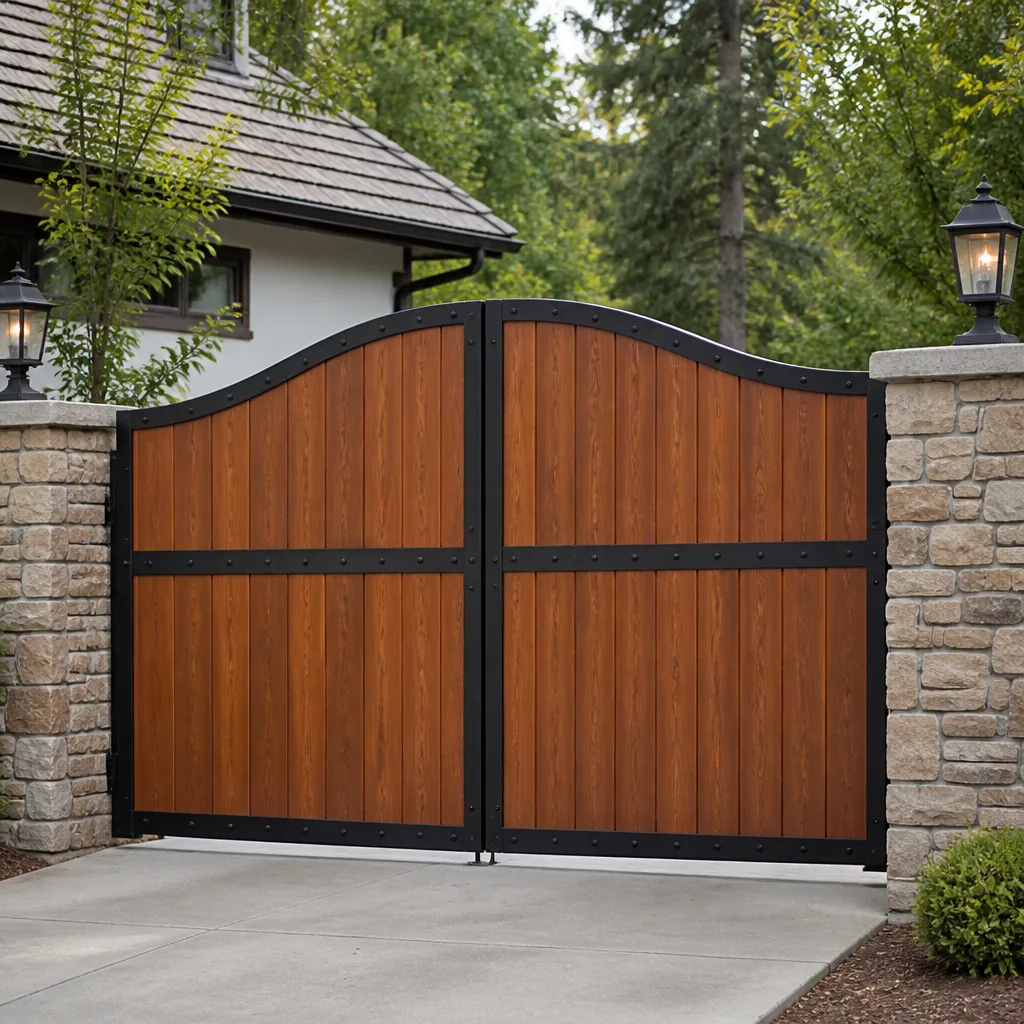 Wood & steel frame
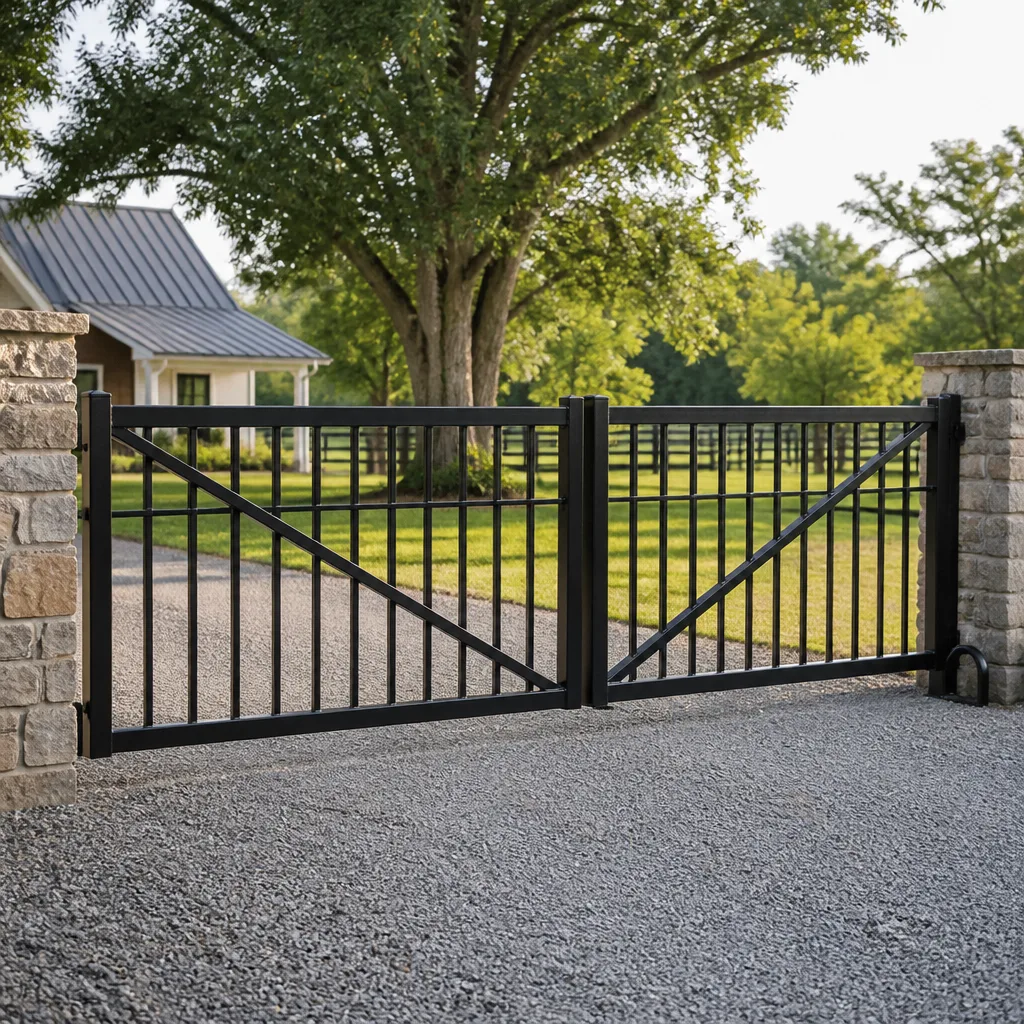 Farm & ranch
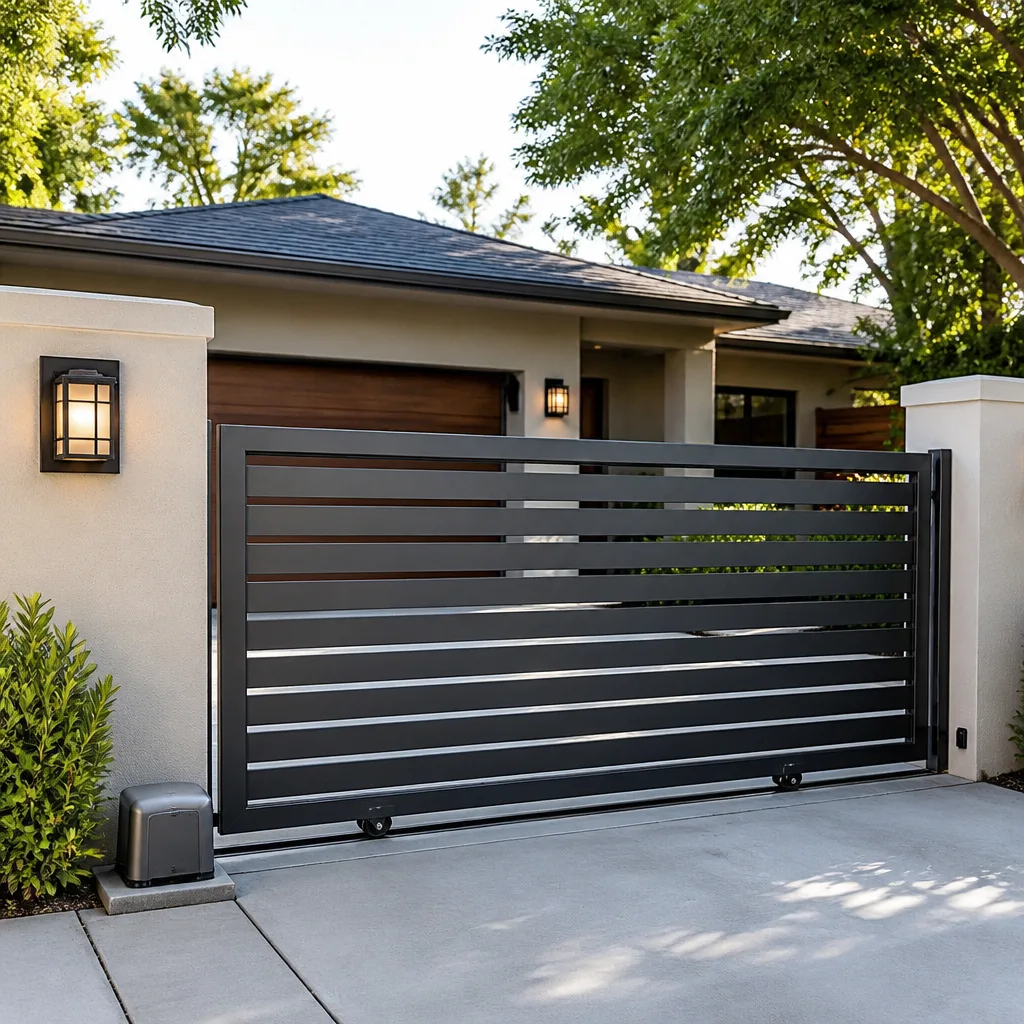 Sliding driveway gates
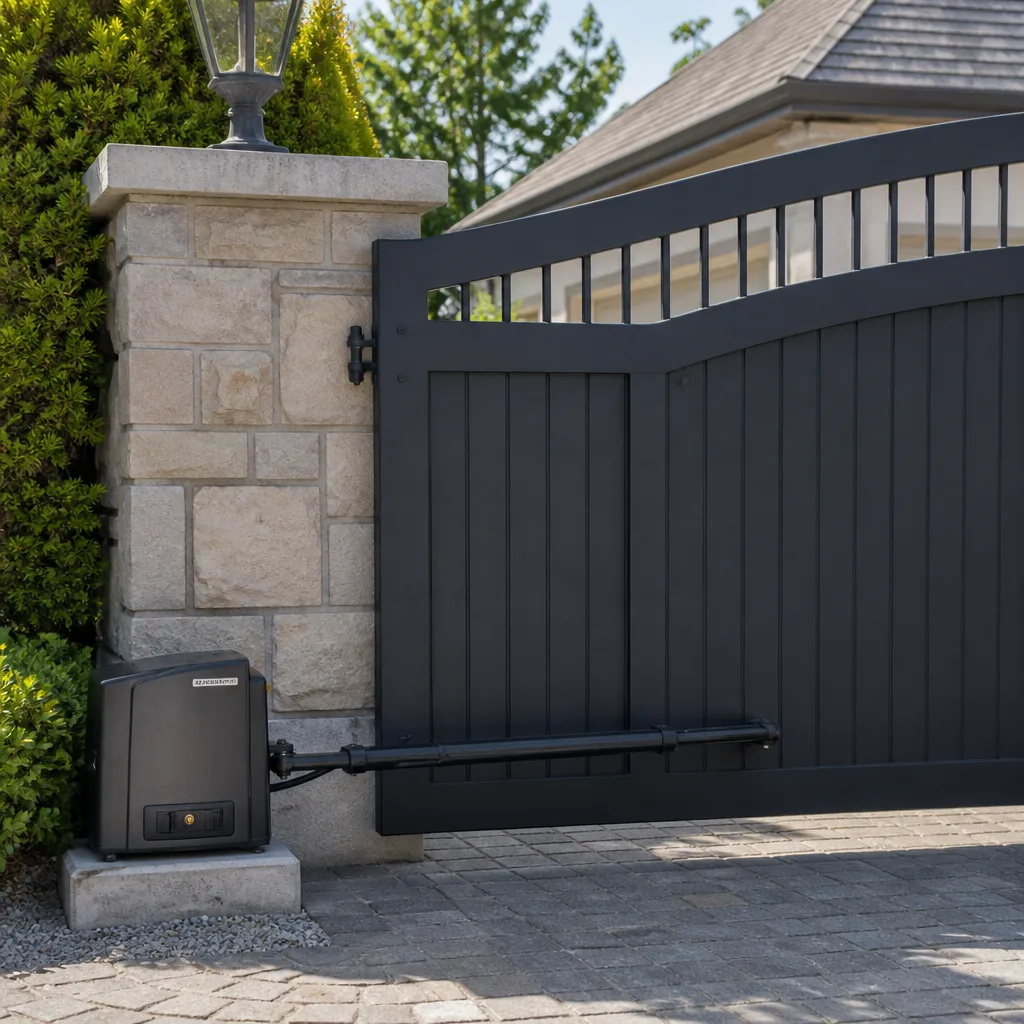 LiftMaster operators
Free on-site gate assessment - hinges, posts, and your LiftMaster or Nice gate operator checked before anything is quoted
The assessment is free and the quote is the invoice.
Get your free estimateThe Complete Gate Repair Guide for Escondido Homeowners
Most gate failures in Escondido aren’t random. They follow a predictable seasonal pattern tied to temperature swings between inland valleys and coastal influence, a cycle most homeowners never connect to their gate problems. In this guide, we’re mapping every major gate system component to the real-world conditions that break it here: hard water mineral buildup on hinges, UV-degraded wiring insulation, and caliche soil that shifts gate posts out of alignment. You’ll learn what actually fails, what it looks like when it does, which fixes you can handle, and which ones need a dedicated gate technician. This is The Complete Guide to Gate Repair in Escondido we wish every homeowner had before their gate quit at the worst possible moment.
Quick Answer
Gate repair in Escondido CA typically starts with a diagnosis of either the mechanical hardware (hinges, posts, wheels) or the electric operator system (motor, control board, safety sensors, loops). Because Escondido’s hard water, intense UV exposure, and expansive clay-heavy soil accelerate specific failure patterns, most homeowners see the same handful of issues repeat: seized hinges from mineral buildup, cracked wiring insulation from sun damage, and shifted posts from soil movement. A dedicated Gate Repair specialist can diagnose these quickly and repair most residential gates in a single visit.
Styles & brands we work with
- Wrought iron
- Wood & steel frame
- Farm & ranch
- Sliding driveway gates
- LiftMaster operators
Table of Contents
- How Escondido’s Climate and Soil Break Gates Differently
- Gate System Anatomy: Every Component and What It Does
- Electric Gate Operators: The Heart of Automated Entry
- DIY Gate Repairs vs. What Needs a Licensed Technician
- Brand-Specific Notes: What We See on LiftMaster, Viking, FAAC, and Linear Systems in Escondido
- Document Your Gate Before It Fails: The 10-Minute Prep That Saves Hours
- Common Mistakes to Avoid
- When to Call a Professional
- Frequently Asked Questions
How Escondido’s Climate and Soil Break Gates Differently
Escondido sits in a microclimate that punishes gate hardware in three specific ways. Understanding these patterns is the difference between fixing a symptom and fixing the cause. We’ve worked on hundreds of gates across San Diego County, and the failure profile in Escondido is genuinely distinct from what you’d see in Carlsbad, Del Mar, or even nearby San Marcos. Here’s what’s happening to your gate that a coastal repair guide will never mention.
First, the hard water. Escondido’s municipal water supply carries a heavy mineral load, and that applies to irrigation water as well as what comes out of your tap. When sprinklers hit gate hinges, posts, and latch hardware even occasionally, calcium and magnesium deposits build up over time. On swing gates, this means hinges that gradually seize, making the operator work harder every single cycle. That extra strain transfers directly to the motor, shortening its life. In neighborhoods like the Country Club area and Old Escondido, where mature landscaping means more irrigation near gates, we see seized hinges on a regular basis.
Second, the UV exposure. Escondido averages over 260 sunny days a year, and the inland heat means surface temperatures on a dark metal gate can exceed 140 degrees in summer. Wiring insulation on electric gates, especially the low-voltage wire running from the control board to the safety sensors and keypads, becomes brittle and cracked after several years of this. We regularly open operator housings in Escondido and find insulation that crumbles at a touch. This creates intermittent faults: a gate that works fine in the morning, then refuses to close at 3 p.m. when the sun is directly on the conduit.
Third, the soil. Escondido’s inland valleys have significant deposits of caliche, a calcium carbonate layer that’s hard as concrete when dry and expansive when wet. It doesn’t drain well. Gate posts set in this soil, particularly for heavier automatic gates, shift with the wet-dry cycle of our rainy seasons. A post that was plumb in October can be visibly leaning by March. That misalignment throws the gate geometry off, causing the gate to bind, the latch to stop engaging, and the safety sensors to read false obstructions.
None of these conditions exist in the same combination on the coast. That’s why a gate repair guide written for generic California homeowners will always miss the root cause here.
Gate System Anatomy: Every Component and What It Does
Before you can diagnose a gate problem, you need to know what the parts are called and what role each one plays. We’ve found that homeowners who understand the basic anatomy of their gate system make better decisions about repairs, communicate more clearly with technicians, and get better outcomes. Here’s the component-by-component breakdown.
The Gate Leaf (or Leaves)
This is the actual gate itself, the part that swings or slides. In Escondido, most residential swing gates are steel or wrought iron with wood or metal infill panels. Slide gates are less common in residential settings but appear regularly on commercial properties and some larger horse properties east of the city. The gate leaf’s weight, material, and condition dictate everything else about the system. A sagging gate leaf is almost always a hinge or post problem, not an operator problem, though it will eventually kill the operator too.
Hinges
On a swing gate, hinges carry the full weight of the gate through every open and close cycle. They’re the single most common wear point on any Escondido gate, and the hard water issue we discussed earlier hits them hardest. Seized or sagging hinges force the operator to work harder, which shortens its lifespan. A gate that slows down noticeably, makes a grinding sound, or sags visibly at the latch end is telling you the hinges need attention.
The Gate Operator
The operator is the motor assembly that opens and closes the gate. It can be mounted on a post, on the gate itself, or in-ground depending on the system design. Residential swing gate operators in Escondido are commonly LiftMaster, Viking, FAAC, or Linear units, and each has its own failure patterns and maintenance needs. A dead operator is one of the most common electric gate repair calls we handle.
The Control Board
The control board is the brain of the electric gate. It processes inputs from the remote, the keypad, the safety sensors, and the loop detectors, then tells the motor what to do. Control boards fail from age, power surges, water intrusion, and sometimes from ants (yes, ants love the warmth of a control board and short them out regularly in Escondido). A gate that responds to the remote sometimes but not always, or opens but won’t close, often has a board problem.
Safety Sensors and Loops
Safety sensors are the photo eyes mounted near the gate opening that detect obstructions and stop the gate from closing on a vehicle or person. Safety loops are wires embedded in the driveway that detect the presence of a vehicle by changes in electromagnetic field. These are safety-critical components and legally required on automated gates. If your gate closes on a vehicle or refuses to close at all, the sensors or loops are the first place a technician checks.
The Latch and Lock
The latch mechanism holds the gate closed and, on electric gates, often includes a solenoid lock that releases when the operator opens the gate. Alignment issues between the gate leaf and the latch post are extremely common in Escondido, driven by the soil shifting we described earlier. A latch that doesn’t fully engage is a security problem as much as a function problem.
Remote Controls and Keypads
Remotes and keypads are the user interface. They fail from battery issues, water damage, or simply because the coding between the remote and the board has drifted. Keypad failures are often UV-related; the plastic housing and membrane keypad degrade under constant Escondido sun.
Electric Gate Operators: The Heart of Automated Entry
Electric gate repair is the core of what a gate specialist does, and operators are the most misunderstood component in any gate system. Here’s what you need to know about how operators fail in Escondido and what that failure looks like.
The most common operator failure we see is the motor capacitor, which provides the starting jolt every time the gate begins to move. Capacitors age, and in Escondido’s summer heat, they age faster. A gate that hums but doesn’t move, or moves slowly at first and then picks up speed, has a failing capacitor. It’s a relatively inexpensive part and a straightforward repair for a technician who carries the right replacement.
The second common failure is the limit switch, which tells the operator where the fully open and fully closed positions are. If your gate opens all the way but then immediately reverses, or stops halfway and won’t go further, the limit switches are likely out of adjustment or failed. On some gate operators this is a simple adjustment; on others it means opening the gearbox.
The third is the gearbox itself. Operators use either worm gears or chain drives to translate motor rotation into gate movement. These wear over time, and a gate that’s dragging (from bad hinges or shifting posts) wears them much faster. A grinding noise from the operator, especially on an older LiftMaster or FAAC unit, usually means gear replacement or a new operator.
Here’s what to do when your operator malfunctions, before you call anyone:
- Check the power. Is the outlet the operator runs on live? Has a GFCI tripped? This is surprisingly common after rain.
- Check the manual release. Most operators have a manual release handle or key that disconnects the motor. If the gate opens freely in manual mode, the gate itself is fine and the problem is in the operator.
- Check the remote. Replace the battery and try again. If a keypad still works and the remote doesn’t, it’s a remote or receiver issue, not an operator issue.
- Listen. A hum with no movement is a capacitor. A grinding noise is a gearbox. A click with no hum is likely a board or connection problem.
- Call a specialist. If the operator is not responding to any input, the issue is likely on the control board or in the wiring. That’s the point where we recommend bringing in a trained technician.
One critical safety note on electric gate repair: gate operators operate on 120V or 240V power, and the capacitors store charge even after power is disconnected. Opening an operator housing without proper training carries real risk of injury. We always recommend cutting power at the breaker and letting a professional handle any repair that involves the operator internals.
DIY Gate Repairs vs. What Needs a Licensed Technician
We’re asked constantly what a homeowner can reasonably handle on their own gate. Here’s our honest answer, informed by years of repairing gates across Escondido, and explored in depth in our DIY vs Professional Gate Repair: The Escondido Homeowner’s Decision Guide.
DIY-Viable Repairs
- Manual release resets. If your gate loses power or the operator malfunctions, the manual release lets you operate the gate by hand. Reconnecting it after the power returns is straightforward on most LiftMaster, Viking, FAAC, and Linear operators. The release mechanism is usually clearly marked on the operator body.
- Remote battery replacement. If the remote works intermittently or only at close range, the battery is almost always the culprit. This takes 30 seconds and requires no tools on most remotes.
- Hinge lubrication. A spray lubricant applied to hinges can temporarily reduce strain on the operator, especially in Escondido where hard water accelerates hinge wear. This is a maintenance measure, not a repair; seized hinges still eventually need replacement.
- Minor latch alignment. If the latch is off by a fraction of an inch, adjusting the strike plate slightly can restore function. This only works when the misalignment is minor; if the gate itself is sagging, adjusting the latch is treating a symptom.
- Sensor cleaning. Photo eyes accumulate dust and mineral deposits from irrigation overspray. Wiping them with a clean, dry cloth can often restore proper function.
Repairs That Need a Specialist
- Any wiring repair. Electric gates run 120V/240V at the operator and low-voltage wiring to sensors, keypads, and loops. Working on either without training is dangerous, and a mis-wired sensor can create a safety hazard that allows the gate to close on a vehicle or person.
- Control board replacement or repair. The board is the most expensive and least forgiving component in the system. Improper installation destroys boards instantly. A specialist will diagnose the reason the board failed, not just swap it.
- Safety loop repair or replacement. Loop detectors are embedded in the driveway concrete or asphalt. Repairing them means cutting into the driveway and reinstalling the wire at the correct depth and spacing. Getting this wrong either makes the loop ineffective or causes it to trigger falsely on every passing vehicle.
- Gearbox or motor replacement. This involves opening the operator housing, which contains stored energy in the capacitors. Beyond the safety concern, the internal alignment of gears requires specific knowledge of the operator model.
- Post resetting or replacement. A gate post that’s shifted due to Escondido’s soil movement needs to be dug out, re-set in concrete, and allowed to cure before the gate is re-hung. This is a multi-day job in most cases and getting the post plumb and square is exacting work.
The practical rule we use: if the problem is on the surface of the system, a homeowner can handle it. If the problem requires opening a housing, cutting wire, or digging, call a dedicated gate technician. If you’d like a full breakdown of residential gate repair services, see our Gate Repair in Escondido page.
Brand-Specific Notes: What We See on LiftMaster, Viking, FAAC, and Linear Systems in Escondido
One advantage of being a gate-only specialist is that we see the same brands across dozens of Escondido installations and develop a clear picture of what fails on each. Here’s what we encounter most.
LiftMaster
LiftMaster is common in both residential and commercial Escondido installations. The LA400 and LA500 swing gate operators are widely used in residential settings, and the slide gate units appear on commercial properties throughout the Miramar corridor and local industrial parks. On LiftMaster swing operators, the most frequent issue we see is the limit switch assembly failing after several years of service, especially on gates that are used heavily. The control boards are robust but vulnerable to power surges; we recommend a surge protector on the circuit feeding any LiftMaster operator in Escondido as insurance.
Viking
Viking operators, especially the F-1 and G-5 series, are built for heavy-duty use and appear on many larger residential properties and small commercial gates throughout Escondido. They’re industrial-grade, but they’re also unforgiving when maintenance lapses. Viking gearboxes are tough, but they will fail if the gate is binding. We see more Viking gates with burned-out capacitors than any other brand we service in Escondido, directly correlated with gates that were running on seized hinges for months or years before we arrived. The good news is that Viking parts are widely available and the operators are rebuildable rather than disposable.
FAAC
FAAC is a premium Italian operator brand known for hydraulic and electromechanical swing operators. They’re common in Escondido’s newer subdivisions and custom home builds. FAAC operators are quiet and smooth when working correctly, but their hydraulic models require fluid level checks and seal maintenance that owners often skip. A FAAC hydraulic operator leaking oil onto the gate post is a clear sign that service is overdue. Their control boards are also more sensitive to voltage fluctuations than other brands, though the newer models have improved protection.
Linear
Linear, now owned by Nortek, is widely installed by builders in Escondido’s tract home developments, especially in the communities built during the 2000s and 2010s. Their residential operators are competitive and sometimes original equipment on package gate systems. The current-generation Linear operator boards are reliable, but the older models suffer from solder joint failures after years of temperature cycling. A Linear gate that works in the morning and fails in the afternoon heat often has a board with failing solder joints, a problem we can repair at the component level or resolve by replacing the board.
The Brand-Agnostic Approach
We work on the gate you have, not the gate a specific brand relationship wants to sell you. That means a technician arrives knowing the quirks of LiftMaster, FAAC, Linear, Viking, and everything else in your system, without guessing. If you’ve been told your operator is “too old to fix” by another company, get a second opinion from a gate specialist before committing to a replacement. More on electric operator service is on our Electric Gate Repair in Escondido page.
Document Your Gate Before It Fails: The 10-Minute Prep That Saves Hours
The worst time to figure out your gate system’s specifications is at 7 p.m. on a Friday when it’s stuck half-open and the sun is going down. We’ve watched homeowners scramble through file cabinets and breaker panels trying to identify what they have. Here’s a prep routine that takes 10 minutes and will save you hours the next time something fails; see our more guides & resources for additional homeowner tips.
- Photograph the operator’s data plate. Most operators have a metal or plastic plate with the brand, model number, and serial number. Take a clear photo with your phone and store it in a folder called “Gate.” This single photo is the most useful piece of information you can provide to any technician.
- Photograph the control board. Open the operator housing (most have a simple latch or screws) and photograph the board itself. Do this during daylight with the power on, and do not touch anything inside. The board will have a model number printed on it that’s different from the operator model number.
- Record the gate dimensions. Measure the width and height of the gate leaf. If it’s a swing gate, note whether it’s single or double leaf. If it’s a slide gate, measure the overall length. This matters for replacement parts and for diagnosing whether the operator is correctly sized for the gate.
- Document the safety components. Count the photo eyes. Note whether there are loop detectors visible in the driveway (look for rectangular seams in the concrete or saw cuts). Write down the keypad brand if visible.
- Locate the power source. Find the outlet or junction box that powers the operator, and note which breaker in your panel controls it. This is the first thing a technician needs to know for any repair, and knowing it saves service time.
- Write down the age if you know it. If you moved into the home and the gate was already there, the operator’s date code on the data plate can give us an approximation. If you installed the gate yourself, the date of installation and the installing company’s name are both useful to know.
Store all of this in one place: a phone note, a folder in your photos app, or a printed sheet in the garage. When you call for service, having this information ready means a technician can arrive with the right parts on the first trip, and in Escondido, that’s the difference between a same-day repair and a multi-day wait for parts.
What to Do When the Gate Fails
When your gate stops working, follow this sequence before you call:
- Check the breaker. If the breaker has tripped, reset it once. If it trips again immediately, do not reset it again. There’s a short somewhere, and repeated reset attempts can damage the control board.
- Operate the gate manually. Use the manual release to get the gate open or closed so your property is secure and your vehicles aren’t trapped. If you’re not sure how to use the manual release, any gate technician can walk you through it on the phone in under a minute.
- Look for anything obvious. Is a branch or landscaping material blocking the gate path? Did a vehicle strike the gate? Is there visible damage to the hinges or post? What you see helps the technician understand what happened.
- Call a gate specialist. Explain what you know: the brand, what happened, and what you’ve already checked. The more specific you can be, the better the technician can prepare.
If the gate has been struck by a vehicle, is leaning dramatically, or is sparking, treat the area as unsafe. Keep children and pets away, and call for professional help immediately.
Common Mistakes to Avoid
- Ignoring a slow gate. A gate that’s slowing down is telling you something: hinges are wearing, the motor is straining, or the gearbox is failing. Waiting until it stops completely turns a $200 hinge replacement into a $1,500 operator replacement in Escondido’s climate, where the wear compounds quickly.
- Using WD-40 on hinges. This is a solvent, not a lubricant. It penetrates, loosens, and then evaporates, leaving the hinge drier than before. Use a proper lithium grease or silicone lubricant designed for metal-on-metal contact.
- Power-cycling a tripping breaker repeatedly. As mentioned above, repeated resets can damage the control board. One reset is reasonable. If it trips again, there’s a real fault and it needs a technician’s attention.
- Replacing the remote before checking the receiver. If you buy a new remote and the gate still doesn’t respond, the problem wasn’t the remote. Most operator receivers can be tested independently to confirm whether they’re receiving signal.
- Waiting to address a shifted post. In Escondido, a post that’s shifted slightly will only shift more with the next rain cycle. The longer you wait, the more involved the repair becomes. A post that’s caught early can sometimes be realigned before concrete replacement is necessary.
- Buying parts online without confirming compatibility. Operator parts are model-specific, and online marketplaces are full of “universal” parts that aren’t. We’ve seen homeowners spend money on replacement boards or remote receivers that were never compatible with their operator.
- Attempting wiring repairs without a diagram. Electric gate wiring is not intuitive. Colors vary between brands, and the safety circuitry functions in specific ways. If you don’t have the wiring diagram for your specific board, guessing at connections can destroy a $400 board in seconds.
When to Call a Professional
Some gate problems are obvious enough that a homeowner should not attempt them. Any issue involving electrical wiring, the control board, safety loops, or the operator internals falls into this category. The safety systems on an automated gate exist to prevent serious injury or death; a gate closing on a person or vehicle is not a cosmetic problem. If your gate is sparking, making a burning smell, operating irregularly after rain, closing without input, or failing to reverse on an obstruction, shut off the breaker and call a specialist immediately.
If your gate is beyond repair or you’re considering replacing it entirely, a gate specialist can advise on what makes sense for your property. Whether you need repair or a full new installation, Gate Repair Escondido offers free estimates in Escondido. Call (833) 630-4122 and we’ll assess your gate on site, quote the work before it starts, and get your entry operational again. For details on new systems, see our Gate Installation in Escondido page.
Frequently Asked Questions
Gate repair costs in Escondido vary widely depending on the component that failed and the system type, but expect a hinge replacement to be the most affordable repair, a control board replacement to be the most expensive single part, and an operator replacement to sit somewhere in the middle depending on the brand and model. The best way to get an exact number is to have a technician diagnose the gate on site. Estimates are free, and we quote every repair before any work begins.
We prioritize gate failures that leave a property unsecured or vehicles trapped, and we work to get a technician to urgent residential gate repairs in Escondido as quickly as possible. If your gate is stuck open and your property is exposed, tell us when you call. Call (833) 630-4122 and we’ll give you a straight answer on our current availability.
The decision comes down to age, condition, and cost of the needed repair. A gate with severe rust, a bent leaf, or posts that have shifted dramatically is often better off replaced than repaired, especially if the operator is also aging. A gate that’s structurally sound but has failed electrical components is usually worth repairing. A gate specialist can give you an honest assessment without pushing you toward replacement when repair makes sense.
We work on the gate you have. That includes LiftMaster, FAAC, BFT, Linear, Viking, Ghost Controls, DoorKing, Elite, and Mighty Mule, along with older brands and off-brand operators installed before you owned the property. We’re brand-agnostic, which means we recommend the repair that makes sense for your existing system, not the replacement that protects a brand relationship. The Gate Repair Escondido home page has more detail on our service approach.
Random operation is almost always an electrical or signal problem: a failing control board, a remote receiver picking up stray signals (common near certain radio installations), or a safety loop that’s triggering falsely. It can also happen after rain if water has gotten into the operator housing or a junction box. This is a safety issue; a gate that operates unpredictably should have power cut until a technician can diagnose it.
Yes, in most cases. A vehicle strike usually bends the gate leaf, damages hinges, and may shift the post, but the operator often survives if it wasn’t forced. The repair usually involves straightening or replacing the gate, replacing hinges, and realigning or resetting the post. We handle post-and-gate collision repairs regularly in Escondido, and we can assess whether the operator is still safe to use after the collision.
The Bottom Line
Gate failures in Escondido follow a pattern: hard water seizes hinges, UV exposure degrades wiring, and soil movement shifts posts, all of which compound the strain on the operator until something fails. Knowing your system’s anatomy, documenting your operator’s specifications before a breakdown, and addressing small problems early will prevent most emergency situations. For anything that involves electrical components, safety sensors, or significant structural movement, bring in a dedicated gate technician. Gate Repair Escondido provides free estimates in Escondido and repairs, replaces, and installs gates across the region. Call (833) 630-4122 for a free estimate and we’ll get your entry working the way it should.
Written by the team at Gate Repair Escondido, serving Escondido since 2018.
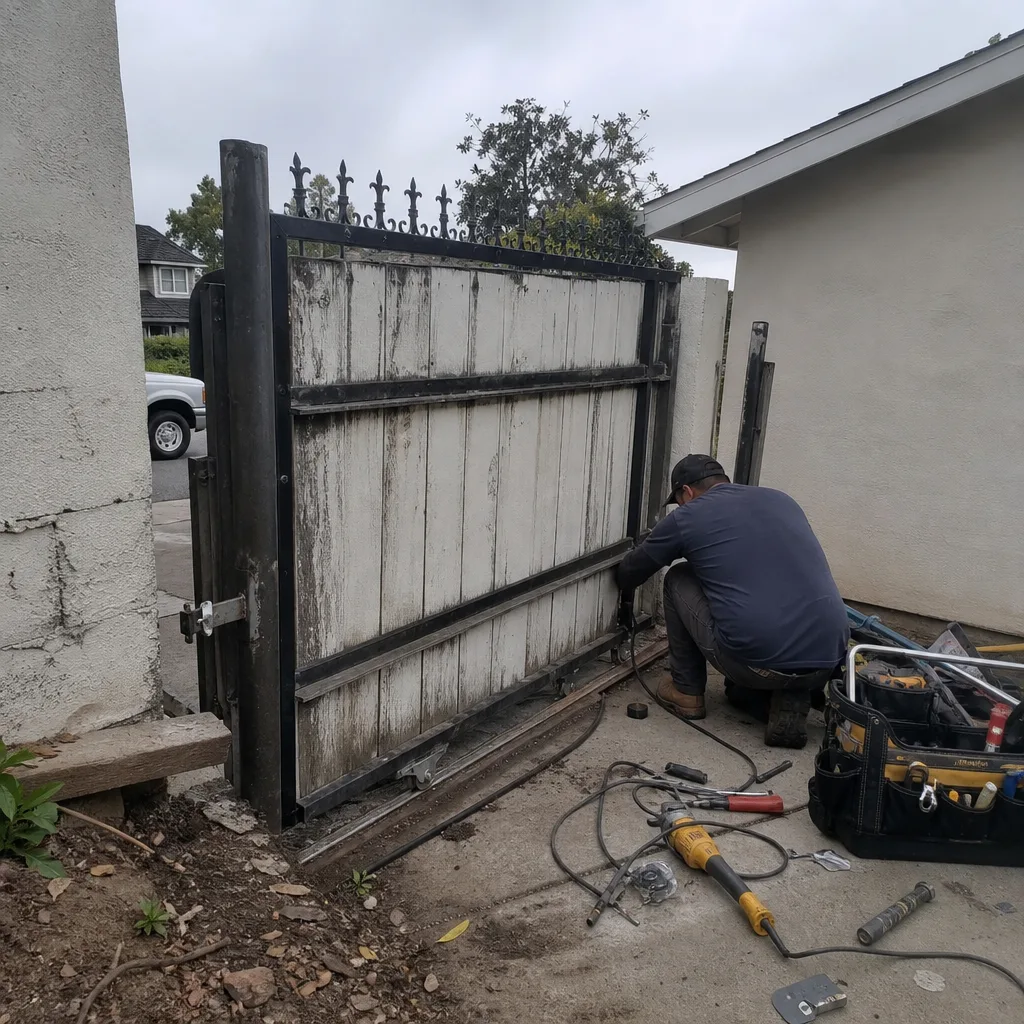
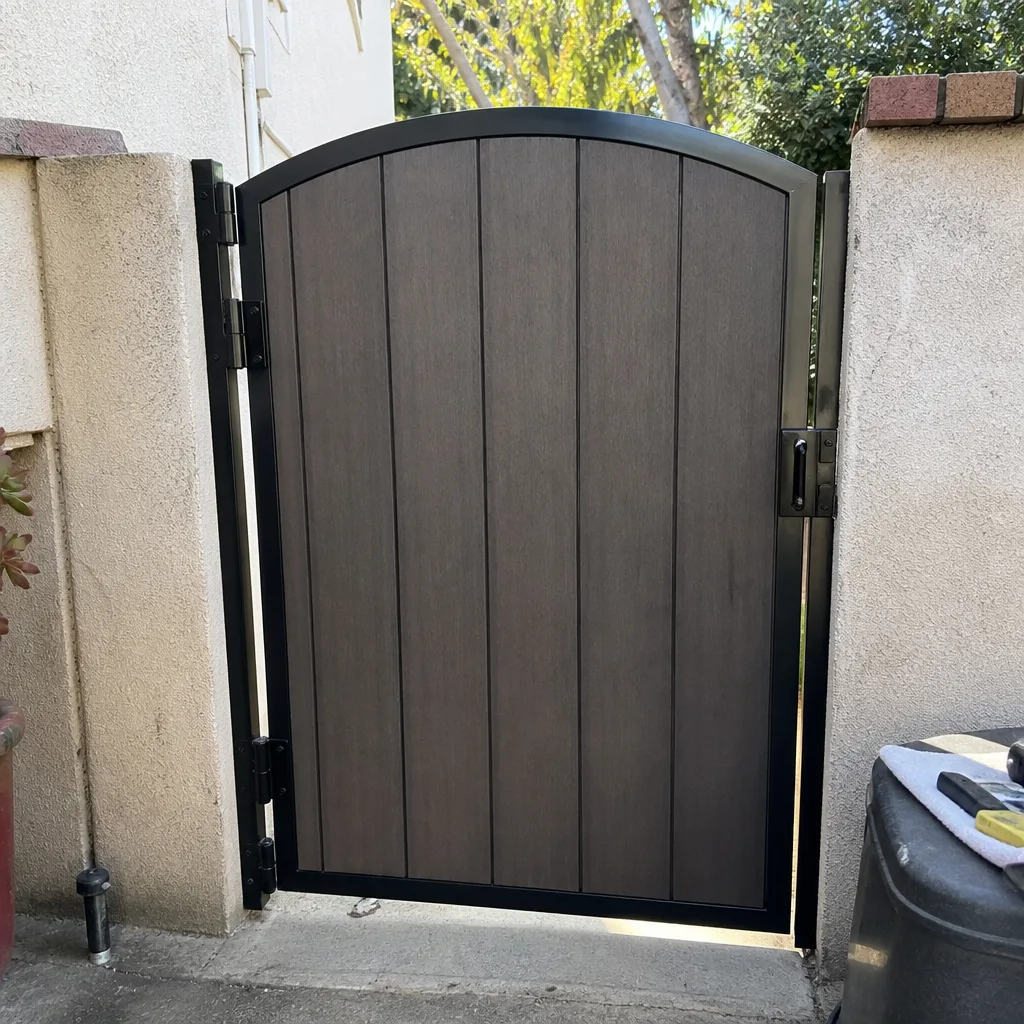
See the difference
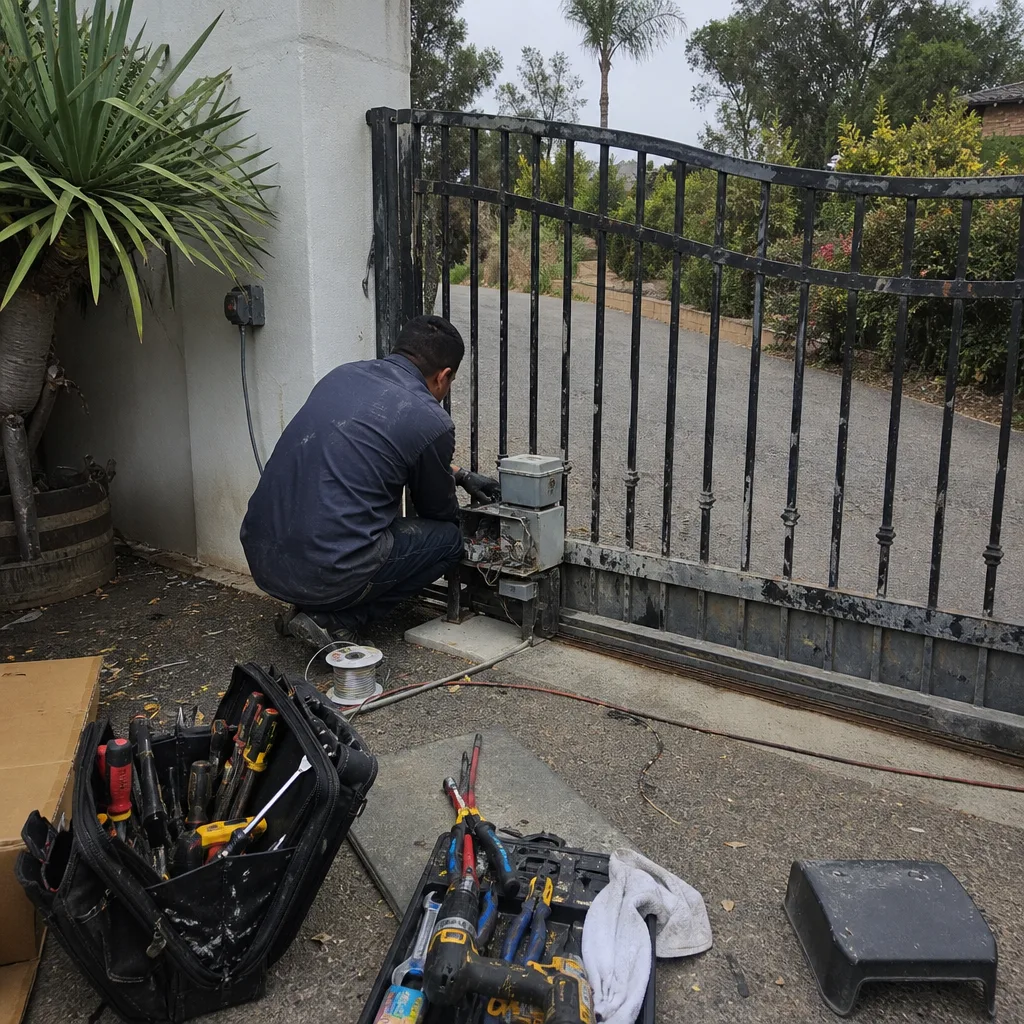 Before
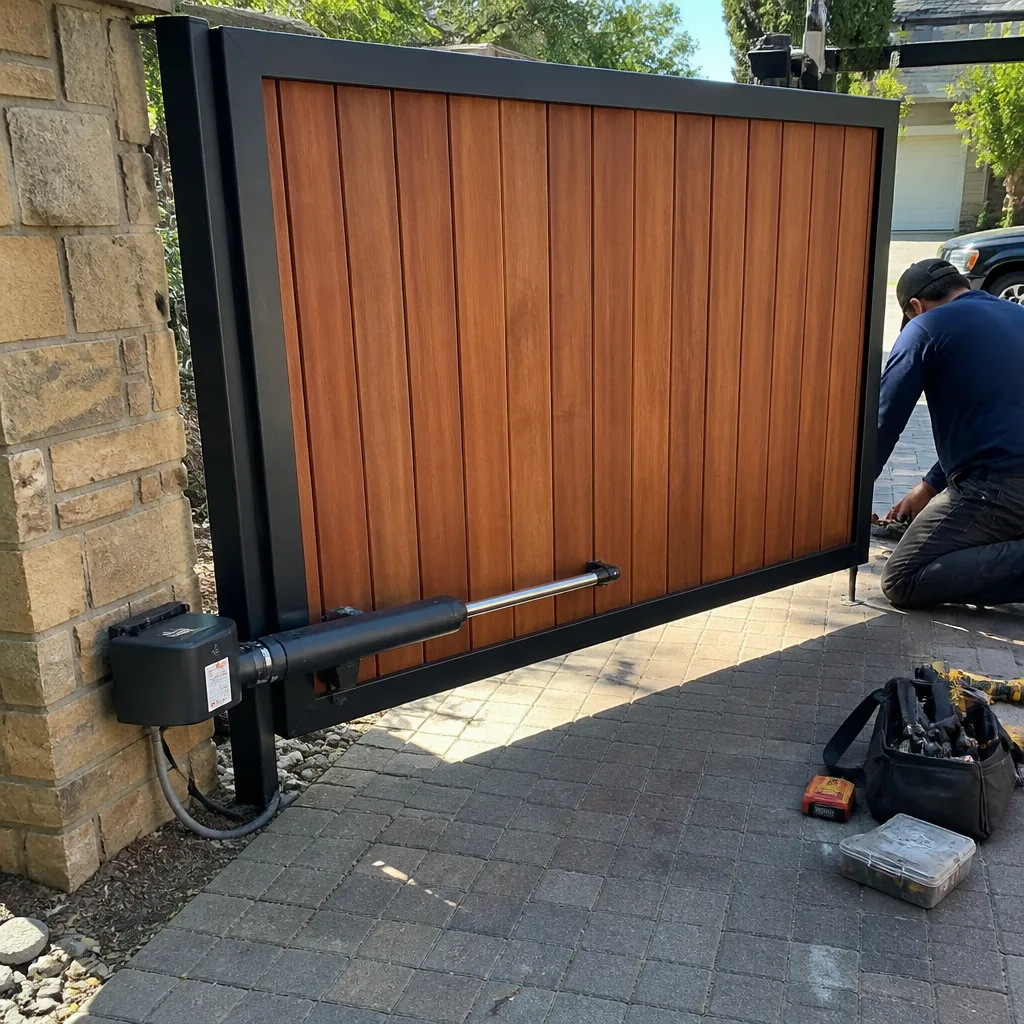 After
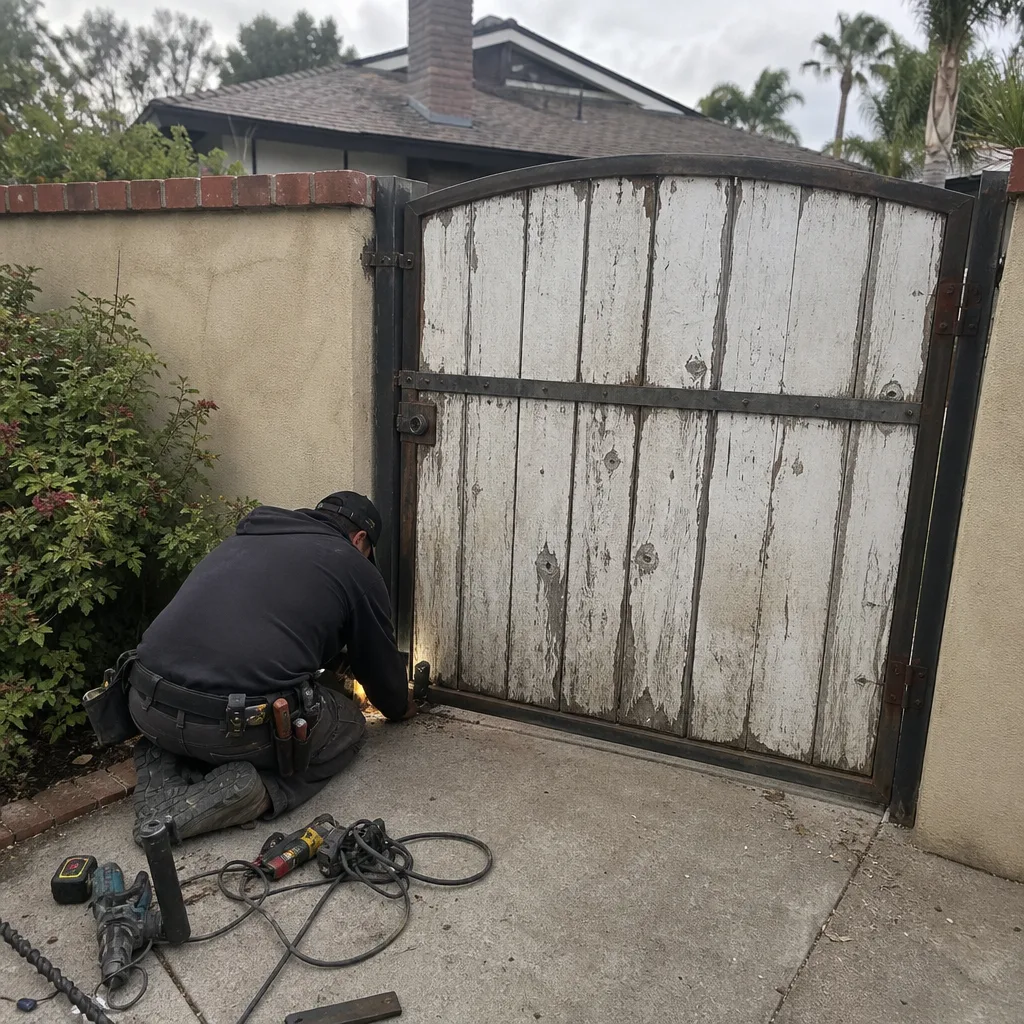 Before
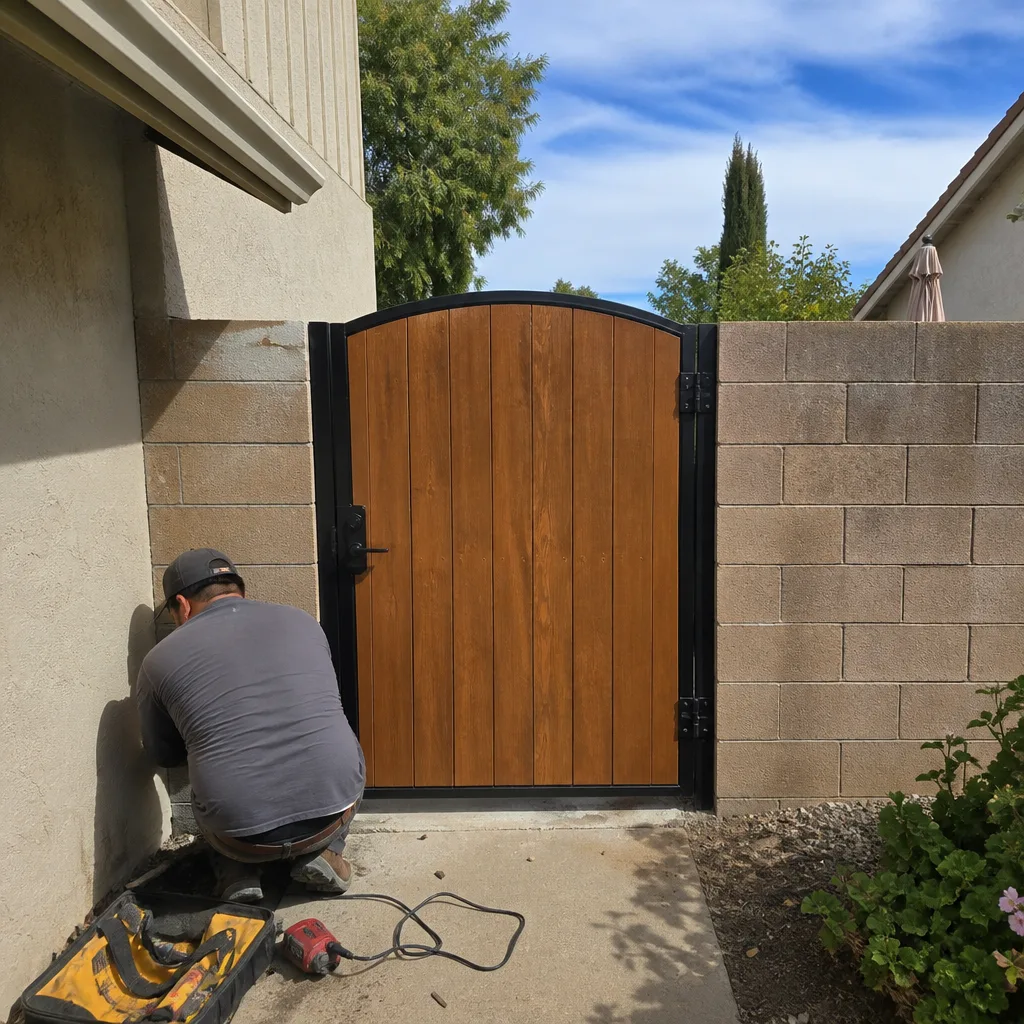 After
 Before
 After