
Last updated November 2, 2026
 Wrought iron
 Wood & steel frame
 Farm & ranch
 Sliding driveway gates
 LiftMaster operators
Free on-site gate assessment - hinges, posts, and your LiftMaster or Nice gate operator checked before anything is quoted
The assessment is free and the quote is the invoice.
Get your free estimateGate Repair Maintenance Checklist for Escondido Homeowners
Most gate maintenance checklists online are written by people who have never replaced a burned-out Viking operator in July. They tell you to “inspect hinges” and leave it at that. What actually kills gates in Escondido is a sequence of failures that starts with dust, heat, and skipped torque checks. The lubrication point most homeowners skip, the roller chain tension on slide gates, is responsible for roughly a third of preventable motor replacements. A loose chain creates micro-shock loads the motor was never rated to absorb, and by the time you hear the clunk, the damage is already done. This guide sequences maintenance by what fails first on Escondido properties, not by what looks good in a spreadsheet.
Styles & brands we work with
- Wrought iron
- Wood & steel frame
- Farm & ranch
- Sliding driveway gates
- LiftMaster operators
Quick Answer
A gate maintenance checklist for Escondido homeowners should prioritize chain tension on slide gates, battery load-testing before fire season, sensor cleaning during dusty months, and control board inspection after rare rain events. Most tasks take under 20 minutes and can be done monthly. When a gate shows visible sag, motor strain, or safety sensor failure, call a Gate Repair specialist rather than forcing the operator to work harder.
Table of Contents
- Why Escondido’s Climate Changes Your Maintenance Schedule
- The Monthly 10-Minute Check (Do This Every Month)
- Slide Gate Chain and Rack Tension: The Check Manuals Skip
- Battery Backup Testing: A Load Test, Not a Voltage Read
- Access Control Hygiene: Keypads, Loop Detectors, and Intercoms
- Season-Indexed Tasks: Fire Season, Heat Peaks, and Rain Events
- Pass/Fail Criteria: When to Self-Correct vs. When to Call
- Common Mistakes to Avoid
- When to Call a Professional
- Frequently Asked Questions
- The Bottom Line
Why Escondido’s Climate Changes Your Maintenance Schedule
Escondido sits in a semi-arid zone that punishes gate equipment in three specific ways. First, the dry air and Santa Ana winds push fine dust into every unsealed component: operators, control boards, keypads, and photo eye housings. Second, summer temperatures routinely exceed 90°F from June through September, and surface temperatures on a dark metal gate can reach 140°F or higher, which degrades plastic gears, expands metal rails, and forces motors to work harder. Third, the rare winter rain events, short but sometimes intense, test every seal and gasket that has been dried out by the previous eight months of aridity.
This pattern creates a maintenance rhythm that is not quarterly. It is seasonal and event-driven. A gate that works flawlessly in March can fail in August because a control board cooking in an unventilated operator housing has been slowly degrading since June. A loop detector that functioned fine during the dry season can drift after the first real rain soaks the ground and changes its inductance reading. Homeowners who follow a generic quarterly checklist miss these transitions. The checklist below is indexed to Escondido’s actual conditions: dust before fire season, heat during summer peaks, and moisture after rain events.
We’ve also seen a pattern in which neighborhoods in Escondido experience these problems differently. Properties in the Harmony Grove area and along the eastern foothills get more wind-driven dust than homes closer to the coastal influence. Properties in the older central neighborhoods near Grand Avenue often have swing gates installed decades ago, with heavier steel and older operator models from DoorKing or Elite that need more frequent hinge inspection. The maintenance tasks are the same, but the frequency changes based on where your property sits relative to the wind and heat patterns.
The Monthly 10-Minute Check (Do This Every Month)
This is the baseline. Ten minutes, once a month, catches most failures before they become repair bills. Start at the gate itself and work back toward the operator. Use a flashlight, even in daylight, because you’re looking for hairline cracks and fine dust that direct sun hides.
Here is the exact sequence we use on service calls:
- Listen to the gate move. Run one full open and close cycle. A healthy gate sounds consistent. A change in pitch, a grinding note, a hesitation, or a new rattle means something shifted. Do not ignore a new sound. It will not go away on its own.
- Check the gate’s physical alignment. For a swing gate, stand at the latch post and look across the gate’s top edge. It should be level. A drop of even half an inch means hinge wear or post movement. For a slide gate, look at the gap between the gate and the guide rollers. It should be even along the full travel.
- Inspect the chain or rack. For slide gates, grab the chain if accessible and press down. It should have about a quarter inch of give, not more. Sagging chain equals stripped teeth on the sprocket later. For rack-and-pinion gates, look at the rack teeth where the pinion engages. You are checking for metal dust accumulation, which indicates misalignment.
- Look at the photo eyes. Located low on each side of the gate opening. Wipe the lenses with a dry cloth, even if they look clean. A thin layer of Escondido dust reduces their range. Make sure the housings have not been knocked out of alignment by the gate itself or by a vehicle bump.
- Check the operator housing. Open the cover and look for dust accumulation, insect nests, or moisture signs. Spiders love the dry, dark interior of a gate operator. Their webs can interfere with limit switches. Blow out the housing with compressed air if you have it, or wipe it down.
- Test the safety reverse. Place a 2×4 or a trash can (something non-breakable) in the gate’s path and run it closed. It must stop and reverse before making firm contact. If it doesn’t, stop using the automatic function until it is repaired. This is the one check you cannot skip.
Keep a small notebook or a note on your phone. Record the date and anything odd you noticed. When you call us at Gate Repair in Escondido, those notes shorten the diagnostic time significantly.
Slide Gate Chain and Rack Tension: The Check Manuals Skip
Operator manuals for slide gates, from Viking, Ghost Controls, DoorKing, and most other manufacturers, include plenty of wiring diagrams but almost nothing about chain tension. That is a gap. In our experience at Gate Repair Escondido, slide gate problems in Escondido follow a predictable pattern: a chain stretches slightly over months, no one re-tensions it, the slack creates shock loads every time the motor starts and stops, the motor’s internal gears strip or the sprocket teeth wear, and by the time the owner calls, the operator is already failing.
Here is how to check tension on a chain-driven slide gate:
- Disconnect power to the operator. You can manually move the gate once the operator is disengaged, but never work on a chain while the operator could be triggered remotely. Disable the breaker or unplug the unit.
- Find the midpoint of the chain span. This is usually the section between the operator sprocket and the idler sprocket at the far end.
- Press down on the chain at the midpoint. It should deflect no more than a half inch. If it deflects more than that, it is loose. If it is guitar-string tight, it is over-tensioned and putting lateral load on the bearings.
- Check for uneven tension. Push the gate along its travel manually. The tension should feel the same at the beginning, middle, and end of travel. A gate that gets tighter near the end of travel may have a bent rail or a misaligned sprocket, not just a tension problem.
- Look at the sprocket teeth. Shine a flashlight on the sprocket where the chain engages. Teeth should be symmetrical. If they look like shark fins (pointed on one side, flat on the other), the sprocket is worn and will eat any new chain you install. This is a replacement item, not a maintenance item.
For rack-and-pinion slide gates, the equivalent check is pinion-rack clearance. The pinion gear should mesh cleanly with the rack teeth across the entire rack. In Escondido, we see racks warped by summer heat expansion, especially on long spans without expansion joints. Run the gate and watch the pinion-rack interface. Any visible gap change, any metal-on-metal grinding, any accumulation of metal dust on the rack means the clearance is off. The fix is often a shim adjustment at the rack mounting points, but it requires precise alignment. This is one of the most common tasks on our Electric Gate Repair in Escondido service calls.
Battery Backup Testing: A Load Test, Not a Voltage Read
Most battery backup systems on residential gates use sealed lead-acid batteries, the same chemistry as a car battery but smaller. These batteries last three to five years in Escondido’s heat, sometimes less. A voltmeter reading tells you almost nothing useful. A battery can read 12.6 volts at rest and collapse to under 10 volts the moment the gate motor draws current. The only test that matters is a load test.
Here is the procedure we recommend for homeowners, done safely:
- Find the battery. It is usually housed inside or next to the operator, in a small metal or plastic box. If you are not comfortable working near the operator, skip to step 4 and call us.
- Check the physical condition. Look for bulging on the battery’s side walls, corrosion on the terminals, or any white residue. Any of these means the battery has already failed, even if the gate still runs on AC power.
- Run a load test by simulation. Pull the operator’s AC power while the gate is closed. Then trigger a full open and close cycle on battery power alone. Watch and listen. If the gate moves noticeably slower than on AC power, or if it hesitates at start, or if the operator beeps and resets, the battery cannot handle the gate’s actual draw.
- Check the battery under repeated cycles. Run two full cycles on battery power, not just one. A battery with reduced capacity may handle one cycle and then falter. If you have a heavy gate, a failing battery will often die halfway through the second cycle.
- Reconnect AC power and note the date. If the battery passed, write down the test date. If it failed, call for a replacement before the next power outage. A battery backup that doesn’t work is worse than no backup, because you believe you are protected when you are not.
Ghost Controls and Viking both offer battery backup kits, and both publish battery replacement intervals of roughly three years under normal conditions. Escondido conditions are not normal. The heat accelerates sulfation, the chemical process that kills lead-acid batteries. We suggest testing twice a year, once before fire season and once after summer heat peaks, and replacing proactively at the three-year mark if the gate is critical to your property access.
Access Control Hygiene: Keypads, Loop Detectors, and Intercoms
The gate operator is only half the system. The access control components, the keypad you type into, the loop detector that senses your car, the intercom that connects to your phone, are outside all year. They catch more dust, more direct sun, and more moisture than the operator does, and they are the most common cause of “the gate won’t open” calls in Escondido.
Keypads and Card Readers
An outdoor keypad on a sunny south or west-facing wall in Escondido can reach surface temperatures that cause the plastic housing to yellow and the membrane buttons to become brittle. The symptom is usually a keypad that works inconsistently, some digits register, some don’t, or it fails entirely on the hottest afternoons. Maintenance is preventive:
- Wipe the keypad face monthly with a dry or lightly damp cloth. Do not use household cleaners or anything solvent-based on the membrane buttons.
- Check the gasket. Open the keypad housing and look at the rubber gasket. If it is cracked, flattened, or missing, moisture and dust have a direct path to the circuit board. A deteriorated gasket on an Elite or DoorKing keypad is a replace-now item, not a patch-later item.
- Look for sun damage on the housing. If the plastic is chalky or yellowed, the UV has started to break down the material. The keypad may still work, but plan for replacement within the next year.
Loop Detectors
Loop detectors are buried in the driveway under the pavement, and their sensitivity drifts over time. In Escondido’s dry soil, a loop that worked fine in January may fail to detect a car in August because the ground around the saw-cut has dried and shifted. The symptom is a gate that opens when no car is present, or fails to open when a car is present, or opens randomly in the middle of the night. Check the detector’s sensitivity setting at the operator control board. Most detectors have a dial or digital setting from 1 to 9 or 1 to 10. If your gate is ghost-opening or not sensing, call a technician rather than repeatedly adjusting the setting yourself. Each adjustment changes the loop’s behavior, and you can easily make the problem worse.
Intercoms and Video Entry
Intercom systems mounted on a post or pedestal near the gate are exposed to the same sun and dust. The microphone and speaker openings collect dust, the internal connections corrode, and the first rain after a long dry spell finds every dried-out seal. Listen to the call quality once a month. A crackle, hum, or low audio on one end means moisture has likely entered the housing. Check for visible gaps in the housing seal, wipe down the faceplate, and if the problem persists, call us before the rain does more damage.
Season-Indexed Tasks: Fire Season, Heat Peaks, and Rain Events
Escondido’s maintenance calendar does not run on neat quarters. It runs on fire season, heat peaks, and rain events. Here is how to sequence your annual maintenance around what actually happens here.
Late Summer to Early Fall: Fire Season Prep
Fire season in Escondido is roughly August through November, with the highest risk during Santa Ana wind events. The gate’s role during fire season is critical: it must open for emergency vehicles, close securely to keep the property sealed, and work on backup power if the grid goes down. Prepare in late July or early August:
- Run the full monthly 10-minute check plus the battery load test. Do this before fire season, not during.
- Clean every photo eye lens and every reflector surface. Smoke and ash reduce sensor effectiveness even before dust does.
- Check the manual release mechanism. If the gate has a keyed manual release or a pull chain, test it once to confirm you can open the gate by hand if the operator fails. In an evacuation scenario, you do not want to discover the release is seized.
- Verify that the gate’s open direction is unobstructed. Check for vegetation growth, debris, or parked objects in the gate’s travel path. Fire season is not the time to be wrangling an overgrown bougainvillea off the gate track.
June through September: Heat Peak Checks
The hottest months of the year stress every plastic component, every capacitor, and every solder joint in the operator. During heat peaks, check the following more frequently:
- Listen for a change in motor pitch during the hottest part of the day. A motor that sounds strained at 2 p.m. but fine in the morning may be fighting thermal expansion in the gate rail or hinge bind.
- Feel the operator housing after a cycle. It will be warm. If it is too hot to keep a hand on, the internal cooling is failing or the motor is overworking. This is a warning sign, not normal operation.
- Watch the gate for any hesitation when starting from a full stop on a hot afternoon. Stick-slip, where the gate jerks slightly before moving smoothly, indicates the motor is drawing more current than it should.
- Check that the operator housing vents are not blocked by dust or debris. Many operators have small vent holes or fins on the housing. If they are clogged, the internal temperature climbs faster and shortens the life of the control board.
After Rain Events (November through April)
Rain is rare in Escondido, but when it comes, it finds every compromised seal. After the first significant rain of the season and after any extended wet weather, do the following within 48 hours:
- Open the operator housing and look for any sign of moisture: water droplets, condensation marks, or rust forming on the electrical connections.
- Test the loop detector. Wet soil changes inductance readings, and a loop that was on the edge of its sensitivity range can start ghost-opening after rain. Run several vehicle approaches from different directions and angles.
- Check the bottom edge of slide gates for debris. Leaves, mud, and small gravel can accumulate at the gate’s bottom track and cause the gate to bind or stall.
- Wipe down all exposed electrical connections on the access control components. A dry rag is enough; do not use spray lubricants on electrical contacts.
Pass/Fail Criteria: When to Self-Correct vs. When to Call
Most maintenance tasks have a clear line between “you can fix this yourself” and “this needs a gate technician.” For deeper help, see our Gate Repair Troubleshooting: Common Problems and How to Fix Them. Here is the breakdown.
Self-Correct (No Call Needed)
- Dirty photo eye lenses: Wipe with a dry cloth. Confirm the gate reverses properly. If it does, move on.
- Light surface dust inside the operator housing: Blow it out with compressed air or wipe with a dry cloth. Do not use water or liquid cleaners.
- Minor vegetation touching the gate travel path: Trim it back. Some homeowners handle this; others prefer to leave it to a landscaper. Either way, the gate should not fight foliage.
- Chain deflection under a half inch: Note it in your maintenance log and recheck next month. If it is not getting worse, leave it alone. Over-tightening a chain is its own problem.
- Keypad grime: Wipe with a damp cloth. If buttons respond, the keypad is fine.
Call a Specialist
- Any visible sag in a swing gate leaf. A gate that has dropped even one inch is no longer a maintenance issue. The hinges, posts, or both have moved, and forcing the operator to compensate will destroy the motor.
- Consistent motor strain, grinding, or metal-on-metal sound. The operator is already damaged or on its way. Continuing to run it makes the eventual repair worse.
- Chain deflection over a half inch that returns after re-tensioning. Something else is moving, possibly the sprocket shaft, a bearing, or the gate frame itself.
- Battery that fails the load test. Replacement is straightforward, but getting the battery specs right and testing the charging circuit requires a technician. A mismatched battery damages the charging system.
- Photo eye fault that persists after cleaning and realignment. The photo eye may be failing, or the problem may be in the wiring running to it. Both are electrical diagnostics, not homeowner tasks.
- Sprocket teeth that look like shark fins. The sprocket is done. If you let it go, it will destroy the next chain too. This requires gate installation-level repair or replacement.
- Any crack in a gate weld, hinge, or post. Structural issues are a safety hazard first and a gate problem second. Do not operate the gate until it is assessed.
The pass/fail rule is simple: if the problem is about cleanliness or minor adjustment, you can probably handle it. If the problem is about load, alignment, electrical behavior, or structural integrity, the gate needs a specialized hand. We’ve never seen a homeowner solve a motor problem by adding lubricant to anything.
Common Mistakes to Avoid
- Over-lubricating the chain or rack. A light film of the correct chain lubricant is good. A heavy coating of grease is a magnet for Escondido dust, which turns the grease into an abrasive paste that accelerates wear. Clean first, lubricate lightly, wipe off excess.
- Ignoring a new sound for “a while.” Gates do not heal themselves. A new grind, whine, or rattle is the first signal of a component failing. Every month you ignore it, the repair gets more expensive.
- Using WD-40 on gate hinges. WD-40 is a water displacer, not a long-term lubricant. It washes out existing grease and leaves metal surfaces dry. Use a proper lithium or silicone-based hinge lubricant for swing gates.
- Testing the battery backup by looking at a voltage reading. As covered above, rest voltage tells you nothing about the battery’s ability to move a gate under load. Only a load test is meaningful.
- Forcing the gate open or closed when the operator is engaged. If the gate is stuck, disengage the operator first. Manual force can break internal gears, bend the rack, or snap the chain, turning a minor adjustment into a full operator replacement.
- Skipping winter checks because “it never rains here.” The first rain after a dry spell is when seals fail, loops drift, and connections corrode. The good weather is exactly why you should check after the rare bad weather.
- Adjusting loop detector sensitivity by trial and error. Every adjustment changes the gate’s behavior in ways that are not obvious from one test. This is a diagnosed adjustment, not a tune-by-feel adjustment.
When to Call a Professional
Call a gate specialist when you see sag, hear grinding, experience intermittent operation, or when the gate fails any safety test. Specifically, if a swing gate leaf drops, if a slide gate makes a new metallic sound, if the operator struggles to move the gate, if the photo eyes fail to reverse the gate after cleaning, or if the battery fails a load test, do not keep running the gate. Every additional cycle on a failing component compounds the damage. Gate Repair Escondido offers free estimates in Escondido, call (833) 630-4122 and describe what you’re seeing. If it is urgent, say so: we prioritize calls that involve a gate stuck open, stuck closed, or moving unpredictably, because those are security problems as much as mechanical ones.
Frequently Asked Questions
Run the monthly 10-minute check every month, and add the battery load test twice a year: once before fire season in late July, and once after summer heat peaks in late September. After any significant rain event, do the post-rain checks within 48 hours. Most Escondido gate failures in our service history trace back to skipped monthly checks, not component age.
Slide gate motor failure caused by loose chain tension is the most common preventable failure we see. A chain that is never re-tensioned after initial stretch creates shock loads that strip motor gears over time. The fix is a five-minute check once a month.
You cannot tell from a voltage reading. Disconnect AC power and run the gate through two full open-close cycles on battery power. If the gate moves at normal speed through both cycles, the battery is still functional. If it slows, hesitates, or fails on the second cycle, the battery needs replacement.
First, open the operator housing and look for spider webs or insects interfering with the limit switches or control board. Then, check the loop detector setting at the control board. If the problem persists, the loop may have drifted or the control board may be failing. Call us at (833) 630-4122 for a diagnostic visit, a ghost-opening gate is a security problem you should not ignore.
You can lubricate hinges and chains yourself if you use the right products: a silicone or lithium-based lubricant for hinges, and a light chain lubricant for chains. Avoid heavy grease and avoid WD-40. The important step is cleaning the surfaces before lubricating, especially in Escondido’s dusty air, otherwise you are just mixing lubricant with abrasive dust.
We work on the gate you have. Our technicians arrive familiar with the service procedures and common failure patterns of Viking, Ghost Controls, DoorKing, Elite, and several other major brands. We do not push proprietary replacements; we repair the system you already own when repair is the right call. Call (833) 630-4122 and tell us the brand and model; that saves a diagnostic step.
The Bottom Line
Gate maintenance in Escondido is not about following a generic quarterly checklist. For more guides & resources, visit our blog. It is about knowing what fails first in this specific climate: chains stretch, batteries sulfate in the heat, photo eyes clog with dust, and control boards cook inside unventilated operator housings. Run the monthly 10-minute sequence, do the load test before fire season, watch for sag and new sounds, and respect the pass/fail line between self-correction and professional repair. Most gate failures give you weeks of warning. The owners who catch those warnings spend less money and keep their gates running for years longer than the ones who wait. That is the entire point of this checklist.
Written by the team at Gate Repair Escondido, serving Escondido since 2018.
See the difference
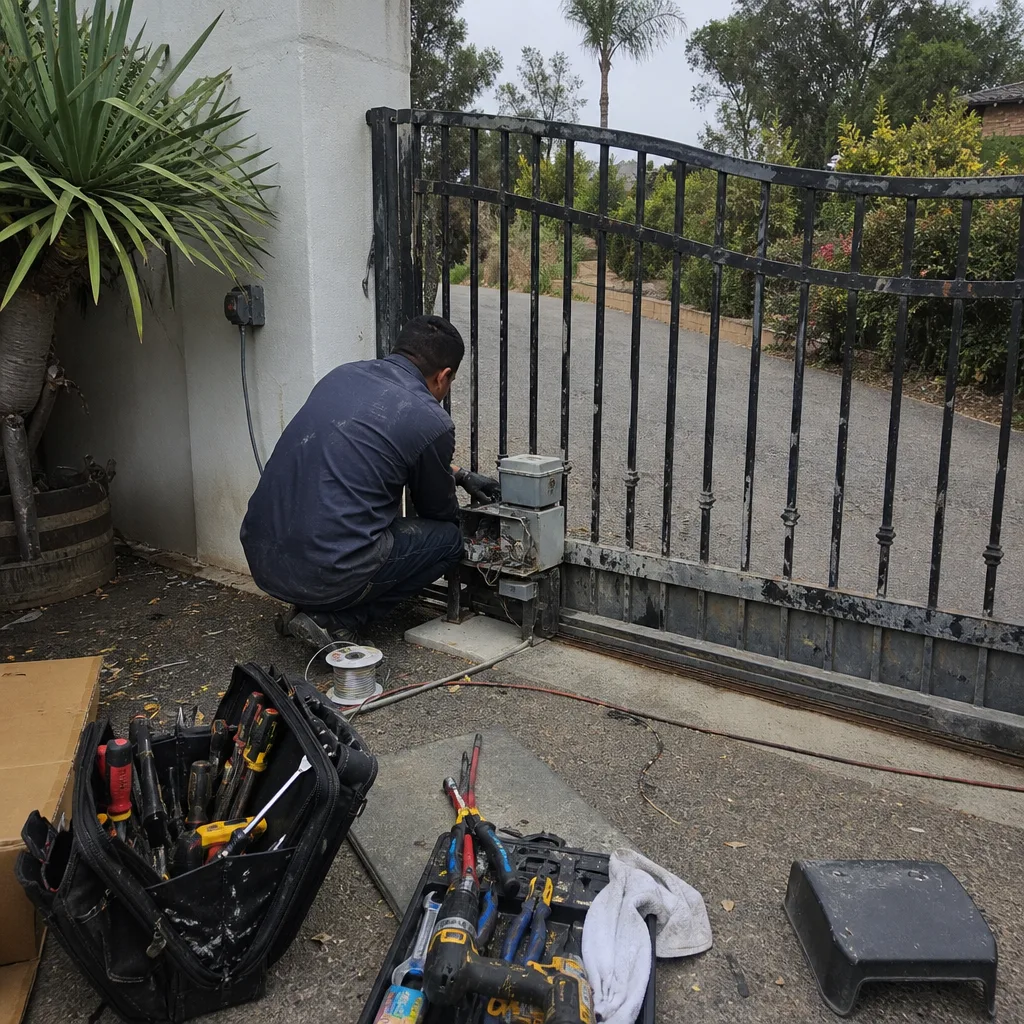 Before
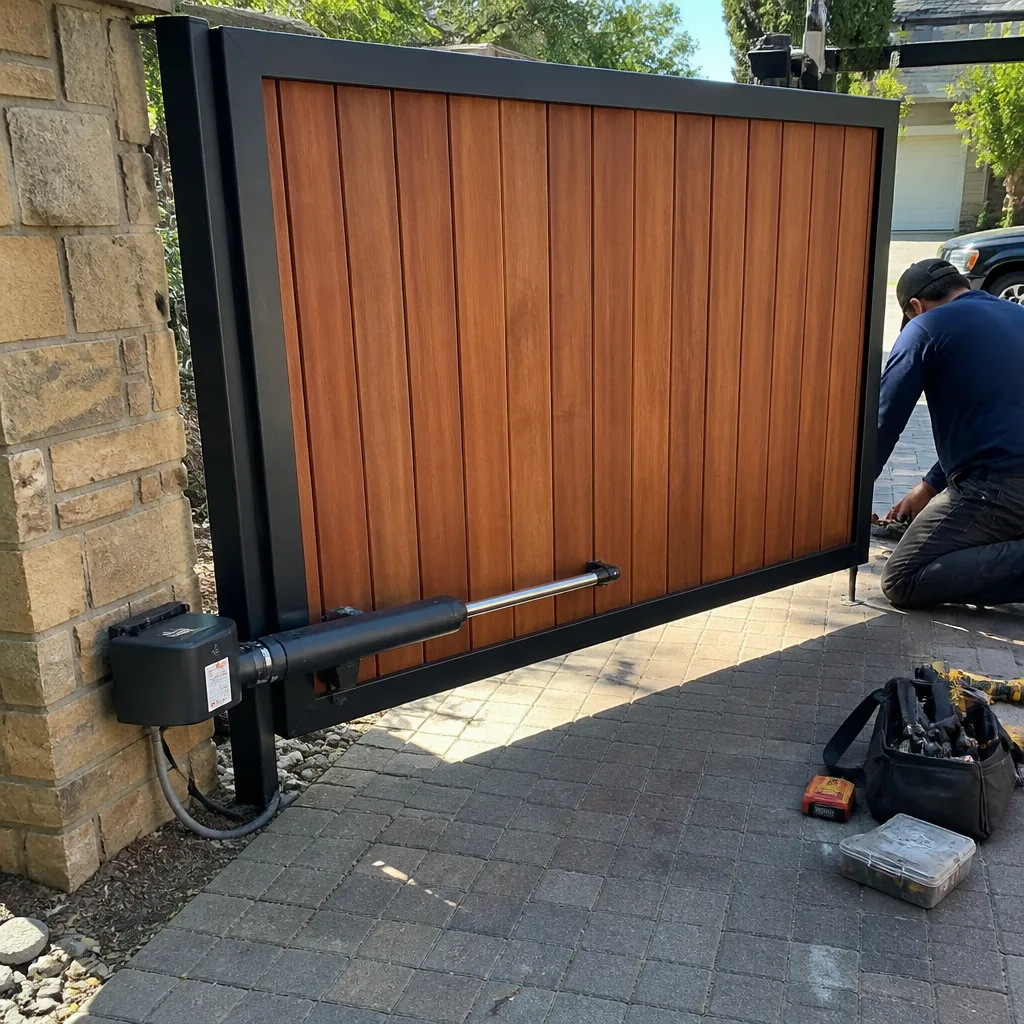 After
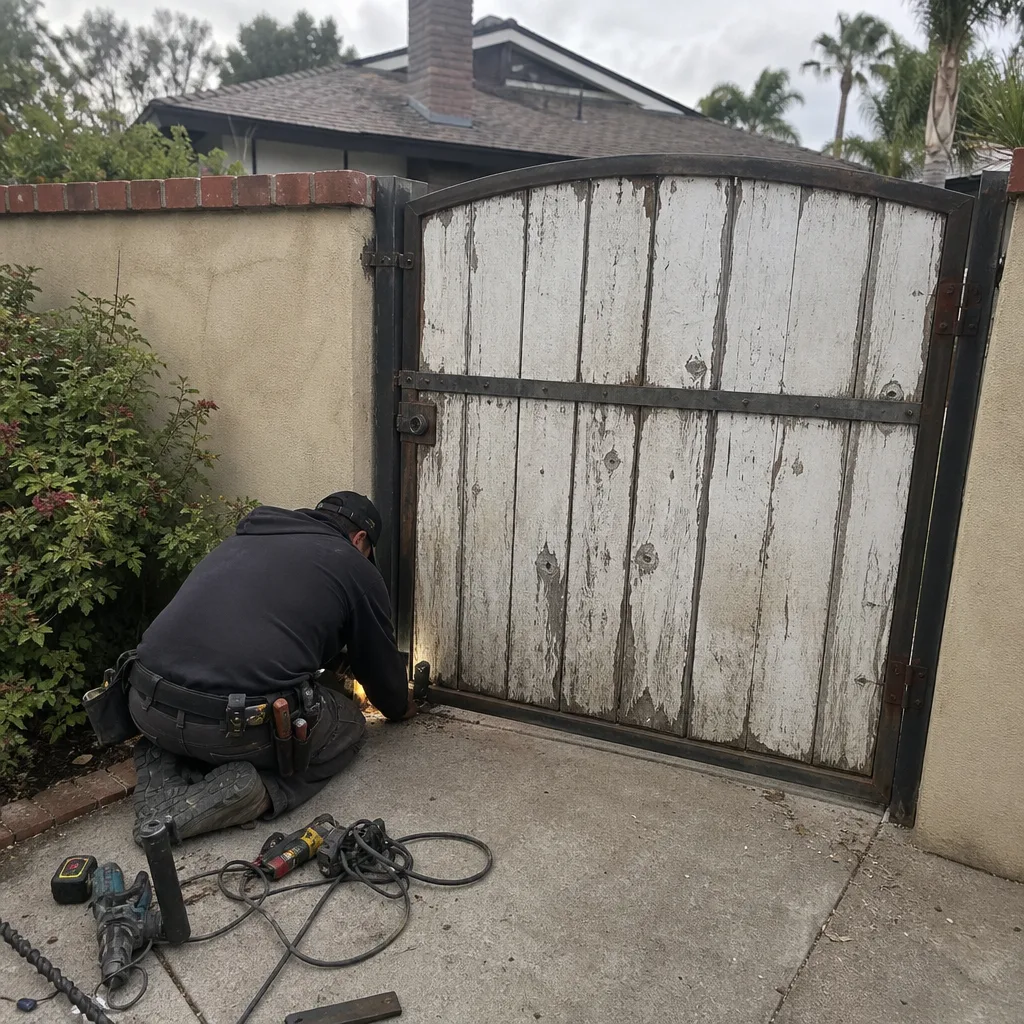 Before
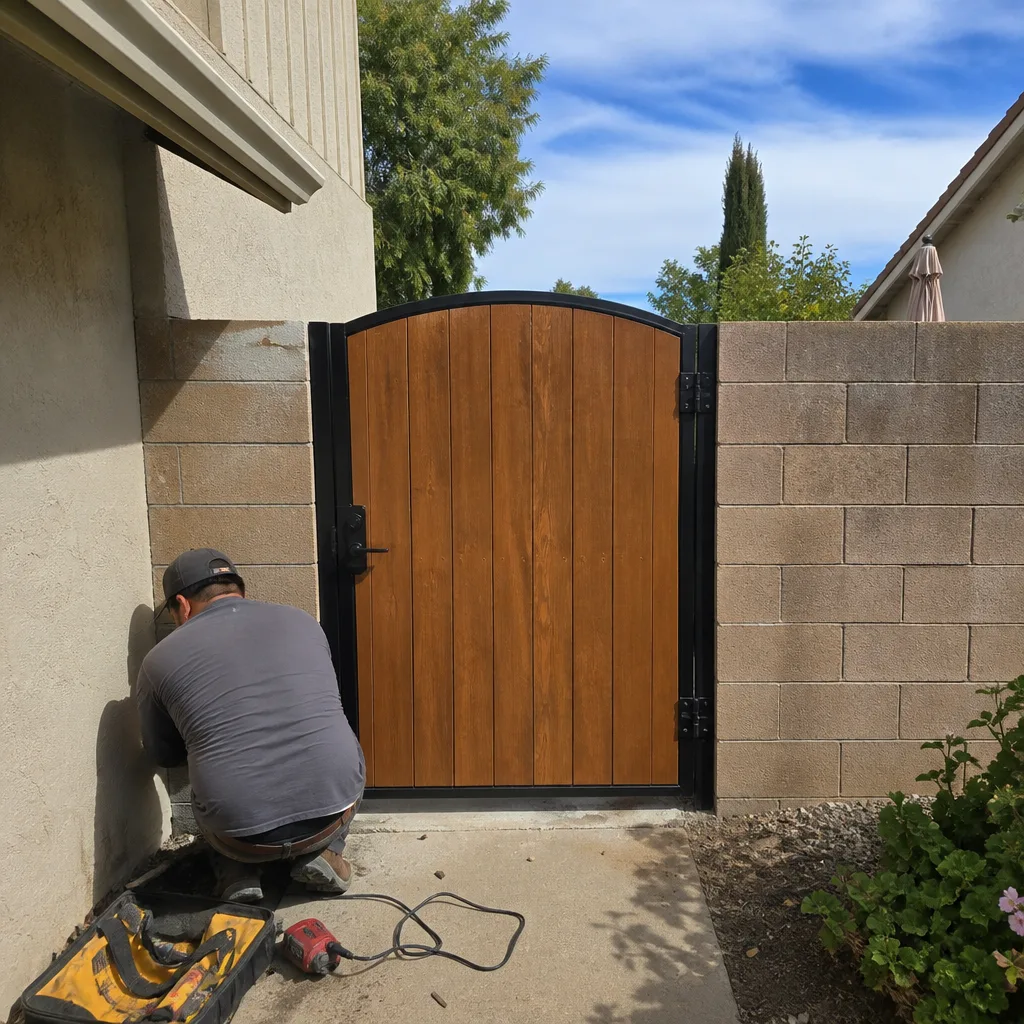 After
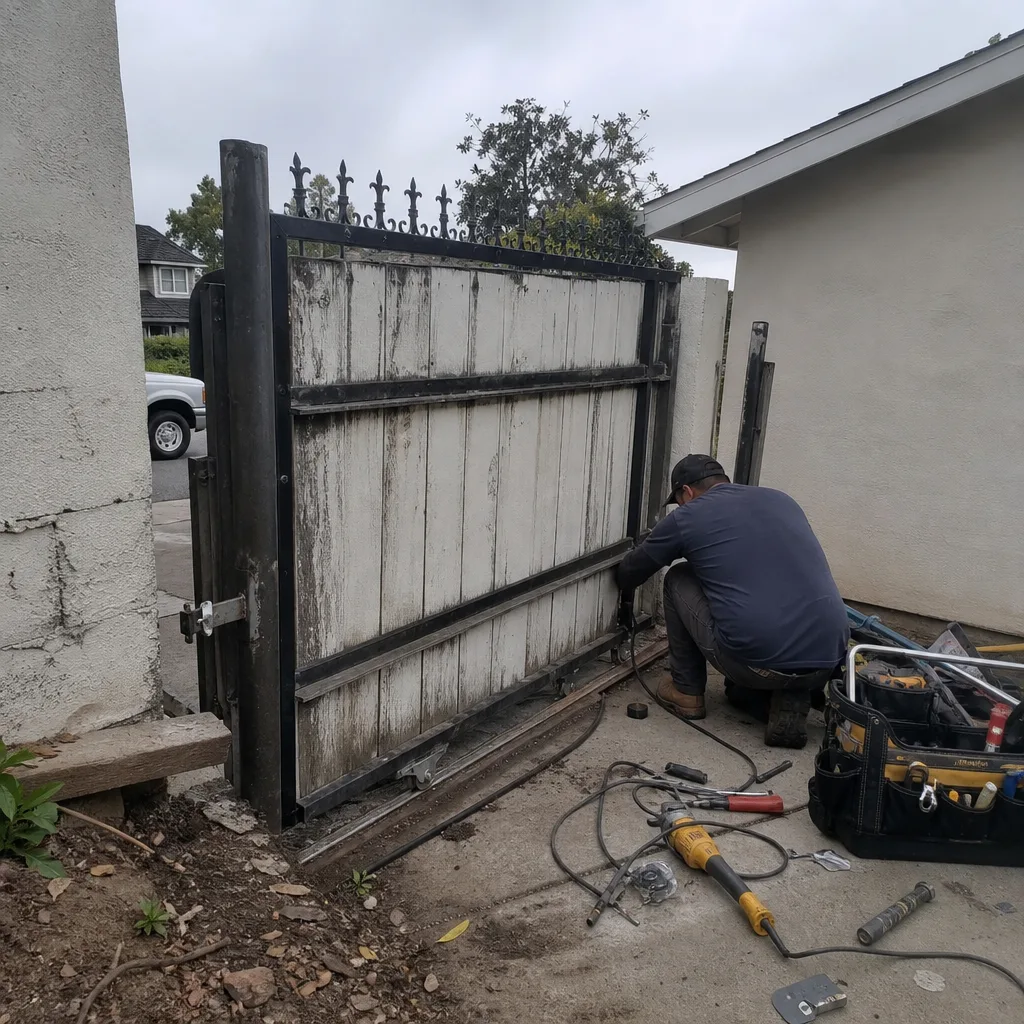 Before
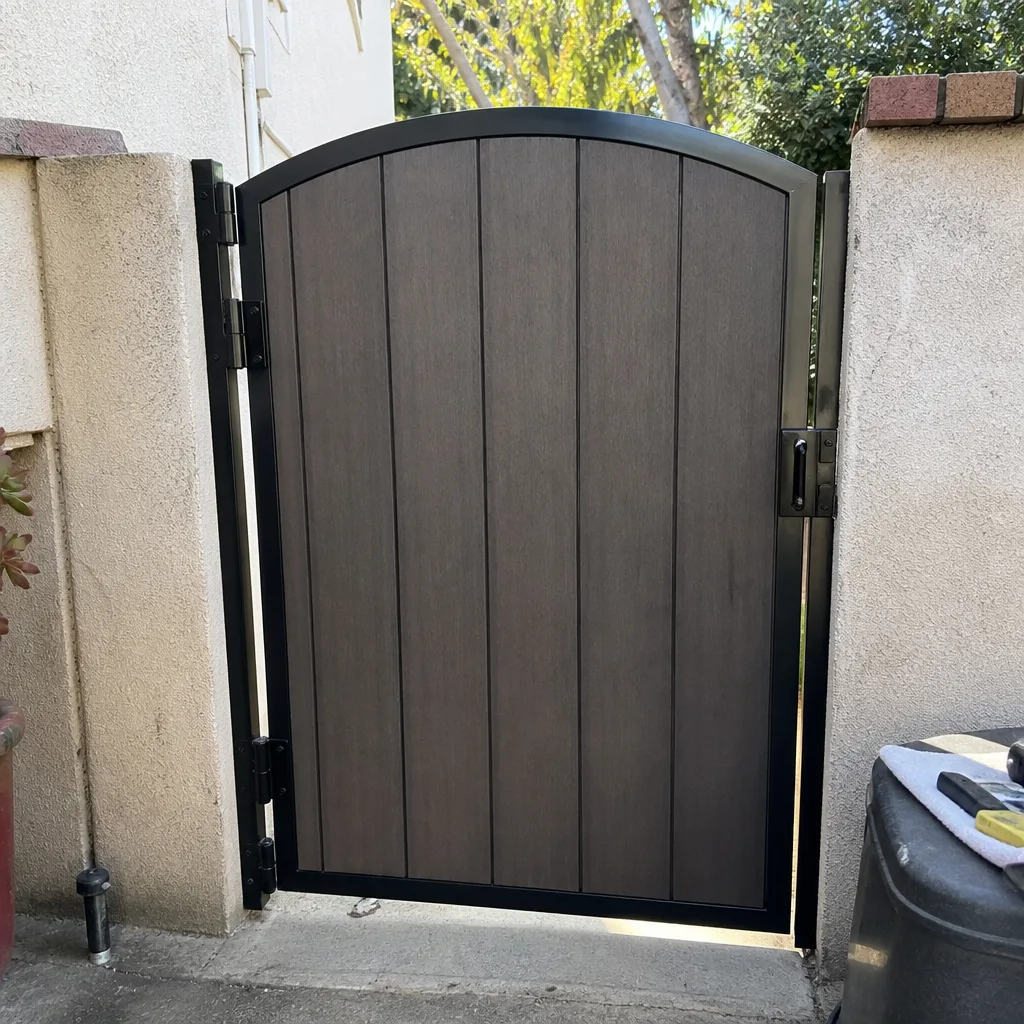 After