
Last updated November 2, 2026
 Wrought iron
 Wood & steel frame
 Farm & ranch
 Sliding driveway gates
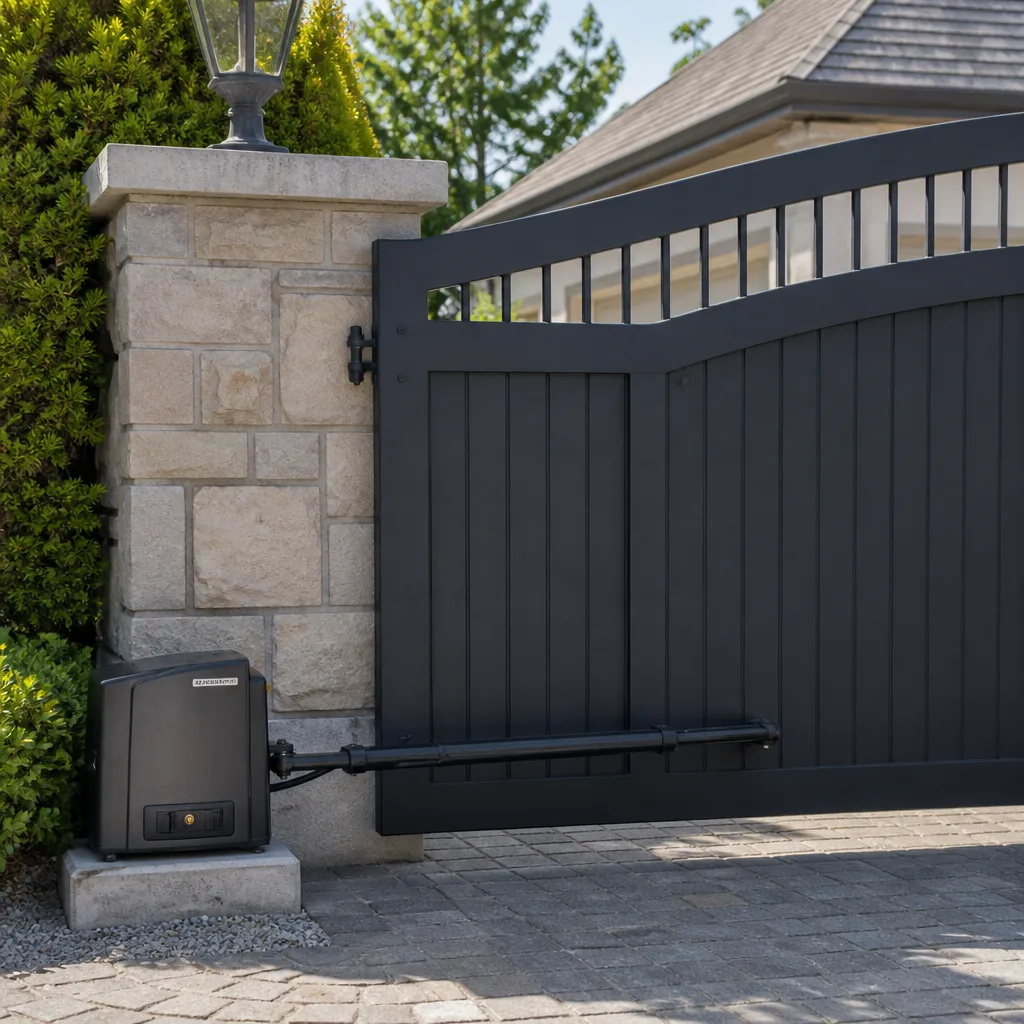 LiftMaster operators
Free on-site gate assessment - hinges, posts, and your LiftMaster or Nice gate operator checked before anything is quoted
The assessment is free and the quote is the invoice.
Get your free estimateGate Repair Emergency Preparedness Guide for Escondido Homes
During the 2007 Witch Fire evacuation in San Diego County, residents reported gates that wouldn’t open manually because they’d never used the emergency release and didn’t know it required a specific key – a detail that costs nothing to verify in advance and everything to discover under smoke. Escondido sits in a wind corridor where Santa Ana conditions can move a fire line faster than a car can turn around in a driveway. This guide covers what actually fails on automated gates during emergencies in Escondido, how to test your manual release and battery backup before you need them, and what documentation to keep accessible when the power is out and the fire department is at your property line. For professional help, our Gate Repair services cover Escondido and surrounding areas.
Quick Answer
Gate emergency preparedness for Escondido homes comes down to three verified actions: test your operator’s manual release mechanism in daylight at least twice a year, confirm your battery backup will actually cycle the gate under load (not just show a green LED), and keep a one-page gate documentation sheet with your operator model, control board serial number, and installer contact stored somewhere you can reach without electricity. For a detailed walkthrough, see our Gate Repair Maintenance Checklist for Escondido Homeowners. Homes in Escondido’s wildfire-adjacent zones should also verify that their gate’s fire department override meets NFPA 1 requirements before an evacuation order forces the question.
Styles & brands we work with
- Wrought iron
- Wood & steel frame
- Farm & ranch
- Sliding driveway gates
- LiftMaster operators
Table of Contents
- Manual Release Procedures: Why “Pull the Red Cord” Isn’t Enough
- Battery Backup Verification: The Load Test That Actually Matters
- Knox Box and Fire Department Access in Escondido
- The Emergency Documentation Kit: What to Have Without Power
- Post-Emergency Gate Inspection: What to Check Before Going Back to Automatic
- Common Mistakes to Avoid
- When to Call a Professional
- Frequently Asked Questions
Manual Release Procedures: Why “Pull the Red Cord” Isn’t Enough
The biggest gap in most Escondido homeowners’ emergency plans is the assumption that every gate has the same manual release. It doesn’t. We service nine major gate and operator brands across Escondido – LiftMaster, FAAC, BFT, Linear, Viking, Ghost Controls, DoorKing, Elite, and Mighty Mule – and each one disengages differently. A LiftMaster slide gate operator typically has a manual release lever on the side of the chassis that you pull downward while holding the gate. A FAAC swing gate operator often requires a keyed release that fits into a small cylinder near the motor housing. Viking operators frequently use a T-handle key or a pull pin depending on the model year, and DoorKing slide operators have a release handle that must be lifted, not pulled, on certain revisions.
Here’s the part most people get wrong: if you’ve never operated the release, you don’t know whether the key is in the drawer where you think it is, whether the release mechanism has corroded from Escondido’s morning marine layer, or whether the gate is heavy enough that one person can’t move it manually at all. A 14-foot steel slide gate weighs more than most people expect, and a swing gate on a slope will drift once released. Test this twice a year. Do it in daylight, with the operator unplugged only if you’re confident about the reset procedure. Otherwise, test it with the operator still powered so you can see how the limit switches respond when you re-engage.
Step-by-Step: Testing a Manual Release Without Damaging the Operator
- Identify your operator brand and model. The data plate is usually on the side of the chassis or inside the cover. If it’s faded, take a photo now and store it in your documentation kit.
- Locate the release mechanism. On LiftMaster and DoorKing slide operators, look for a handle or lever on the interior side of the chassis. On FAAC swing operators, look for a small keyed cylinder. On Viking units, check for a pull pin or T-handle.
- Before touching the release, notate the gate’s current position (open, closed, or partial). This matters because re-engaging the operator without resetting the limit logic can cause the gate to slam or run past its stop.
- Operate the release. Use the key or handle as designed. Do not force it. If it doesn’t move with normal hand pressure, the mechanism needs service before an emergency depends on it.
- Move the gate manually through at least six feet of travel. Note whether it binds, drags, or catches. A gate that’s hard to move by hand during calm conditions will be nearly impossible to move in a panic.
- Re-engage the operator and run one full open and close cycle. Watch for hesitation, grinding, or a gate that stops short of its normal limit.
If any step of this test fails, that’s a gate repair in Escondido issue that should be addressed before fire season peaks. The manual release is not a convenience feature. It’s the only mechanical override you have when the power is out and the control board is dark.
Battery Backup Verification: The Load Test That Actually Matters
Battery backup units on automated gates in Escondido fail quietly. The LED indicator on a LiftMaster or Viking battery backup may show a steady green “charged” status while the battery itself has degraded to the point where it can’t cycle a loaded gate more than once or twice. The only way to know is to run a real load test. Here’s how:
- Turn off the dedicated circuit breaker for the gate operator, not just the operator’s own power switch. This simulates an actual outage rather than a standby state.
- Run the gate through a full open and close cycle using the normal controls – remote, keypad, or call button. Note whether the gate moves at full speed or visibly slower. Slower movement under battery power indicates a battery that’s past its useful life.
- Repeat the cycle at least five times in a row. During an extended outage, your gate may need to cycle dozens of times for evacuating vehicles, responding fire crews, or residents coming and going. A battery that dies on cycle three is a liability.
- If the gate stalls or the operator errors out during the test, the battery needs replacement, not just a recharge. Battery backups for gate operators generally have a service life of three to five years, and Escondido’s summer heat accelerates degradation.
- Restore power and run one more full cycle to confirm the operator’s logic resets cleanly.
Most battery backup systems on residential gates are sized for intermittent use, not continuous operation. The National Electrical Code requires battery backup on certain gate operators in wildfire-prone areas of California, but code compliance doesn’t guarantee real-world performance. We’ve seen homeowners in the Harmony Grove and Hidden Trails areas of Escondido discover during a planned outage that their backup system was effectively dead despite a clean installation. The lesson: test under load, not just under the LED.
If your gate doesn’t have a backup battery at all, that’s a gap worth closing. A dedicated electric gate repair in Escondido call can confirm whether your operator supports a battery backup retrofit, and which units are compatible with your control board.
Knox Box and Fire Department Access in Escondido
Gated properties in Escondido create a specific problem for fire suppression and EMS response: if the gate won’t open, the apparatus can’t enter. NFPA 1, the fire code adopted in most of San Diego County including Escondido, requires that gated properties provide approved emergency access. For many Escondido properties, that means a Knox Box or Knox key switch installed at the gate entry, containing a key or switch that allows the fire department to operate the gate without having to cut through it.
The reality we see in the field is that many gates in Escondido were installed years ago, before the current code enforcement emphasis on wildfire access. For a deeper look at regulatory requirements, read our guide on Gate Repair Permits, Codes & Inspections in CA: What You Need to Know. Some have Knox switches that were installed but never tested with the actual gate operator. Some have boxes that contain keys to a lock that no longer exists because the gate was replaced and the old key slot was welded over. And some have no fire department access provision at all, which can become a compliance issue during a fire marshal inspection or, worse, during an actual emergency when the 20 seconds it takes to cut a lock or chain is 20 seconds the crew doesn’t have.
Here’s what to check:
- Confirm whether your gate has a Knox switch, Knox Box, or a dedicated fire department override keyed to the Escondido Fire Department’s system. If you’re not sure what you’re looking at, take a photo of the entry area and the operator and bring it to a gate specialist.
- If a Knox switch is present, test it once a year. Use the same procedure as the manual release test: operate the override, confirm the gate opens, and confirm it closes and resets under normal power.
- If no fire department access exists, contact the Escondido Fire Department’s prevention bureau about what’s required for your property type. Single-family residential gates may have different requirements than multi-family or commercial gates.
- Document the make and model of any override hardware in your emergency documentation kit, including the Knox box mounting location and the serial number printed on the box itself.
This isn’t a theoretical exercise. Escondido’s wildland-urban interface extends through neighborhoods off Bear Valley Parkway, Cloverdale Road, and into the communities east of Interstate 15. A gate that doesn’t open for first responders is a delay that compounds every other problem on scene. We recommend having any Knox-related equipment checked and tested by someone who understands the operator side of the equation, not just the lock box itself.
The Emergency Documentation Kit: What to Have Without Power
When the power is out and your phone is at 4%, you will not be able to look up your gate operator’s model number online. You won’t remember whether it’s a FAAC 400 or a DoorKing 9150. And when a technician arrives after the emergency, the first thing they’ll need is exactly that information. Build a one-page gate documentation sheet now and keep it in a physical location you can access without electricity – a kitchen drawer, a garage shelf, or a laminated card taped inside a cabinet near the gate controls.
Here’s what goes on the sheet:
- Operator brand and model (example: LiftMaster LA500, not just “LiftMaster”)
- Control board model and revision number, usually printed on the circuit board itself
- Serial number of the operator, found on the data plate or inside the chassis
- Manual release type and location (keyed cylinder, pull handle, T-handle, pin release)
- Battery backup model and installation date, if applicable
- Knox Box or fire department override location and serial number
- Installer contact information, including the company name and phone number
- Date of last manual release test and last battery load test
If you have multiple gates – a driveway gate and a pedestrian gate, for instance – make one sheet per gate. Property managers overseeing gated communities in Escondido should keep a binder with this information for every gate on the property, plus a map showing gate locations and the nearest electrical disconnect for each operator.
One more addition: know where the dedicated circuit breaker for the gate is. It’s often labeled “GATE” in the main panel, but sometimes it’s on a subpanel near the driveway or in a weatherproof box near the operator itself. In a power outage or fire evacuation, turning off the gate breaker is the safest way to prevent the operator from cycling unexpectedly while someone is moving the gate manually.
Post-Emergency Gate Inspection: What to Check Before Going Back to Automatic
After a power surge, a wildfire smoke event, or a forced manual operation during an evacuation, an automated gate in Escondido needs more than a quick glance before it goes back into daily service. Smoke and ash are abrasive and conductive. A Santa Ana wind event can coat control boards, sensors, and limit switches with fine particulate that causes intermittent faults for weeks afterward. A power surge that happened when SDG&E restored service can damage a control board without leaving any visible sign.
Here’s the inspection sequence we recommend after any emergency event:
- Visually inspect the operator chassis, control board enclosure, and all wiring connections for signs of heat damage, melted insulation, or discoloration. Ash residue on a circuit board is a real problem – do not brush it off with your hand. Compressed air or a soft brush is the right tool.
- Check the gate’s travel limits. After a manual release and re-engage, the operator may have lost its limit settings. Run the gate open and closed several times and watch whether it stops at the same position each time. If it doesn’t, the limits need recalibration.
- Test the safety loops and photo eyes. This is non-negotiable after any event that involved manual gate operation or a power anomaly. A gate that doesn’t stop when a vehicle is present or a person walks through is a serious hazard.
- Inspect the gate hinges, rollers, and track for damage from forced manual movement. A slide gate that was pushed open against resistance may have a bent roller bracket or a misaligned track. A swing gate that was shoved hard can have a strained hinge or a cracked weld at the base.
- Run a full battery test if a backup unit is installed. An outage that drained the battery completely may have damaged it beyond recovery. Follow the load test procedure from earlier in this guide.
- If the gate was exposed to smoke or ash for any length of time, have the control board and connections inspected by someone who works on gate electronics specifically. Ash is conductive, and it doesn’t take much to create a short across traces on a board.
Skipping any of these steps after an emergency is how small problems become big ones. We’ve had calls from Escondido homeowners after fire-season power shutoffs where a gate worked fine for three weeks after the event, then failed completely because ash had slowly corroded a connector. The fix was more expensive than an inspection would have been.
If any of this inspection turns up something you’re not sure about, that’s a dedicated electric gate repair in Escondido situation. A gate specialist who works on these systems every day will identify the problem faster than a generalist, and the fix will be done right the first time.
Common Mistakes to Avoid
- Testing the manual release only when the gate is already broken. If your first experience with the emergency release is during an actual emergency, you’ve already lost. Test it twice a year, in daylight, following the procedure for your specific operator brand.
- Trusting the battery backup’s green LED. A green light means charging, not capacity. Run the load test – cycle the gate multiple times on battery power only – before the next Santa Ana season starts.
- Assuming the fire department can always get through. Many older Escondido gates have no Knox switch or fire department override. If you can’t confirm one is present and functional, you can’t count on first responder access.
- Forcing a gate that’s binding or stuck. When a slide gate or swing gate resists manual movement, the answer is not more force. That’s how you bend a track, snap a hinge, or injure yourself. Find the obstruction or call a professional.
- Putting the documentation kit in a digital-only location. A cloud drive or a notes app won’t help you when the power is out and your phone is dead. Keep a physical copy where you can find it in the dark.
- Ignoring a gate that worked “fine” through an outage. Power surges and brownouts can damage a control board without killing it immediately. If your gate behaved oddly during an outage, treat that as a symptom, not a fluke.
- Letting months pass between full open-close cycles. Gates that are rarely used – second driveways, back gates, side entries – develop problems that only show up when the gate is needed most. Cycle every gate you own at least monthly.
When to Call a Professional
Some gate problems are owner-replaceable, but many are not. A gate that won’t disengage from the operator, a manual release that requires more than normal hand force, a battery backup that fails the load test, a control board with visible heat damage or ash contamination, a gate that slams or shudders at the limits, or any safety loop and photo eye that isn’t responding – these are professional-level issues. The danger in waiting is not just inconvenience. It’s a gate that fails exactly when you need it to work: during an evacuation, during a medical emergency, during a power outage when the manual release is your only way out. Gate Repair Escondido offers free estimates in Escondido – call (833) 630-4122 to schedule a gate check.
Frequently Asked Questions
Every operator brand has a different manual release mechanism. LiftMaster slide operators typically use a pull-down lever on the side of the chassis, FAAC swing operators often require a keyed cylinder release, Viking units may use a T-handle or pull pin depending on the model, and DoorKing slide operators use a lift-style release handle on certain revisions. If you don’t know which type you have, find the operator data plate and look up the model-specific procedure, or call a gate specialist in Escondido to show you in person. Call (833) 630-4122 for help identifying your release mechanism.
A properly sized and maintained battery backup should cycle a residential gate at least 50 times on a full charge, but battery age, temperature exposure, and load all reduce real-world capacity. The only way to know is to run a load test: turn off the breaker, cycle the gate five or more times in a row, and watch for slowing or stalling. Three to five years is the typical service life for gate backup batteries in Escondido’s climate.
Most gated properties in Escondido are required by the fire code to provide approved emergency access, which commonly means a Knox Box or Knox key switch that works with the fire department’s key system. Single-family homes, multi-family communities, and commercial properties can have different requirements. Contact the Escondido Fire Department’s prevention bureau to confirm what applies to your property, and have the operator side of any override equipment tested at the same time.
After any smoke, ash, or power surge event, check the control board and wiring for heat or ash damage, confirm the travel limits are still correct by running multiple open-close cycles, test the safety loops and photo eyes, inspect hinges and rollers for damage from forced manual operation, and run a full battery load test if a backup unit is installed. Ash is conductive and abrasive, and it causes delayed failures that can take weeks to appear.
Twice a year minimum, and ideally timed to Escondido’s fire season. Test once in spring before the hot Santa Ana months and once in fall before the winter storm season. If your gate is in a high-wind exposure area or near heavy vegetation, testing quarterly is a better interval. Each test takes about ten minutes when you know the procedure for your operator.
Battery backup installation involves line-voltage wiring and control board interfacing, which is not a safe DIY project. Knox switch installation requires coordination with the fire department’s keying system and must be done to their specifications. Both are jobs for a professional who works on gate operators specifically. For a gate installation in Escondido that includes emergency access equipment, get a written estimate from a qualified gate specialist. Call (833) 630-4122 for details.
The Bottom Line
Emergency preparedness for an automated gate in Escondido isn’t about buying a backup generator or installing a second keypad. It’s about the three things most homeowners never do until it’s too late: actually operating the manual release, actually load-testing the battery backup, and actually confirming that fire department access works. These are cheap, fast, repeatable checks. They take less than an hour twice a year. And they’re the difference between a gate that opens when you need it and a gate that traps you, or delays the people coming to help you, exactly when the stakes are highest. If you’re not sure where to start, start with the manual release test. If that alone gives you trouble, call a professional before the next Santa Ana season puts it to the real test. You can also explore our more guides & resources for additional gate maintenance and safety information.
Written by the team at Gate Repair Escondido, serving Escondido since 2018.
See the difference
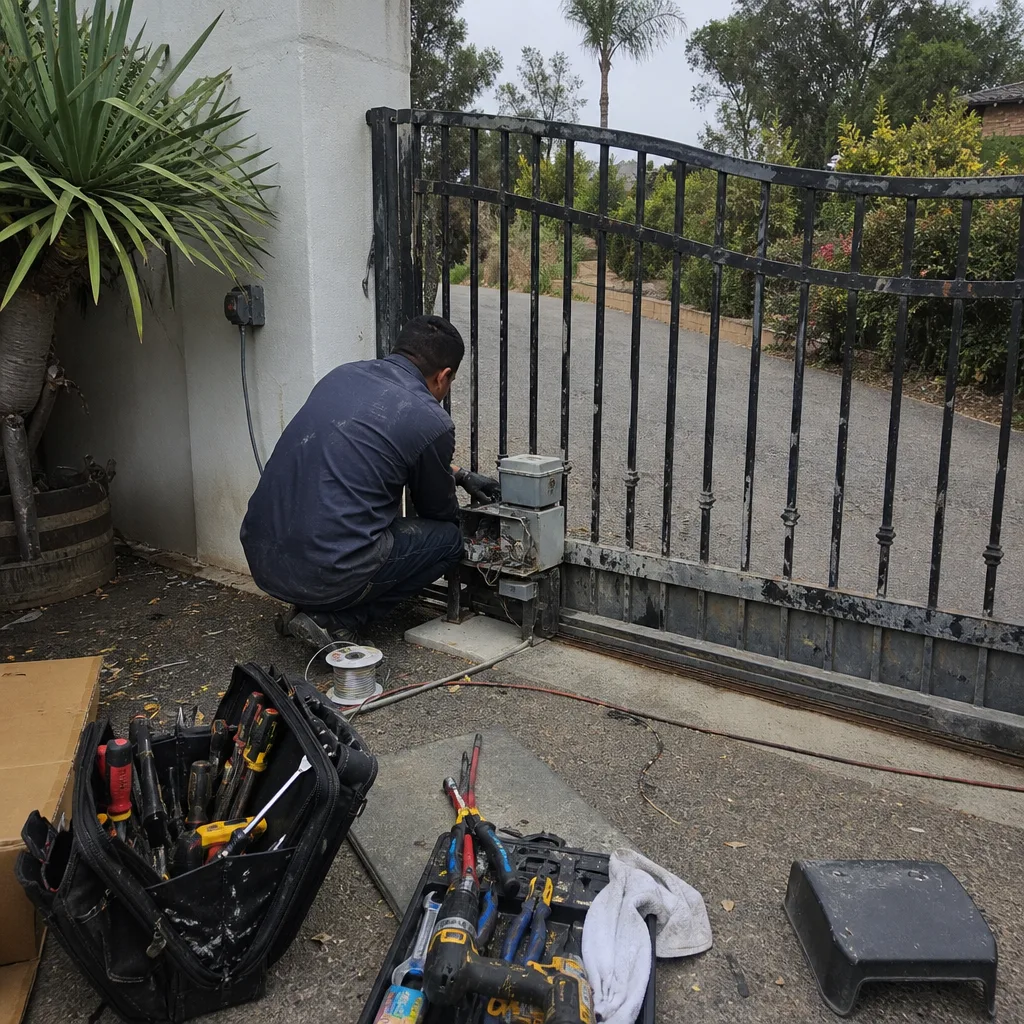 Before
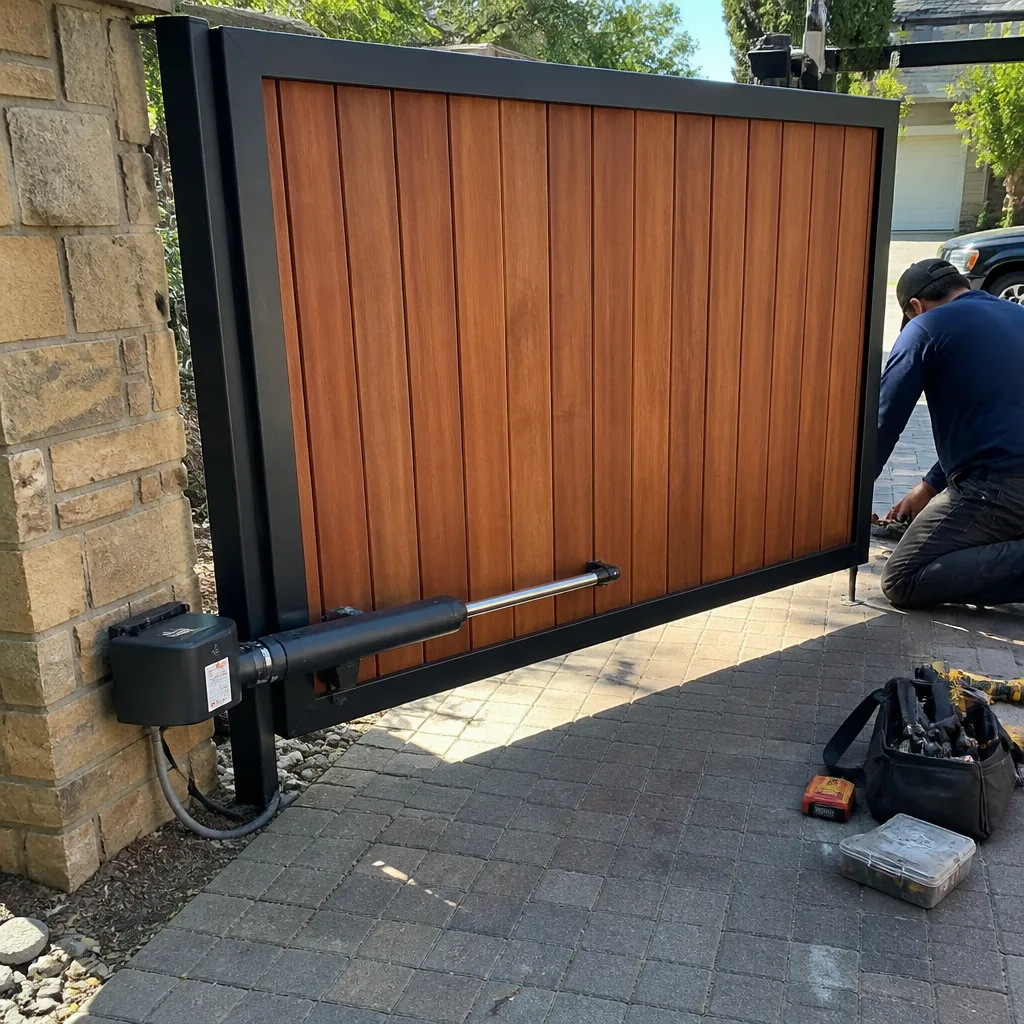 After
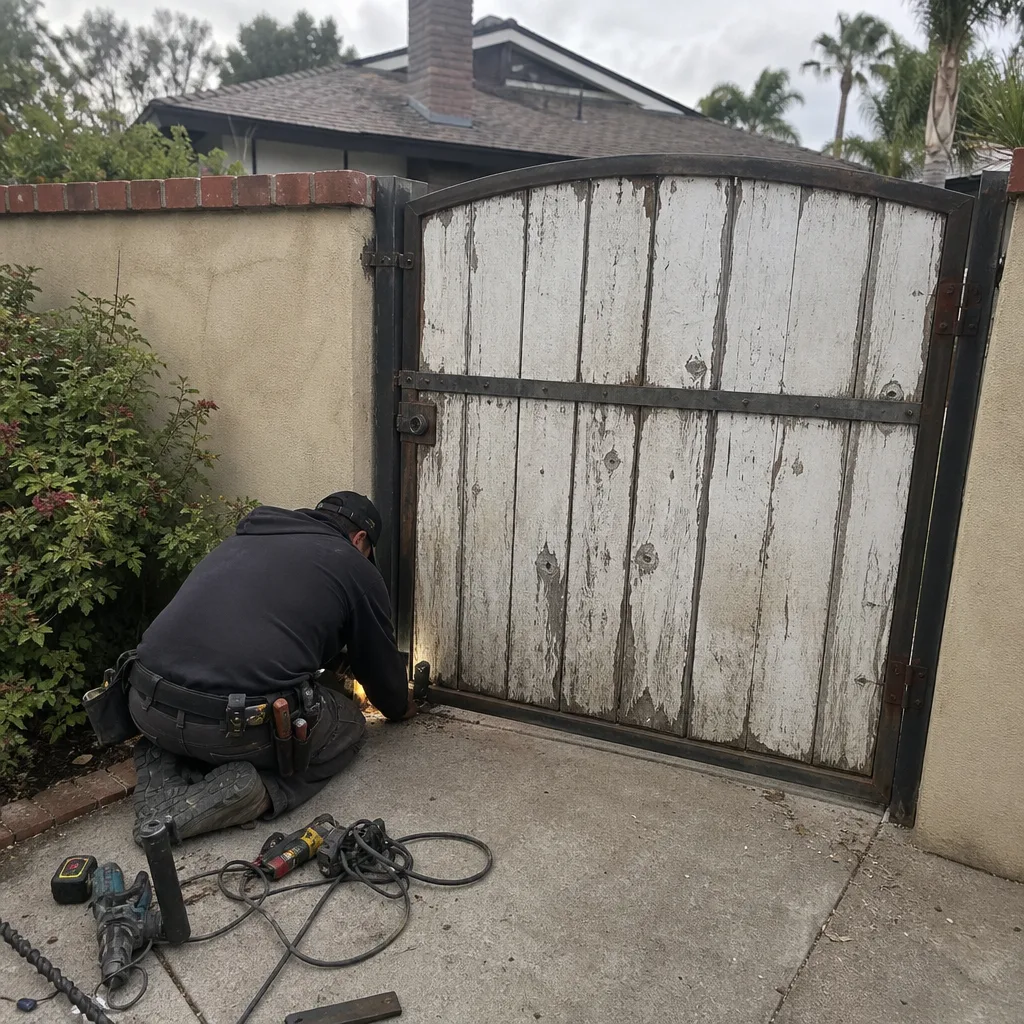 Before
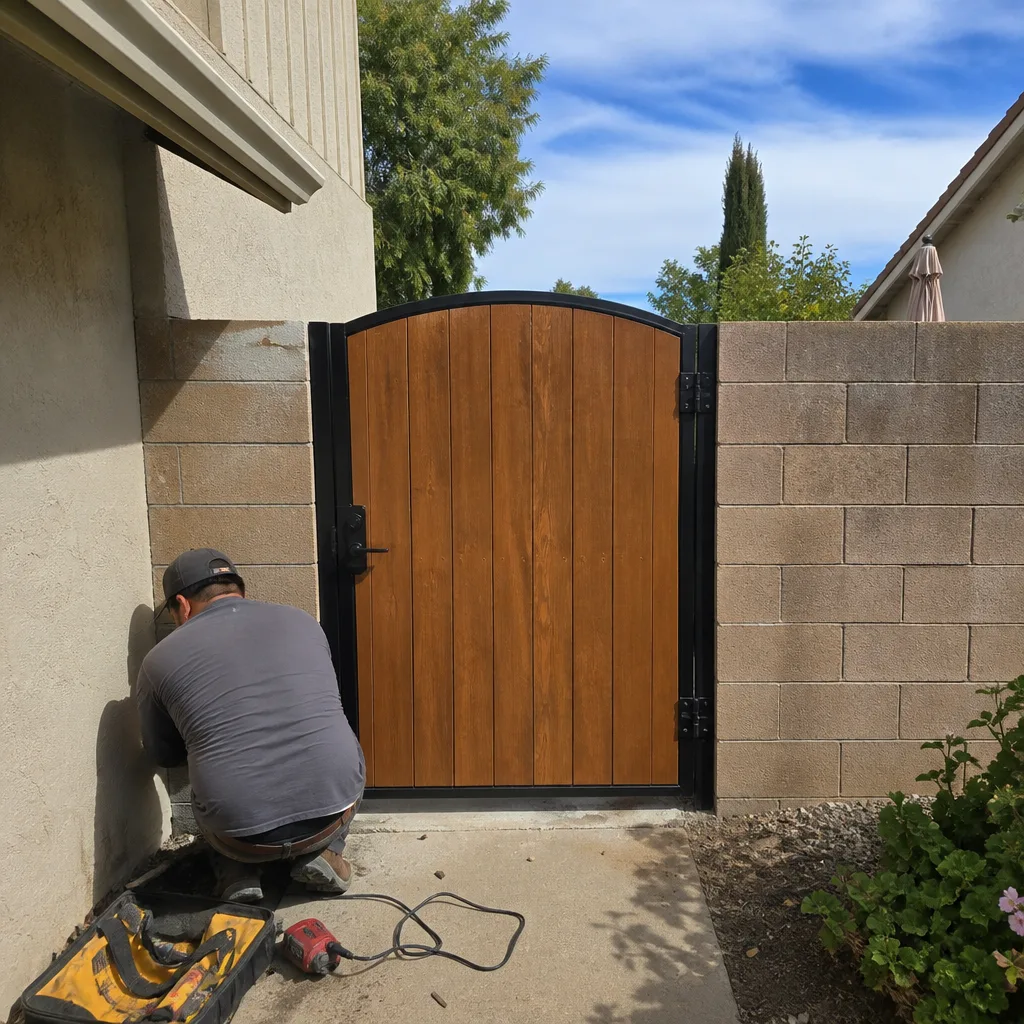 After
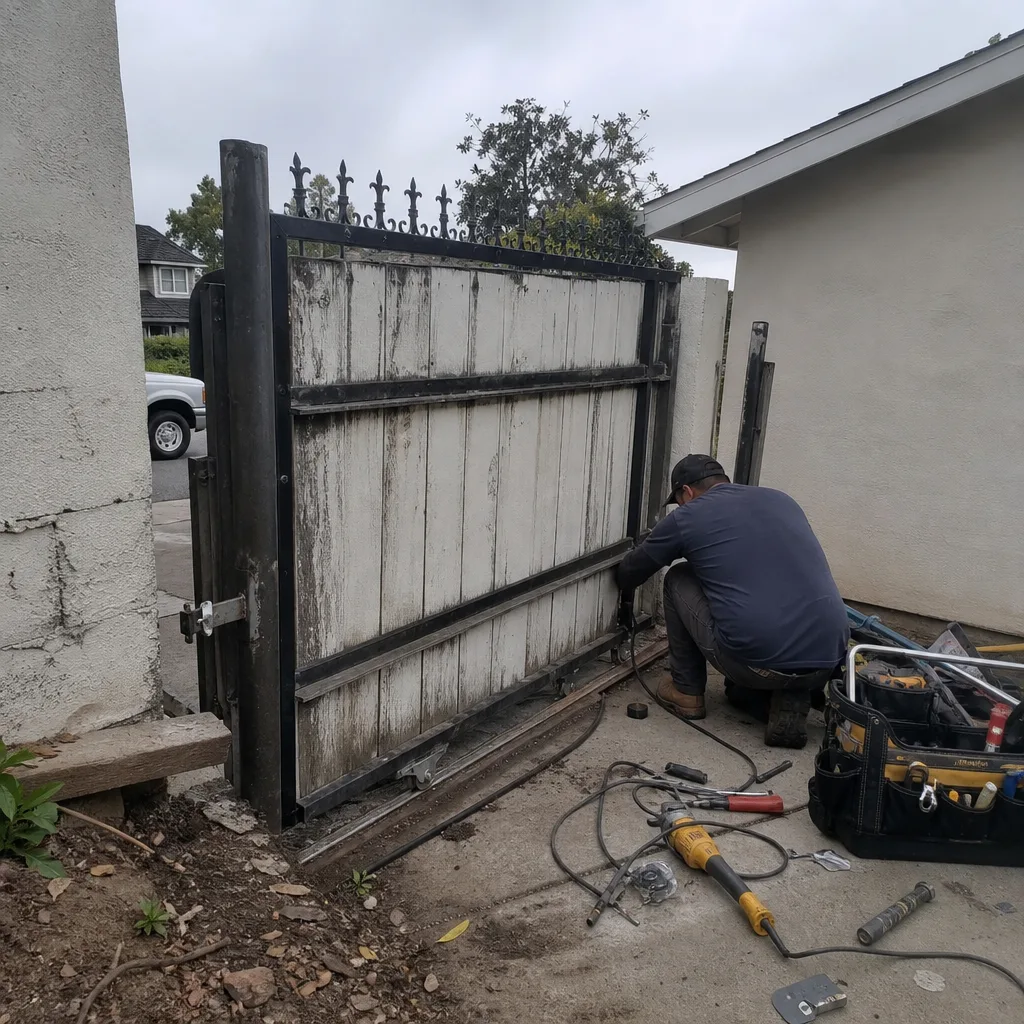 Before
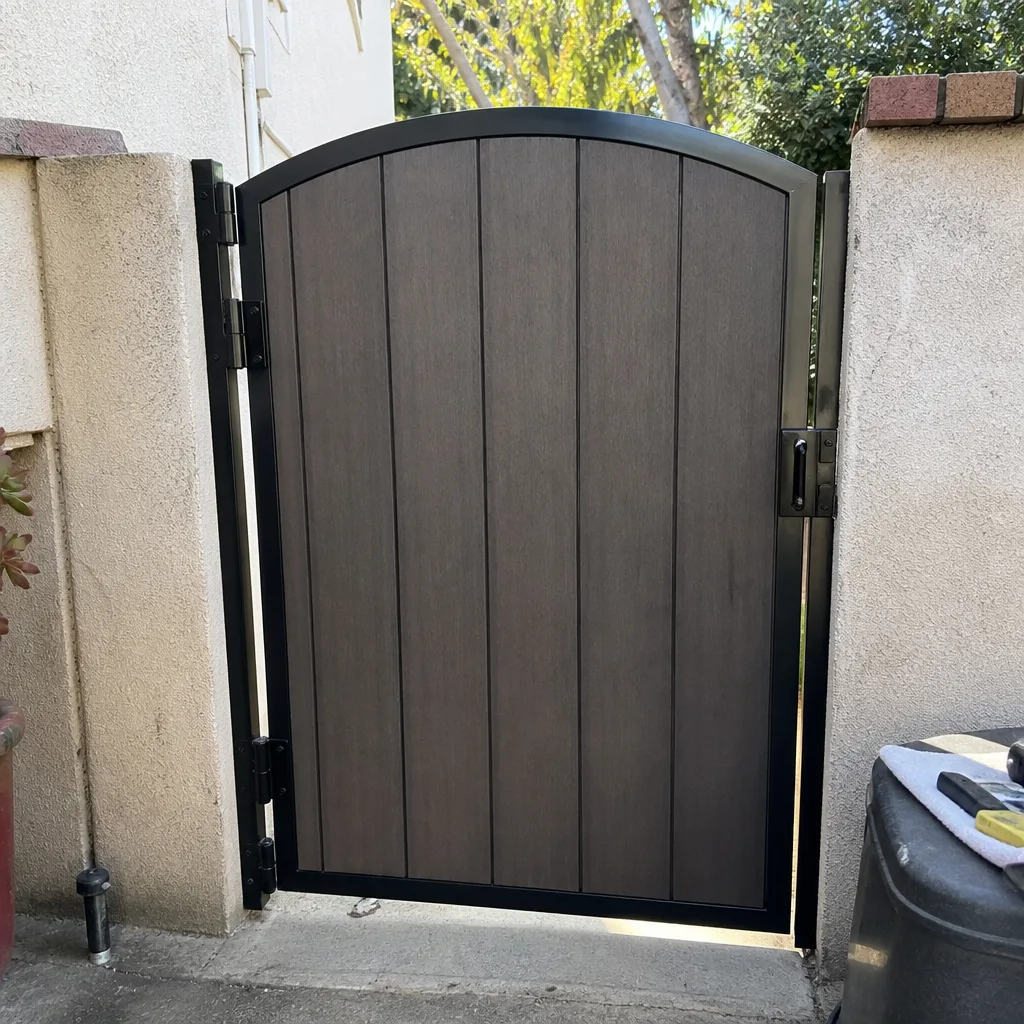 After